
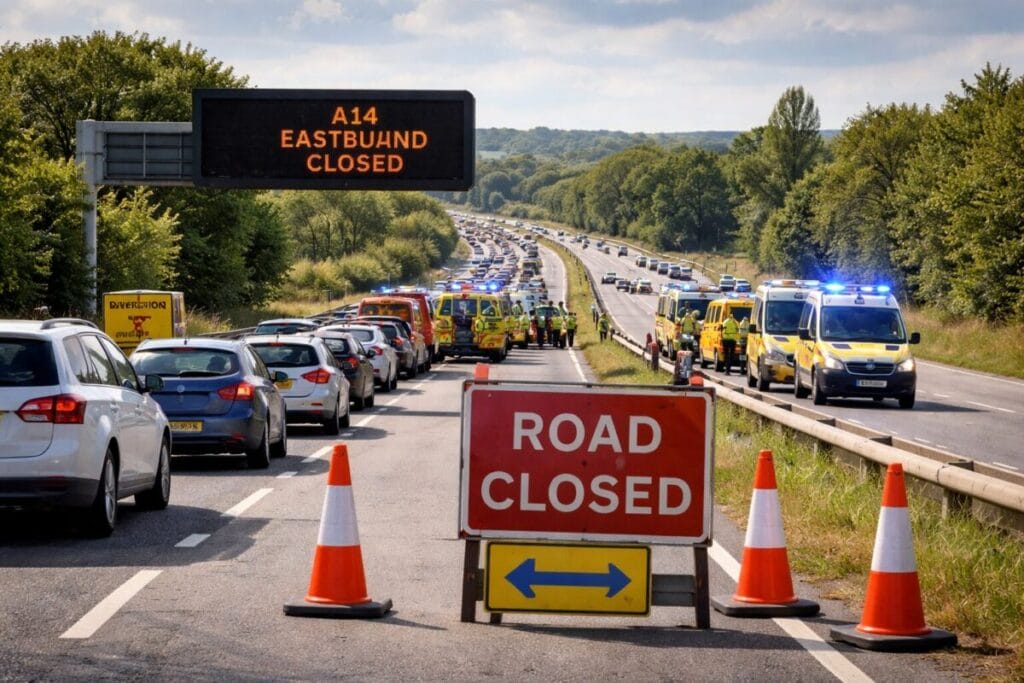
A serious road collision has forced authorities to close the A14 eastbound in Cambridgeshire, creating significant disruption for drivers and travellers. The closure affects the stretch between Junction 37 at Newmarket and Junction 39 near Kentford. Emergency teams responded quickly after the incident, securing the area and managing traffic flow.
The A14 is one of eastern England’s most important transport corridors. It connects regional towns, tourism hubs, and freight routes linking ports with central England. Any disruption along this road can affect not only local commuters but also tourists exploring nearby attractions.
Traffic management teams immediately activated diversions to reduce congestion and maintain safety. However, delays continue to build as vehicles reroute through smaller local roads.
Diversion Routes Introduced for Eastbound Drivers
Authorities have set up a structured diversion plan to guide motorists around the closure. Drivers travelling eastbound must exit the A14 at Junction 37 near Exning. From there, they follow the A142 toward Newmarket.
At Newmarket’s clock tower, drivers turn left onto the A1304. They continue until reaching the signal-controlled junction with the B1506. Motorists then turn right and follow the B1506 through Kentford village. This route allows vehicles to rejoin the A14 eastbound at Junction 39.
Officials designed this diversion to keep traffic moving while emergency crews clear the accident site. Despite these measures, travel times remain longer than usual. Local roads may struggle with increased traffic volumes, especially during peak hours.
Drivers should remain alert and follow road signs carefully. Traffic officers continue monitoring the flow to prevent bottlenecks.
Impact on Tourism and Regional Travel
The A14 serves as a key route for visitors travelling through East Anglia. Tourists heading toward Newmarket, Cambridge, Suffolk countryside destinations, and coastal attractions often rely on this highway.
Newmarket, known for its horse racing heritage, attracts domestic and international visitors year-round. Traffic disruption near this area can affect travel schedules for racecourse events, countryside tours, and heritage visits.
Travel delays may also influence journeys toward Cambridge, a popular destination famous for historic colleges, museums, and riverside attractions. Tour operators and hospitality businesses could see scheduling challenges when major routes face closures.
Local tourism authorities typically encourage visitors to check travel conditions before departure. Planning ahead helps reduce stress and avoids unexpected disruptions.
Emergency Response and Safety Measures
Emergency responders remain at the scene to manage safety risks and remove damaged vehicles. Police and highway officers coordinate traffic control, investigate the cause of the collision, and support stranded motorists.
Safety remains the top priority during such incidents. Officials have warned drivers to slow down near diversion points and follow instructions from traffic personnel. Reduced speeds help prevent secondary accidents, which often occur during heavy congestion.
Road closures allow crews to clear debris, repair any damage, and ensure the carriageway becomes safe for reopening. Authorities have not confirmed an exact reopening time, as conditions depend on investigation progress and clean-up operations.
Why the A14 Is Critical for UK Travel
The A14 plays a vital role in the UK’s transport network. It connects the Midlands with major ports and eastern counties, making it essential for logistics, commuting, and tourism travel.
Freight vehicles use the road heavily, which means closures quickly create ripple effects across surrounding routes. When traffic diverts onto local roads, smaller communities experience higher vehicle volumes.
For tourists, the A14 provides access to scenic countryside drives, heritage towns, and popular attractions throughout Cambridgeshire and Suffolk. Any disruption along this route requires travellers to adjust schedules or consider alternate paths.
Travel Advice for Drivers and Visitors
Travellers planning to drive through the affected area should prepare for delays and remain flexible. Here are key tips to reduce inconvenience:
Check Live Traffic Updates
Monitor real-time traffic conditions before starting your journey. Road situations can change quickly as emergency operations continue.
Allow Extra Travel Time
Diversion routes often increase travel distance. Leave earlier than planned to avoid missing appointments or tour bookings.
Consider Alternative Routes
If possible, use alternative major roads instead of local diversion routes. This approach may reduce travel stress during peak congestion.
Stay Patient and Drive Carefully
Local villages may experience heavier traffic than usual. Respect speed limits and remain courteous toward other drivers.
Ongoing Situation and Expected Updates
Traffic officials continue assessing the situation while emergency teams work to restore normal conditions. Updates will likely follow as investigations conclude and clean-up operations progress.
Drivers should expect congestion until the eastbound carriageway reopens fully. Tourism operators and travellers should remain flexible and monitor travel advisories.
Conclusion
The A14 eastbound closure between Newmarket and Kentford has created significant disruption for motorists and visitors alike. Emergency services are working to manage the aftermath of the collision while maintaining safety across diversion routes. The incident highlights how critical major transport corridors are for both local communities and the UK tourism sector. Until authorities reopen the road, travellers should plan carefully, allow extra time, and stay informed about changing traffic conditions.
For more travel news like this, keep reading Global Travel Wire