Central Asia is rewriting the global aviation story. Once overlooked, the region is now the fastest-growing air travel market in the world. Airlines are expanding fast. Passenger demand is rising sharply. Tourism is following the same upward path.
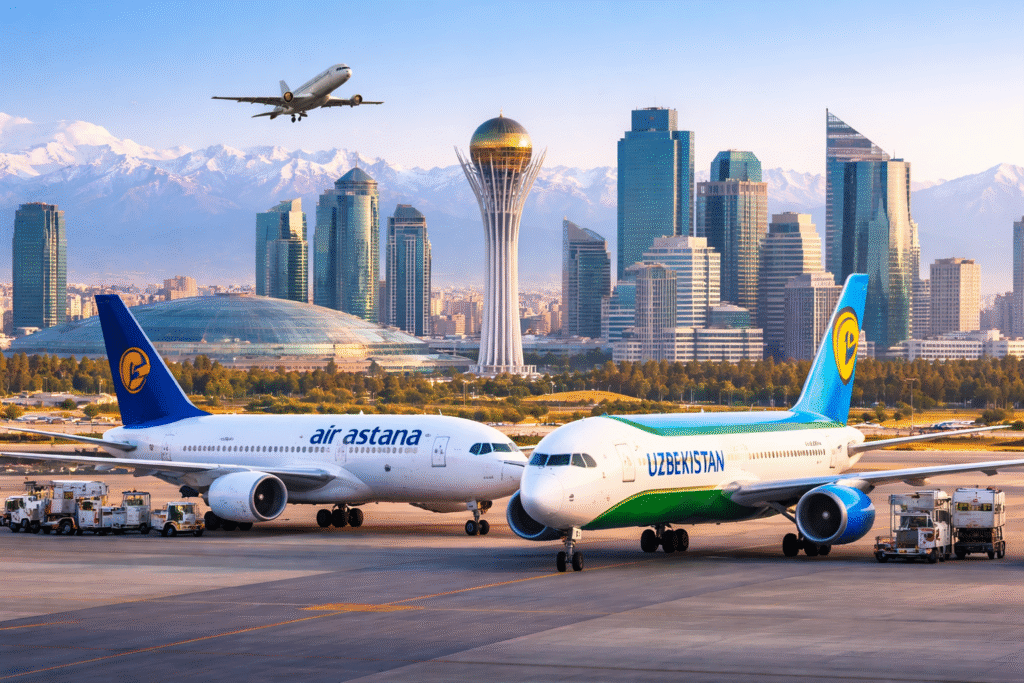
Air Astana and Uzbekistan Airways stand at the center of this transformation. Both carriers are breaking traffic records. Both are expanding networks aggressively. Together, they are turning Central Asia into a key bridge between Europe and Asia.
This aviation surge is not just about flights. It is reshaping tourism, hospitality, and local economies across the region.
Unmatched Growth in Air Travel Capacity
Over the past two decades, Central Asia’s airline seat capacity has grown nearly fivefold. No other global region matches this pace. The market continues to expand at an annual growth rate of over seven percent.
Several factors drive this momentum. Governments are opening skies. Airports are modernizing fast. Low-cost carriers are entering the market. Tourism policies are becoming more welcoming.
As a result, international and regional connectivity has improved dramatically.
Air Astana Expands Its Global Footprint
Air Astana has become the region’s aviation leader. The airline operates one of the youngest fleets in the region. It focuses on reliability, comfort, and strong international reach.
Flights now connect Kazakhstan directly to major cities across Europe, Asia, and the Middle East. Almaty and Astana serve as powerful hubs for both leisure and business travelers.
Service quality also fuels growth. Passengers experience modern cabins, improved in-flight services, and competitive schedules. Business travelers benefit from smooth transit options. Leisure travelers gain easier access to Central Asia’s landscapes and cities.
Air Astana’s expansion has also strengthened Kazakhstan’s role as a regional transit center.
Uzbekistan Airways Accelerates Tourism Growth
Uzbekistan Airways plays a critical role in the aviation boom. The airline has modernized its fleet and expanded its route map. New connections link Uzbekistan with Europe, Asia, and the Middle East.
Tourist arrivals have surged as air access improves. Uzbekistan has positioned itself as a cultural and heritage destination. Cities linked to the ancient Silk Road attract global interest.
Direct flights now make travel simpler and faster. This convenience has boosted demand from both first-time and repeat visitors.
Uzbekistan Airways continues to increase capacity to meet rising tourism needs.
Silk Road Cities Fuel Travel Demand
Central Asia’s cultural appeal strengthens aviation growth. Historic cities draw travelers seeking authentic experiences.
Samarkand impresses with grand architecture and timeless squares. Bukhara offers preserved heritage and ancient neighborhoods. Khiva delivers a living museum atmosphere within its historic walls.
Kazakhstan adds natural diversity. Almaty blends mountain scenery with urban life. Charyn Canyon delivers dramatic landscapes. Astana showcases futuristic architecture and modern planning.
Improved air access has made these destinations easier to reach year-round.
Hospitality Sector Grows Alongside Aviation
As flights increase, hotels follow. Central Asia’s hospitality sector is expanding at record speed.
Major cities now host international hotel brands. Luxury properties, business hotels, and boutique stays are opening steadily. Budget and mid-range options are also growing fast.
Kazakhstan has seen strong hotel development in Almaty and Astana. Uzbekistan has expanded accommodations in Tashkent, Samarkand, and Bukhara. Traditional guesthouses blend heritage with modern comfort.
This growth supports longer stays and higher visitor spending.
Tourism-Friendly Policies Support Expansion
Governments across Central Asia support tourism growth actively. Visa rules have eased. Digital entry systems have improved access. Many nationalities now enjoy visa-free or simplified entry.
Infrastructure investments continue. Airports are expanding. Roads and rail links are improving. Tourism services are becoming more professional and visitor-focused.
These changes build traveler confidence and encourage repeat visits.
Practical Travel Insights for Visitors
Easy Flight Connectivity
Direct flights now connect Central Asia with major global hubs. Regional connections have also improved, making multi-country trips simpler.
Affordable Travel Costs
Daily expenses remain lower than many Western destinations. Accommodation, food, and transport offer strong value.
Language and Culture
Russian remains widely spoken. English usage is growing in tourist areas. Cultural hospitality remains a strong highlight.
Best Travel Experiences
Nature, history, cuisine, and modern cities offer balanced travel options. Each country delivers a unique identity.
Central Asia’s Aviation Boom Is Just Beginning
The rise of Air Astana and Uzbekistan Airways signals a long-term shift. Central Asia is no longer a niche destination. It is now a rising global travel hub.
Improved air access fuels tourism growth. Tourism drives hospitality expansion. Together, they strengthen regional economies.
For travelers, this means better flights, smoother journeys, and richer experiences. Central Asia stands ready to welcome the world.
The skies over the region have opened—and the momentum shows no sign of slowing.
For more travel news like this, keep reading Global Travel Wire