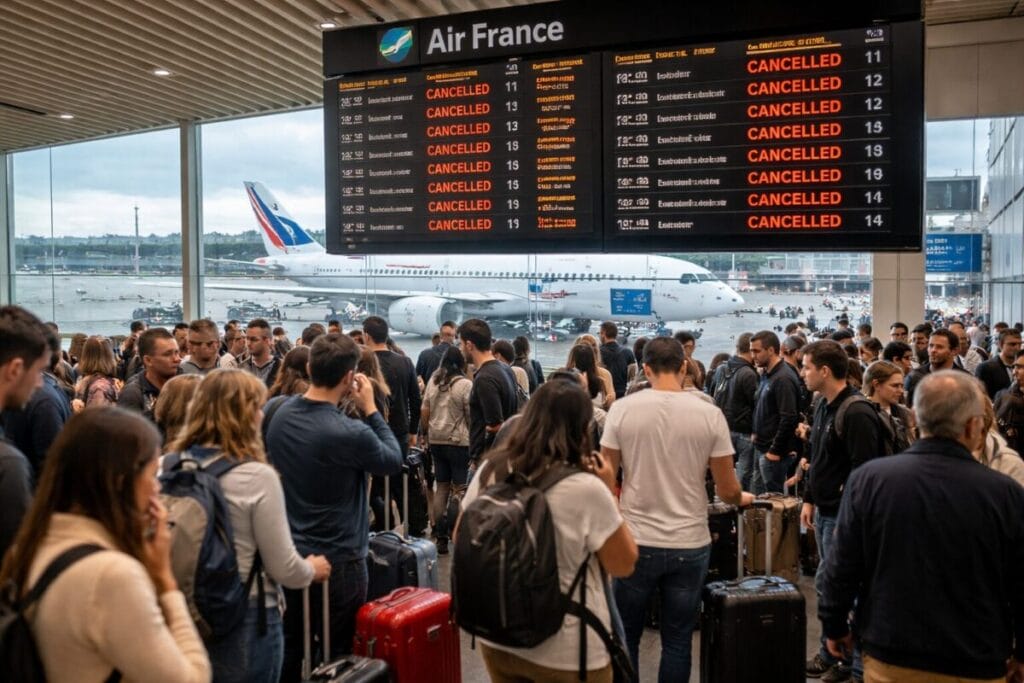
Air France passengers faced widespread disruption after the airline cancelled 14 flights and delayed seven others across major international routes. The sudden changes stranded travelers in multiple countries and created congestion at airports across Europe, North America, and North Africa.
Key aviation hubs including Paris, New York, London, Tunis, Copenhagen, and Los Angeles experienced significant operational pressure. Travelers struggled to rebook flights while airlines attempted to adjust schedules and manage capacity.
The disruption highlights ongoing vulnerabilities in global aviation as airlines continue to balance rising travel demand with unpredictable operational challenges.
Paris Emerges as the Center of Disruption
Paris Charles de Gaulle Airport became the focal point of the disruption. As Air France’s primary hub, cancellations and delays quickly triggered a domino effect across the airline’s network.
Flights connecting Paris with major international cities faced the most significant impact. Transatlantic routes between France and the United States experienced multiple cancellations, leaving passengers searching for alternative travel options.
Paris Orly Airport also reported operational stress due to increased passenger volume and schedule adjustments. Ground services and airline staff worked to accommodate stranded travelers, but delays extended across several hours.
International Routes Most Affected
Several high-demand routes encountered cancellations or significant delays. Flights connecting France with New York, Boston, Newark, Los Angeles, Stockholm, Copenhagen, Tunis, and London faced disruption.
Transatlantic flights proved especially vulnerable. Routes between Paris and John F. Kennedy International Airport saw repeated changes, affecting both departing and returning passengers. Similar issues impacted flights between Paris and Newark Liberty International Airport.
European short-haul routes were not immune. Flights linking Paris with London Heathrow and Copenhagen experienced delays that caused missed connections for many passengers traveling onward to other destinations.
Travelers moving between Tunisia and France also reported extended waiting times, highlighting how disruptions at one hub can quickly affect multiple regions.
Weather Conditions Played a Major Role
Adverse weather created difficult operating conditions across several airports. Reduced visibility from fog, heavy rain, and seasonal storms forced airlines to adjust flight schedules for safety reasons.
Air traffic controllers often limit aircraft movements during poor weather to maintain safe spacing between flights. These restrictions reduce runway capacity and cause cascading delays throughout the day.
Winter weather patterns in parts of Europe and North America added further complications. De-icing procedures and ground handling delays slowed operations and reduced turnaround times between flights.
Safety remains the primary factor in airline decision-making during extreme weather. Airlines typically prioritize caution, even if cancellations become unavoidable.
Operational Challenges Add Pressure
Beyond weather conditions, operational constraints worsened the disruption. The aviation industry continues to face staffing shortages following pandemic-era layoffs and shifting workforce demands.
Airlines worldwide have struggled to recruit enough pilots, cabin crew, and ground staff to meet rising travel demand. Technical issues, logistical coordination, and aircraft availability can also influence flight reliability.
Increased passenger volumes during peak travel periods amplify these challenges. Even small disruptions can escalate quickly when flight schedules run at near-full capacity.
Air France worked to rebook affected passengers, but limited seat availability slowed recovery efforts.
Impact on Travelers Across Key Cities
Passengers experienced long queues, uncertainty, and last-minute itinerary changes. Many travelers faced overnight stays at airports while waiting for alternative flights.
New York travelers encountered extended delays as multiple transatlantic services faced disruption. In London, passengers connecting through Paris struggled to maintain tight schedules.
Copenhagen and Stockholm passengers reported missed onward connections due to delayed arrivals. Tunis also experienced cancellations that affected travelers returning home or continuing to other international destinations.
Airlines generally offer rebooking options, refunds, or compensation depending on the circumstances. However, high demand and limited flight availability made rescheduling difficult for some passengers.
Broader Implications for Global Aviation
Recent disruptions underline how interconnected the aviation system has become. A problem at a major hub can ripple across continents within hours.
Industry experts expect operational stability to improve as airlines strengthen staffing levels and optimize schedules. However, weather events and external factors will continue to challenge airlines, especially during peak travel seasons.
Governments and aviation authorities continue to push for improved passenger rights policies and better communication during disruptions. Real-time updates and digital tools now play a crucial role in helping travelers manage unexpected changes.
What Travelers Should Expect Next
Air France continues efforts to clear backlogs and restore normal operations. Travelers planning international journeys should monitor flight updates closely and allow extra time for connections.
Flexible travel plans and early check-in can reduce stress during uncertain conditions. Airlines recommend staying informed through official notifications and preparing contingency plans when traveling through major hubs.
While disruptions remain frustrating, they highlight the complexity of modern air travel and the importance of resilience within the aviation system.
For more travel news like this, keep reading Global Travel Wire