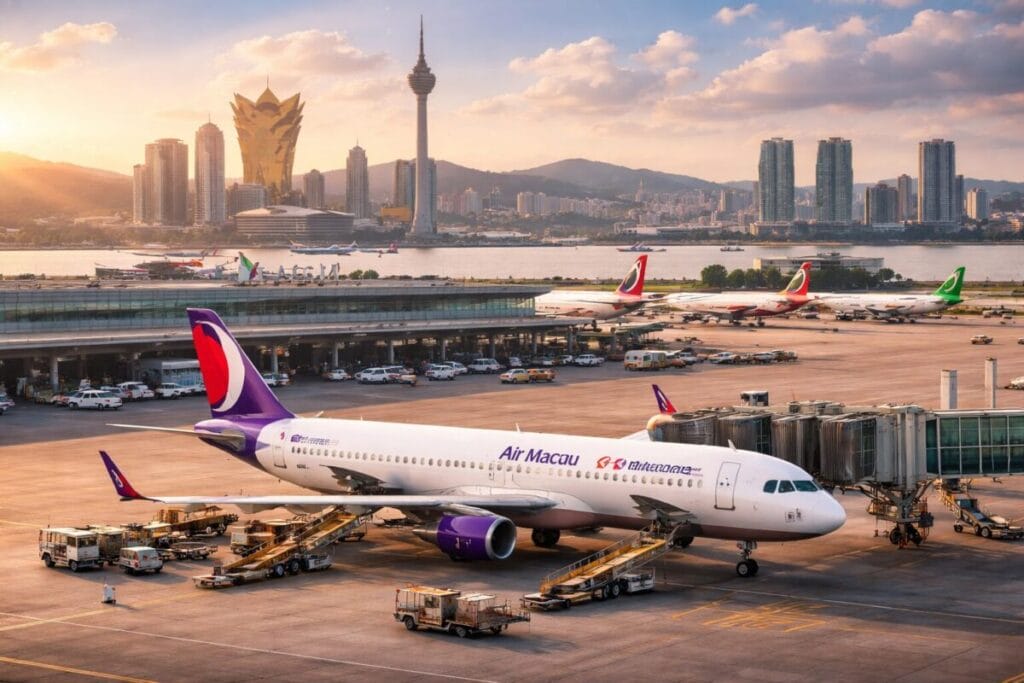
Air Macau is entering a critical phase as Macau begins opening its aviation market to greater competition. For decades, the airline operated with limited rivalry and enjoyed strong market protection. That situation is now changing rapidly.
Macau authorities are introducing aviation liberalisation measures to boost tourism recovery and strengthen global connectivity. These reforms aim to attract new airlines and expand route networks. However, they also create strong pressure on Air Macau to rethink its strategy.
The airline now faces growing competition from regional carriers, including airlines based in Singapore, Malaysia, and mainland China. Many of these competitors operate low-cost models that attract price-sensitive travelers.
As Macau depends heavily on tourism, the future of its national airline matters beyond aviation. Changes in flight availability, pricing, and service models could reshape how tourists reach the city.
Liberalisation Reshapes Macau’s Aviation Landscape
Macau’s aviation sector has historically remained tightly controlled. Air Macau held a dominant position, operating most scheduled routes. Liberalisation signals a clear shift toward open competition.
Government policy now focuses on expanding air connectivity and increasing visitor arrivals. The pandemic slowed travel growth, and officials want faster recovery through improved accessibility.
New regulations allow more carriers to enter the market. This move encourages competition, which could reduce ticket prices and improve service quality.
However, the transition also challenges the existing airline structure. Air Macau must adjust quickly as new players bring fresh business models and aggressive pricing strategies.
Financial pressures already reflect this shift. The airline has reported significant losses in recent years. These figures highlight the urgency of adapting to new market realities.
Full-Service or Low-Cost: A Strategic Crossroad
One of the biggest questions facing Air Macau is its future identity. Should it remain a traditional full-service airline, or move toward a low-cost or hybrid model?
Examples from neighboring countries offer useful insights.
Singapore’s aviation sector adapted to liberalisation by creating separate brands for different markets. Premium carriers maintained high-end services while launching low-cost subsidiaries to compete on price.
Malaysia’s aviation industry followed a more difficult path. Attempts to balance cost efficiency with legacy operations created ongoing restructuring challenges.
Air Macau could consider a hybrid strategy. This model combines core full-service offerings with budget-friendly options. Such an approach allows airlines to serve multiple customer segments without weakening their premium brand image.
Travel trends show strong demand for affordable short-haul flights across Asia. If Air Macau fails to capture this segment, competitors may quickly dominate regional routes.
Low-Cost Carriers Could Transform Travel to Macau
The arrival of low-cost airlines may significantly change travel patterns to Macau. Increased competition usually leads to lower ticket prices and more frequent flights.
For tourists, this development brings clear advantages. Travelers may gain access to cheaper flights from nearby destinations such as Southeast Asia, mainland China, and regional hubs.
Short city breaks could become more popular as fares drop. Budget travelers and younger visitors may also find Macau more accessible.
New routes could strengthen Macau’s role as a gateway destination. Visitors might combine trips to Hong Kong, Guangdong Province, and other nearby locations. This regional connectivity can boost tourism flows and diversify visitor markets.
Greater airline choice also encourages flexibility. Travelers could select between premium services or budget options depending on their preferences.
Balancing Competition and Market Stability
While liberalisation promises growth, it also introduces risks. Rapid competition may strain smaller or financially vulnerable airlines.
Macau regulators must balance two goals: encouraging new entrants while protecting industry stability. Sudden market disruption could affect employment, connectivity, and service reliability.
Policy measures aim to support gradual change rather than rapid deregulation. Authorities want to maintain strong air links to key mainland cities while expanding international routes.
Infrastructure development and airport capacity planning will also play a role. As more airlines enter the market, efficient operations become essential to avoid congestion and maintain passenger experience.
What Tourists Should Expect in the Coming Years
Travelers planning a trip to Macau may soon notice major changes. Increased airline competition often leads to:
- More flight options across different price ranges
- Improved scheduling flexibility
- Promotional fares and seasonal deals
- Expansion of regional connections
Visitors may also see changes in Air Macau’s onboard services or pricing structure as the airline adapts. A shift toward a hybrid model could introduce new fare categories or simplified services.
For tourism, the overall outlook appears positive. Lower travel costs can attract new visitor segments, including families, digital nomads, and regional leisure travelers.
Macau’s reputation as a destination goes beyond its famous casinos. Cultural heritage sites, culinary experiences, festivals, and entertainment attractions continue to diversify the tourism offering. Better flight accessibility could highlight these experiences to a wider audience.
The Road Ahead for Air Macau and Macau Tourism
Air Macau stands at a strategic turning point. Liberalisation removes long-standing protections and forces the airline to compete in a dynamic regional market.
Success will depend on innovation, efficient operations, and clear positioning. Whether through partnerships, a low-cost subsidiary, or service redesign, the airline must respond to evolving traveler expectations.
For tourists, the future looks promising. Increased competition typically benefits passengers through lower prices and better choices.
As Macau opens its skies, the aviation landscape will evolve quickly. These changes may redefine how visitors reach the city and how Macau strengthens its role as a key tourism destination in Asia.
For more travel news like this, keep reading Global Travel Wire