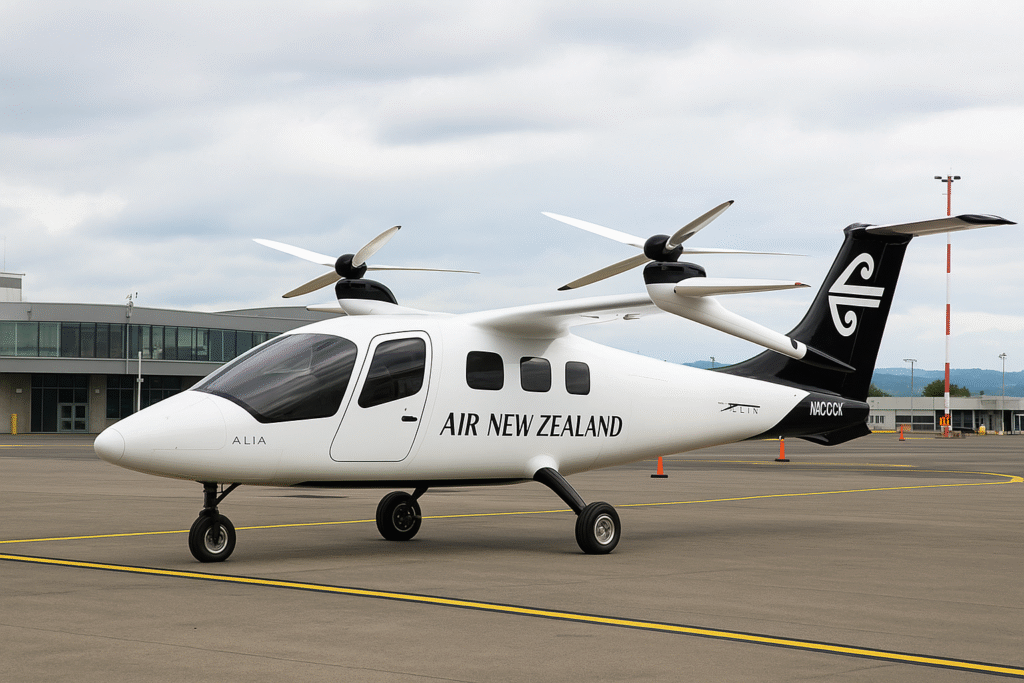
Air New Zealand has kicked off its first full-scale electric aircraft programme, featuring the ALIA CX300. This marks a major push into sustainable aviation for the airline. The initiative is the latest in New Zealand’s drive to reduce aviation emissions and promote greener travel.
Why New Zealand is the Ideal Testbed
New Zealand’s unique landscape and energy profile make it an ideal proving ground. Roughly sixty percent of regional flights cover less than 350 km, and around eighty-five percent of the country’s electricity comes from renewable sources. Together, these factors set the stage for testing next-generation aircraft in real-world conditions.
The Demonstrator Programme Unveiled
In collaboration with BETA Technologies, Air New Zealand has begun a four-month demonstrator phase. The ALIA CX300 will conduct flights across the country, starting with operations at Hamilton Airport before heading through stop-over points like Taupō, Napier, Palmerston North, and ultimately for Cook Strait crossings to Blenheim. These flights will test the electric aircraft’s performance in varied environments and routes.
Aircraft Features and Operational Plans
The ALIA CX300 is a battery-electric conventional take-off and landing (CTOL) aircraft. It carries two crew and cargo up to 5.6 m³. Its range is approximately 398 km in ideal conditions. The aircraft uses mobile 65 kW charging stations located at key airports around New Zealand. A full recharge takes about 90 minutes, enabling multiple daily legs in the regional network.
Infrastructure and Regulatory Collaboration
The success of the programme depends on infrastructure and regulation. Hamilton Airport plays a pivotal role in hosting the initial phase and providing logistical support. Meanwhile, the Civil Aviation Authority of New Zealand (CAA) is partnering in the trials to assess how emerging aircraft types integrate into the existing aviation framework. The data collected will shape future rules for electric aviation.
What It Means for Tourism and Regional Connectivity
For travellers and tourism regions, the shift to electric aircraft signals cleaner, quieter regional flights. Short-haul routes between scenic destinations will benefit from lower noise levels and reduced emissions. Regions that rely on air links for tourism and commerce could see a boost as more sustainable aircraft become viable.
Global Implications and Industry Impact
While the demonstration is New Zealand-based, its implications are global. The collaboration between airline, regulator and infrastructure sets a precedent for how the aviation industry can adopt lower-emission technologies. Airlines, airports and governments around the world will watch this programme as a blueprint for electric regional aviation.
Looking Ahead: What to Expect
Over the coming months, expect:
- Flight data on performance, charging cycles and real-world operations.
- Pilot and crew training adaptations for electric propulsion systems.
- Insights into cost savings, especially in energy and maintenance.
- Regulatory updates influenced by the findings of the CAA and partners.
Air New Zealand’s launch of the ALIA CX300 programme positions the airline as a leader in sustainable aviation. With strong government backing, renewable energy infrastructure and narrow-body regional routes, New Zealand has stepped into the role of aviation innovator.
Fewer emissions. Quieter cabins. Short-haul flights redefined. The future of regional travel is electric—and the first chapter is unfolding across New Zealand’s skies.
For more travel news like this, keep reading Global Travel Wire