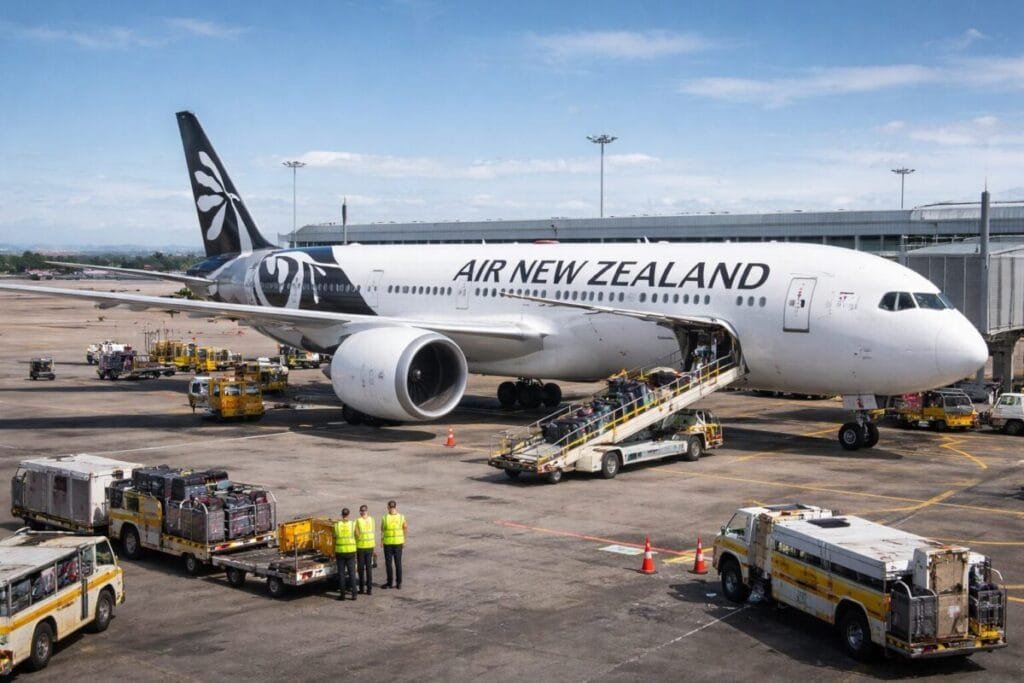
International travelers flying through New Zealand in February 2026 may face significant delays and cancellations as Air New Zealand’s international cabin crew prepare for a three-day strike from February 11 to 13. The industrial action, called by the Flight Attendants’ Association of New Zealand (FAANZ), follows months of tense negotiations over pay, safety standards, and working conditions that union leaders argue have not kept pace with inflation or the growing demands of long-haul operations.
The strike will target Air New Zealand’s Boeing 787 Dreamliner and Boeing 777 wide-body aircraft—two fleets that form the backbone of the airline’s long-haul network. With these aircraft operating services to destinations across North America, Asia, and Europe, the walkout is expected to affect travelers far beyond New Zealand’s borders, underscoring how labor actions within the aviation sector can ripple through global travel systems.
Rising Frustrations Behind the Strike
While Air New Zealand has offered pay increases during negotiations, union representatives maintain the proposals fail to address rising living costs and inflationary pressures that have intensified since global aviation resumed at scale. Cabin crew argue that real wages have stagnated and that crew members are effectively earning less than they did before the pandemic, once cost of living adjustments are taken into account.
The union is also resisting proposals it says would require staff to trade away critical safety protections in exchange for wage increases. For flight attendants, safety is not a negotiable component of the job. Crew are responsible for managing emergencies, overseeing evacuation procedures, handling onboard medical incidents, and maintaining security—all while serving passengers on long-haul flights that can extend beyond 12 hours.
FAANZ leaders have described the strike as a last resort after traditional bargaining mechanisms failed to produce a sustainable agreement.
Operational Challenges Fueling the Dispute
In addition to wage concerns, front-line crew point to operational challenges that have strained service delivery and morale. Travelers are accustomed to seeing cabin crew as part of a seamless service experience, but behind the scenes, flight attendants have reported increasingly difficult conditions.
Common complaints include limited catering choices on long-haul flights, shortages of basic service equipment, and malfunctioning cabin features such as non-operational seats or galleys. Crew members have also expressed frustration at an uptick in flight cancellations and schedule changes, which they argue could have been avoided with better resource planning.
These issues not only impact staff but shape the passenger experience, particularly on premium-priced international routes where expectations are high. The airline has built a strong global reputation in part through a focus on New Zealand’s hospitality values, so crew say the deteriorating service conditions put them in the uncomfortable position of navigating customer dissatisfaction without the necessary tools to deliver the airline’s advertised standard.
How the Strike Will Affect Travelers
For consumers, the strike could result in a range of disruptions: flight cancellations, rebookings, rerouting through alternative hubs, and significant delays during a traditionally busy period of international travel for New Zealand. Air New Zealand has not publicly confirmed the number of flights expected to be canceled, but industry analysts suggest that a three-day stoppage of long-haul crew could impact thousands of passengers.
Travelers already booked on routes operated by Boeing 787 and 777 aircraft—including those to Los Angeles, Vancouver, Tokyo, Singapore, and London—may face adjustments. Those with tight onward connections or travel plans involving cruises, tours, or events could experience cascading logistical challenges.
Consumer travel groups often advise that passengers affected by industrial action rebook as early as possible, monitor airline communications closely, and consider travel insurance products that provide strike-related coverage. While airlines generally attempt to limit customer inconvenience, industrial action remains one of the most complex types of disruption to mitigate due to the operational specificity of crew positions.
Airline Response as Negotiations Continue
Air New Zealand has acknowledged the strike notice and reaffirmed its intention to continue bargaining. Management has emphasized that it values its flight attendants and recognizes their essential role in maintaining safety and service standards. However, the airline also faces economic realities, including fuel costs, fleet upgrade investments, and the broader financial recovery efforts still underway across the aviation sector.
With only weeks remaining before the scheduled strike dates, mediation teams on both sides are attempting to broker an agreement. While last-minute settlements are common in global aviation labor disputes, travelers planning February departures are being advised to prepare for possible disruptions regardless of the outcome.
A Wider Look at the Aviation Industry’s Labor Pressures
Air New Zealand is not an isolated case. Airlines in North America, Europe, and Asia have experienced similar disputes as aviation workers seek pay adjustments that match inflation, staffing levels sufficient to reduce fatigue, and workplace improvements after years of post-pandemic operational instability. For many employees, the aviation recovery has meant higher workloads rather than restored working conditions.
What Comes Next for Air Travelers
As February approaches, passengers and industry observers will watch closely to determine whether negotiations succeed or industrial action proceeds. In the meantime, the situation serves as a reminder of how interconnected labor relations, travel planning, and consumer experience have become—particularly for long-haul carriers that connect remote destinations like New Zealand to the rest of the world.
For more travel news like this, keep reading Global Travel Wire