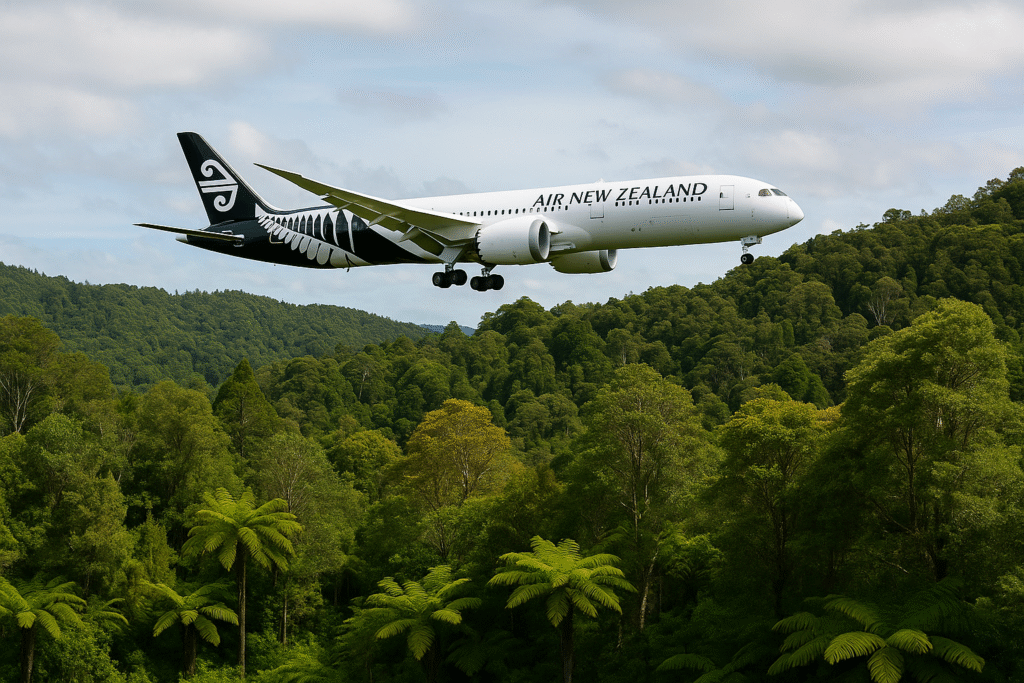
Air New Zealand is setting a new benchmark in sustainable tourism by joining forces with My Native Forest to accelerate New Zealand–based carbon removal projects and fortify its standing in the global carbon market. This visionary alliance not only speaks to the airline’s climate ambitions but also reinforces New Zealand’s reputation as a destination that values ecological integrity.
A Local Carbon Strategy with Global Reach
Under this agreement, Air New Zealand pledges to retire 8,000 tonnes of carbon dioxide removals by 2030 through native forest regeneration carried out via My Native Forest. The plan is phased: 500 tonnes in 2028, 2,500 tonnes in 2029, and 5,000 tonnes in 2030. Each carbon credit produced will represent one tonne of CO₂ sequestered, validated under rigorous international standards and registered in a global system.
This marks a strategic shift toward nature-based carbon removal within New Zealand—directing funding that might otherwise flow offshore back into local ecosystems. The partnership sends a clear signal that forest restoration is not merely a charitable exercise but a viable, market-driven solution for landowners and conservationists alike.
Why Native Forests Matter—Beyond Carbon
New Zealand’s native forests hold rich biodiversity, cultural significance, and resilience against environmental threats. Their restoration delivers more than carbon sequestration—they stabilize waterways, support species recovery, and help control invasive pests. By focusing on Aotearoa’s indigenous ecosystems, the collaboration ensures that every tonne of carbon removed also yields multiple ecological co-benefits.
Co-founder of My Native Forest, Mitchell McLaughlin, explains that this Alliance enables landowners to tap into new revenue streams tied to long-term forest health. He notes that regions such as Canterbury, Nelson, Marlborough, Tairāwhiti Gisborne, Waikato, Auckland, and Northland are potential sites for reforestation and ecosystem restoration efforts.
Air New Zealand’s Climate Journey & Market Role
Air New Zealand has officially adopted a net zero by 2050 target, and carbon credits are a key lever alongside fleet optimization, operational efficiency, and sustainable aviation fuel (SAF). The airline’s 2030 Emissions Guidance, updated annually, reflects a dynamic view of its pathway toward deeper decarbonisation.
However, the airline recently withdrew from the Science Based Targets Initiative and removed its earlier 2030 intensity goal. That has heightened scrutiny of how it will balance ambition with realism. In that light, this forest-based offset deal provides a visible, locally rooted mechanism to contribute toward climate goals.
Traditionally, Air New Zealand has supported carbon offsetting through its FlyNeutral programme. That programme channels passenger contributions—half toward SAF development and half toward native-forest projects. Over recent years, passenger donations have funded the planting of hundreds of thousands of native trees across New Zealand.
Strengthening New Zealand’s Carbon Market Leadership
This partnership is more than corporate action—it’s a push to make New Zealand a credible force in the voluntary carbon market. By buying locally generated, high-integrity carbon removals, Air New Zealand helps build a homegrown voluntary carbon market that aligns conservation, community, and climate goals.
New Zealand already uses its Emissions Trading Scheme (ETS) to integrate forestry offsets: landowners earning credits for carbon sequestration under the ETS is standard practice. Native forest projects are eligible under the same rules as other forests. The expertise and capital flowing into this domain now could catalyze further interest from other sectors, including tourism, agriculture, and local government.
Government programs, such as the Afforestation Grant Scheme and carbon-offset policies, support landowners in planting and retaining forests. These incentives amplify the impact of private capital investments and help ensure permanence and compliance.
Implications for Tourism & Destination Branding
Tourism is among New Zealand’s most climate-exposed sectors. The country’s “100% Pure New Zealand” identity depends on pristine landscapes, clean air, and thriving nature. As climate risks rise, visitors increasingly expect destinations to lead in climate integrity.
By embedding carbon removal into its identity, the airline links travel to restoration. Tour operators and tourism businesses can similarly invest in native forest projects via My Native Forest (which already offers tailored offset plans for tourism operators). This helps mitigate “scope 3” emissions (e.g. guest transport, energy use) and strengthens the credibility of a “regenerative tourism” brand.
As academic research emphasizes, tourism’s long-term viability depends on shifting from “low-carbon” toward regenerative practices—where visitors help heal, rather than simply reduce harm.
Looking Ahead: Growth, Credibility, and Challenges
Before the year ends, Air New Zealand plans to finalize a second domestic nature-based carbon removal agreement. The cumulative investments will accelerate supply of verified credits within New Zealand, reducing dependence on overseas offset purchases.
Yet challenges remain. Native forest projects require patience—they take decades to mature and deliver carbon at scale. Ensuring permanence, avoiding double-counting, and meeting rigorous transparency standards will be critical. Moreover, balancing scale with integrity demands strong governance, independent verification, and long-term management.
If successful, the alliance between Air New Zealand and My Native Forest could become a blueprint for aviation, conservation, and tourism convergence. It anchors climate action in the local land, reinforces New Zealand’s ecological brand, and helps set a new standard for responsible travel in a warming world.
For more travel news like this, keep reading Global Travel Wire