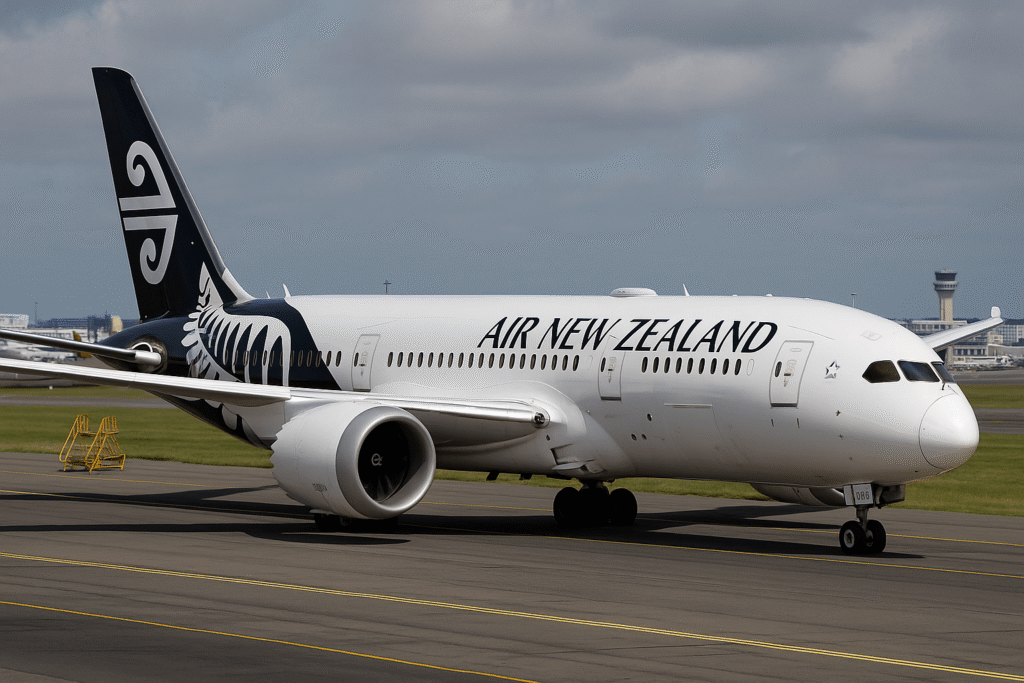
Air New Zealand is expecting a pre-tax loss of between NZ$30 million and NZ$55 million in the first half of fiscal 2026. The company had earlier projected a modest profit for this period but now faces headwinds from multiple fronts.
What’s Driving the Downturn?
Lower Passenger Numbers
Air New Zealand had anticipated a 2 %–3 % uplift in bookings across domestic and U.S. routes. That increase has not materialised, with weaker demand translating into a revenue shortfall of around NZ$50 million for the period.
Maintenance and Fleet Availability Challenges
Upwards of nine to eleven aircraft have at times been grounded since the start of the financial year. Repair and engine-maintenance issues have raised end-of-lease and grounding-cost liabilities by approximately NZ$20 million.
Rising Cost Pressures
In addition to maintenance woes, the airline faces rising costs under the international carbon-offset scheme (CORSIA), fuel inflation, and increasing airport and third-party charges. These contribute about an extra NZ$10 million in the first half.
What This Means for Tourism and Travel
For the tourism and air-travel sectors, the implications are significant:
- Fewer available flights may limit inbound and domestic tourism capacity.
- Weaker demand reflects subdued business and leisure travel activity, hinting at a slower tourism recovery.
- Rising costs could translate into higher fares or fewer route options, which may dampen travel growth further.
Strategic Response from the Airline
Air New Zealand is rolling out several initiatives:
- The carrier is pushing cost-savings and operational-efficiency programmes to protect its balance sheet.
- It plans to increase capacity in the second half of the year, with new aircraft coming online and improved route availability expected.
- Negotiations with engine-manufacturers remain active as the airline seeks compensation for unserviceable engines and clearer timeframes for aircraft returns.
- While the first half is weak, the company emphasises that the second half has stronger growth prospects, so comparisons across halves may not reflect full-year trends.
Outlook and Industry Context
Although the near-term result is disappointing, Air New Zealand remains confident in a recovery trajectory. The airline is investing in fleet renewal and network optimisation to meet recovering travel demand. Within the wider tourism industry, the result underscores the dual challenge of rising operational costs and fragile travel markets. Stakeholders and travellers alike will be watching whether capacity grows, fares remain competitive, and services stabilise.
Summary
Air New Zealand’s revised forecast of a first-half pre-tax loss of up to NZ$55 million signals the severity of the challenges it faces. Maintenance delays and grounded aircraft have combined with weak passenger demand and higher costs to derail the carrier’s expected performance. While the second half of the year may offer brighter prospects, the outcome highlights the need for both airlines and the tourism sector in New Zealand to navigate cost headwinds and demand uncertainty carefully.
For more travel news like this, keep reading Global Travel Wire