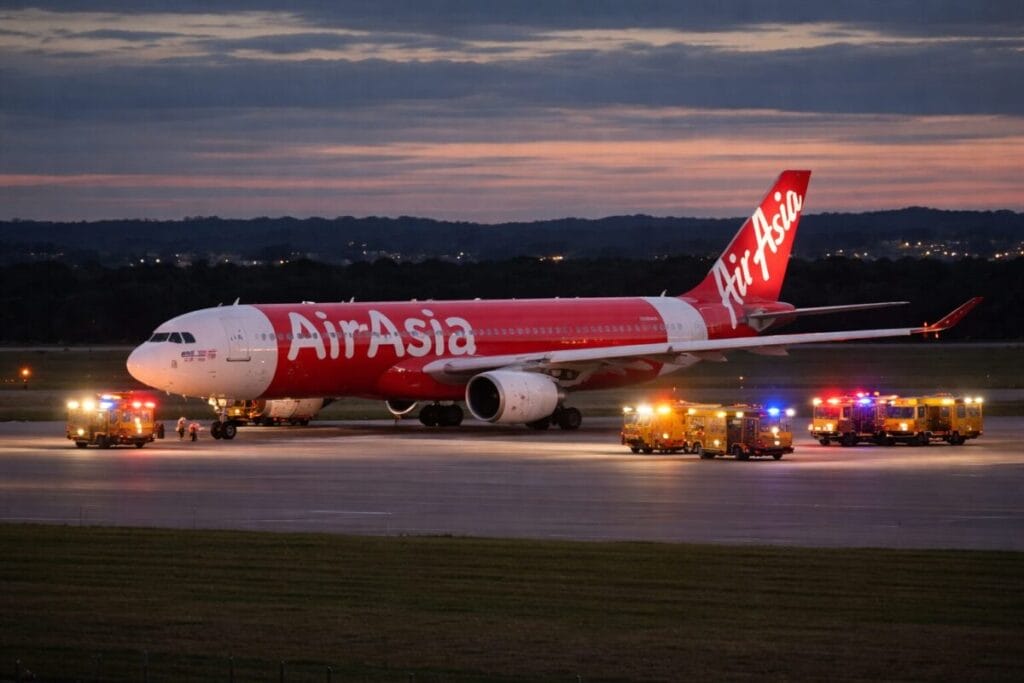
An AirAsia long-haul flight triggered concern across the aviation industry after declaring an emergency mid-air and diverting to Brisbane. The incident took place on February 8, 2026, when Flight D7221 encountered a technical issue during its journey from Sydney to Kuala Lumpur. The unexpected diversion disrupted travel plans and prompted renewed discussions about airline safety procedures and crisis management.
The aircraft landed safely, but passengers experienced anxiety as uncertainty surrounded the situation. Authorities and airline teams now focus on investigating the technical issue while managing logistical challenges for affected travelers.
Emergency Signal Triggers Mid-Air Diversion
Flight D7221 departed Sydney for Kuala Lumpur as scheduled. Around two hours into the journey, the Airbus A330 transmitted a “squawk 7700” code. This signal indicates a general emergency and alerts air traffic control to provide immediate assistance.
After issuing the alert, the aircraft changed course and headed toward Brisbane. Aviation tracking systems showed the aircraft flying along Australia’s eastern coastline before beginning its descent.
Passengers onboard reported confusion as the route shifted suddenly. Crew members followed standard safety protocols and prepared the cabin for diversion. While the airline described the situation as a technical issue, specific details remain undisclosed.
Emergency signals do not always mean catastrophic failures. Airlines use them as precautionary measures to ensure safe landings whenever potential risks arise.
Safe Landing in Brisbane and Immediate Response
Brisbane Airport became an unexpected stop for travelers bound for Malaysia. Emergency services remained on standby as a standard precaution during the aircraft’s arrival.
The aircraft landed safely without injuries or reported major complications. Airport authorities coordinated with airline staff to manage passenger support, including accommodation, rebooking, and onward travel arrangements.
Technical teams began inspections soon after arrival. Engineers aim to identify the root cause of the malfunction before allowing the aircraft to return to service.
International airports like Brisbane maintain contingency plans for such incidents. These procedures help ensure efficient coordination between air traffic controllers, ground staff, and airline personnel.
Passenger Experience and Travel Disruptions
Unexpected diversions often create stress for passengers. Those onboard faced delays, uncertainty, and changes to travel schedules. Some travelers missed connecting flights or faced overnight stays due to rescheduling.
Airlines usually provide assistance during such disruptions, including meals, accommodation, and alternative routes. Communication remains a critical factor in maintaining passenger confidence during emergencies.
Travel experts advise passengers to keep essential items accessible during long-haul flights. This includes medications, chargers, and important documents. Unexpected delays can occur even with highly reliable carriers.
Travel insurance can also help reduce financial risks caused by delays or emergency diversions.
AirAsia’s Safety Record Under Scrutiny
AirAsia has built a strong reputation as a low-cost carrier with a wide network across Asia and beyond. The airline has received industry recognition for operational efficiency and safety standards. However, incidents involving emergency diversions often trigger public scrutiny.
Aviation professionals emphasize that declaring an emergency reflects adherence to safety protocols rather than operational failure. Pilots and airlines prioritize precaution to prevent potential escalation.
Despite this, public perception can shift quickly after high-profile incidents. Passenger feedback frequently highlights communication gaps during disruptions. Addressing these concerns may help airlines maintain trust even when emergencies occur.
Financial Challenges and Operational Changes
The emergency comes at a time when AirAsia continues to undergo restructuring. The airline has worked to reduce debt and improve financial stability following challenging years for the aviation sector.
Operational consolidation and cost optimization form part of its recovery strategy. Recent rebranding efforts aim to simplify operations and strengthen market competitiveness.
Industry analysts note that financial pressure can influence operational decisions. However, aviation regulators require strict safety compliance regardless of financial circumstances. Airlines must maintain maintenance schedules, pilot training standards, and aircraft inspections under global aviation rules.
Understanding Squawk 7700: What It Means for Travelers
The squawk 7700 code is an internationally recognized distress signal used by pilots. It alerts air traffic control that an aircraft requires priority handling due to a general emergency.
Common reasons include technical malfunctions, medical emergencies, cabin pressure issues, or precautionary checks. Many situations resolve safely without major incidents.
Passengers should understand that emergency codes demonstrate proactive safety management. Modern aviation systems allow pilots to respond quickly, ensuring safe outcomes even during unexpected events.
Impact on Tourism and Airline Operations
Flight disruptions can ripple across the travel industry. Diversions affect airport operations, crew scheduling, and passenger connections. For tourism markets, such incidents highlight the importance of contingency planning.
Airlines often work with tourism authorities and airport partners to minimize disruption. Quick response and transparent communication help maintain traveler confidence, especially on popular international routes.
For travelers planning long-haul journeys, flexibility remains key. Checking flight updates and allowing buffer time between connections can reduce stress during unexpected changes.
What Happens Next
The aircraft remains under technical evaluation while investigators analyze data from onboard systems and crew reports. AirAsia is expected to provide further updates once the investigation concludes.
Passengers affected by the diversion continue their journeys through rebooked flights. The incident serves as a reminder that aviation safety relies on rapid decision-making and strict procedures.
Despite the disruption, the safe landing demonstrates the effectiveness of emergency protocols. As airlines navigate operational challenges and passenger expectations, transparency and safety communication will remain critical priorities.
For more travel news like this, keep reading Global Travel Wire