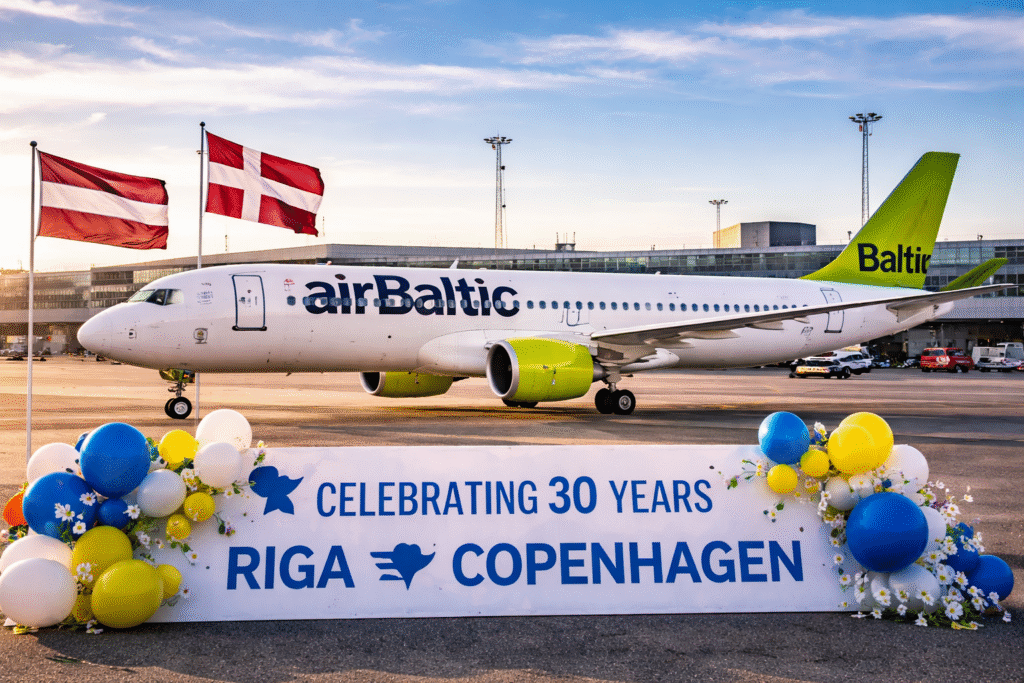
airBaltic is celebrating 30 years of uninterrupted air connectivity between Riga and Copenhagen, a route that has played a vital role in shaping Baltic aviation and regional tourism. Since its launch, this connection has supported business travel, cultural exchange, and leisure tourism between Latvia and Denmark.
The anniversary marks more than longevity. It reflects how airBaltic helped integrate the Baltic States into the wider Northern European travel network.
A Route That Shaped Early Expansion
The Riga–Copenhagen service began in the mid-1990s during airBaltic’s formative years. After introducing flights to Stockholm and Helsinki, Copenhagen became the airline’s third international destination. This strategic step strengthened links between the Baltics and Scandinavia at a time when regional air travel was rapidly evolving.
The route quickly gained popularity due to its reliability and convenient scheduling. Over time, it became one of the airline’s strongest and most consistent performers.
Supporting Tourism and Business Travel
For three decades, the Riga–Copenhagen route has served both leisure travelers and business passengers. Tourists benefit from easy access to historic cities, coastal attractions, and cultural events in both countries. Business travelers rely on the route for fast and efficient connections between key economic centers.
The service has also supported conferences, trade partnerships, and cross-border investments. These factors have contributed to stronger economic ties across the Baltic and Nordic regions.
Increased Frequencies and Better Flexibility
Today, airBaltic operates up to three daily flights between Riga and Copenhagen. This frequency offers travelers greater flexibility and improved day-trip options. Morning and evening departures suit both corporate schedules and leisure itineraries.
Passengers also gain access to smooth onward connections via Riga to more than 80 destinations. This makes the route a gateway between Scandinavia, the Baltics, and the rest of Europe.
Strong Presence in the Danish Market
Beyond Copenhagen, airBaltic continues to expand its footprint in Denmark. The airline operates multiple routes linking Denmark with Latvia and Estonia. Seasonal leisure services also connect Denmark with popular holiday destinations.
This strong presence reinforces Denmark’s role as a key market while positioning Riga as a central hub for Baltic travel.
Modern Fleet and Sustainable Operations
airBaltic operates one of Europe’s youngest fleets, built entirely around the Airbus A220-300 aircraft. These aircraft offer improved fuel efficiency, reduced emissions, and quieter operations. Passengers enjoy wider seats, larger windows, and enhanced cabin comfort.
The modern fleet supports the airline’s long-term sustainability goals. It also aligns with growing regional and European efforts to reduce aviation’s environmental impact.
Innovation in Passenger Experience
Innovation remains central to airBaltic’s strategy. The airline became the first in Europe to introduce complimentary high-speed satellite internet across its flights. This service allows passengers to stay connected for work or entertainment throughout the journey.
The airline plans to equip its entire fleet with this technology. This move reflects changing traveler expectations and the growing demand for digital connectivity in the air.
Choice for Every Traveler
airBaltic offers both Economy and Business Class on all scheduled flights. Economy Class focuses on efficiency and comfort, making it ideal for short-haul travel. Business Class provides additional space, premium services, and priority handling.
This dual-class approach allows the airline to serve a broad range of passengers, from budget-conscious tourists to premium business travelers.
From Regional Carrier to Global Connector
Over the past 30 years, airBaltic has evolved from a small regional airline into a major connector for the Baltic States. Its network now links the region to destinations across Europe, the Middle East, and beyond.
The Riga–Copenhagen route remains a cornerstone of this network. It symbolizes stability, growth, and long-term commitment to regional connectivity.
A Milestone with a Forward Focus
As airBaltic marks this 30-year milestone, the focus remains on future growth. Continued investment in fleet, technology, and route development will shape the next chapter.
The Riga–Copenhagen route stands as a powerful example of how consistent connectivity can drive tourism, strengthen economies, and bring regions closer together.
For more travel news like this, keep reading Global Travel Wire