The 2025 edition of the Global Tourism Forum in Brussels proved a landmark event for the industry, bringing together global leaders, investors and policymakers to shape the future of travel. Among the standout moments was the vibrant presence of Kazakhstan, and in particular its largest city Almaty, which emerged as a symbol of how urban innovation, digital transformation and sustainable tourism are now interlinked and essential for destination success.
Kazakhstan’s delegation made a powerful impression at the forum, showcasing a blend of tradition and modernity with a carefully crafted exhibit that drew on its rich cultural heritage. A traditional yurt stood as a focal point of its display, underscoring the country’s nomadic roots, while high-tech visuals and interactive installations communicated its ambitions in digital tourism, connectivity and green growth. The participation signaled the country’s aim to raise its global tourism profile and appeal to travellers interested in both culture and innovation.
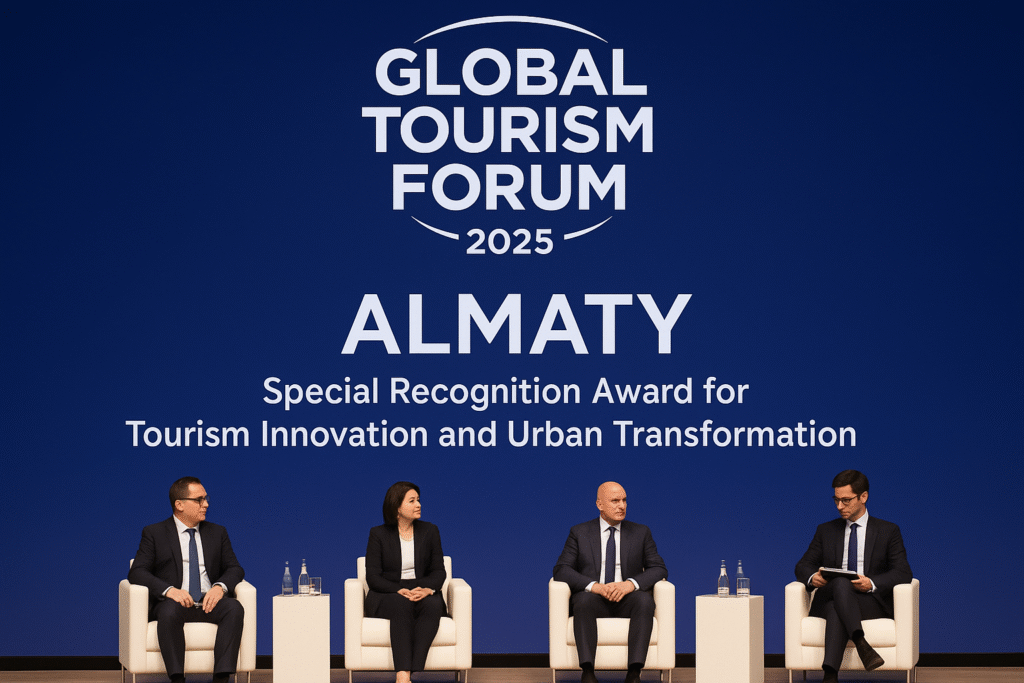
At the forum’s prestigious ceremony of the World Tourism Awards 2025, Almaty was awarded the Special Recognition Award for Tourism Innovation and Urban Transformation, in recognition of its strategic achievements in creating a city-destination that blends sustainable urban policies, modern infrastructure and natural landscape protection. The accolade highlighted how Almaty is emerging as a model destination in Central Asia for city-tourism that doesn’t compromise on liveability or environment.
What makes Almaty’s tourism rise noteworthy is its commitment to urban innovation while maintaining respect for its surrounding natural environment – the city lies at the foothills of the picturesque Trans-Ili Alatau mountain range. Over recent years, investments in pedestrian zones, cycling infrastructure, green spaces and modern transport systems have helped reshape its image from an industrial legacy city to a destination of lifestyle, culture and nature. Its tourism strategy reflects both domestic liveability improvements and international appeal.
The city’s airport and air-connectivity expansion further support its ambition as a regional hub. In 2025, Kazakhstan launched close to 20 new direct routes linking Almaty with Europe, Asia and the Middle East. These enhanced links make the city more accessible to international travellers, opening up weekend city-break options, multi-destination trips and regional stop-overs that flow beyond just Almaty into wider Central Asia experiences.
From a tourism-destination perspective, Almaty offers a dual appeal: vibrant urban culture and direct access to nature. Visitors can roam its modern districts, enjoy cafes, galleries and nightlife, then quickly access mountain resorts, glacial lakes, ski slopes or hiking trails. This combination makes it particularly attractive to travellers seeking something more than the standard city break. The recognition at the forum gives the city extra momentum and visibility in global markets.
The broader narrative of the Global Tourism Forum this year emphasised the transformation of tourism into a strategic pillar of economic growth, sustainability and digital innovation. Discussions ranged from artificial intelligence in travel planning and data-driven destination management to mobility solutions, hotel innovations, and the importance of cultural diplomacy in tourism. Almaty’s showcase aligned perfectly with these themes: an urban destination embracing green practices, tech integration and international access simultaneously.
For travel professionals and destination marketers, the message is clear: Almaty is emerging as a new contender for city-break, regional gateway and nature-plus-tourism proposition. The award and forum presence increase the city’s credibility, making it more likely to feature in curated itineraries, multi-destination tours and marketing campaigns targeting Europe, Asia and beyond. Tour operators may now treat it as more than a stop-over, but as a credible destination in its own right.
Domestic tourism in Kazakhstan also stands to benefit. With urban improvements raising quality of stay for visitors and locals alike, local residents will experience improved infrastructure, and international visitors will find more comfort, accessibility and amenities. The city’s long-term strategy appears well aligned: investing in sustainable growth, leveraging natural assets, expanding global connectivity and promoting cultural assets.
From a visitor’s standpoint, Almaty offers something increasingly rare in tourism: a city that feels modern and global, yet is directly linked to one of nature’s most striking landscapes. Expect boutique hotels, local gastronomy rooted in regional cuisine, cultural festivals, street-art scenes, and easily accessible outdoor adventures—all in one destination. With improved flight connections and a new global profile, Almaty has positioned itself as accessible, innovative and ready for international tourism.
Challenges remain, of course. Tourism growth needs to be managed so that infrastructure remains adequate, authenticity is preserved and environmental impact is minimised. But the recognition of Almaty’s progress signals to the industry that these issues are being taken seriously. The city’s urbanscape shows that modernization and heritage, convenience and nature, can be blended as part of a coherent tourism strategy.
In conclusion, the Global Tourism Forum 2025 achieved more than just networking and speeches—it amplified how tourism now operates at the intersection of culture, sustainability, connectivity and innovation. Almaty’s award and presentation in Brussels demonstrate how a city can transform itself and communicate that transformation to the global market. For travellers, tour operators and destination marketers alike, this means one thing: pay attention to Almaty. The destination is not waiting in the wings—it is stepping into the spotlight.
For more travel news like this, keep reading Global Travel Wire