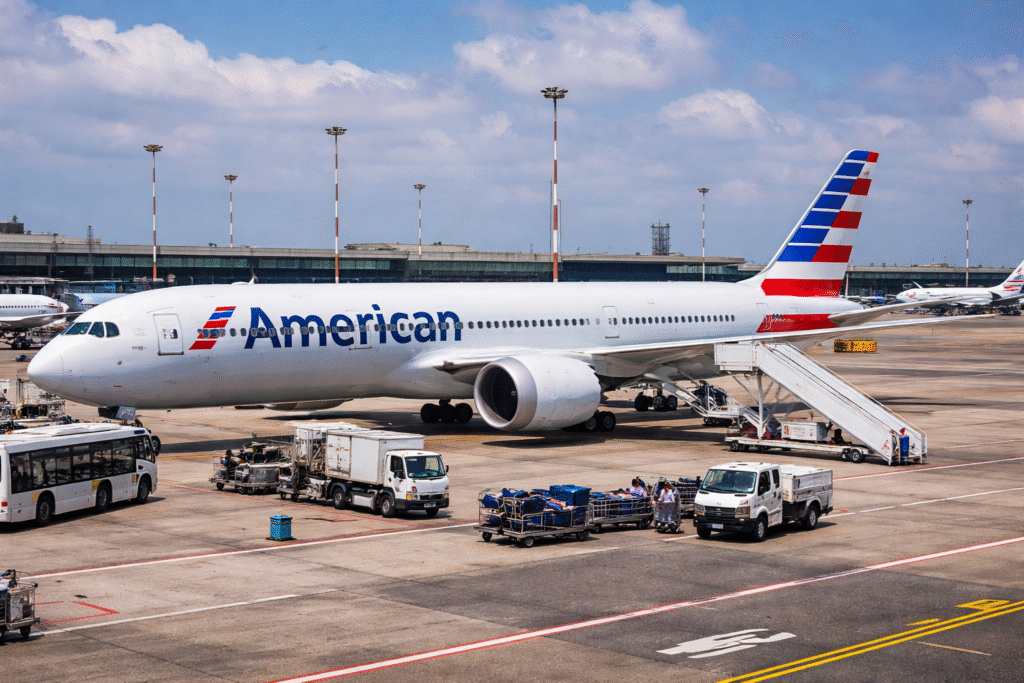
An international American Airlines flight from Philadelphia to Naples took an unexpected turn after an aircraft assignment error. The long-haul service, scheduled to land in southern Italy, diverted to Rome instead. The reason was not weather or safety concerns but aircraft compatibility with the destination airport.
The incident occurred in early June 2025 and drew attention across the travel and aviation sector. It highlighted how small operational decisions can lead to large disruptions for travelers.
What Went Wrong Before Takeoff
The flight was originally planned to operate with a Boeing 787-8 Dreamliner. Due to internal operational changes, the airline substituted it with a Boeing 787-9. While both aircraft belong to the same family, they differ in size, weight, and airport certification limits.
The larger 787-9 is not approved to land at Naples International Airport. That detail was missed during flight planning. The issue only became clear after the aircraft was already en route across the Atlantic.
Why Naples Airport Could Not Accept the Aircraft
Naples International Airport has strict operational limits. Its single runway, surrounding terrain, and apron space restrict the types of wide-body aircraft allowed to land. These limits exist to ensure safe operations in a densely populated and geographically constrained area.
The Boeing 787-9 has a higher maximum takeoff and landing weight than the 787-8. Even small differences in aircraft size can trigger certification issues. In this case, the aircraft did not meet the airport’s approved criteria.
Decision to Divert to Rome
Once the flight crew confirmed the mismatch, they made a precautionary decision. The aircraft diverted to Rome Fiumicino Airport, one of Italy’s largest international hubs. Rome is fully equipped to handle all variants of the Boeing 787.
The diversion added distance and time to the journey but ensured full compliance with aviation regulations. Weather conditions in Naples were clear, and the diversion was purely operational.
What Happened After Landing in Rome
After landing in Rome, American Airlines faced a complex logistical challenge. The airline needed to reposition aircraft, manage crew duty limits, and support passengers affected by the diversion.
Rome already hosted another American Airlines Dreamliner scheduled for a transatlantic departure. This allowed the airline to reshuffle aircraft assignments. The diverted Boeing 787-9 was reassigned to another long-haul route, while a certified Boeing 787-8 prepared to continue to Naples.
Crew Duty Limits Added Another Delay
International flight crews operate under strict duty time rules. By the time the aircraft swap was complete, the crew assigned to Naples had reached their legal working limit.
As a result, the onward flight to Naples could not depart immediately. The aircraft and crew remained overnight in Rome. The short hop to Naples, which takes under 40 minutes, operated the following day.
Passenger Experience and Rebooking
American Airlines did not release full details about passenger re-accommodation. However, airlines typically provide hotel stays, meals, and alternate transport in such situations. Some passengers may have continued to Naples by air the next day. Others may have used ground transport, including high-speed rail, which is common between Rome and Naples.
Despite the disruption, passengers eventually reached their destination. No injuries or safety concerns were reported.
Why Aircraft Certification Matters in Tourism
This incident highlights a lesser-known aspect of air travel. Not all airports can accept every aircraft, even within the same model family. Aircraft certification depends on runway length, pavement strength, taxiway design, and emergency response capacity.
For tourism destinations like Naples, which attract millions of visitors each year, airport limitations play a key role in route planning. Airlines must align aircraft size with local infrastructure to avoid disruptions.
Growing Pressure on Airlines Post-Pandemic
Global travel demand continues to rise. Airlines are operating full schedules with limited spare aircraft. This increases pressure on fleet planning teams and dispatch operations.
As networks grow denser, the risk of small planning errors also rises. Airlines must balance efficiency with precision. Incidents like this show why layered checks remain critical.
Lessons for Airlines and Travelers
For airlines, the event underscores the importance of strict pre-flight verification. Aircraft swaps may seem routine, but international routes require extra scrutiny.
For travelers, the incident is a reminder that diversions can happen for reasons beyond weather or technical faults. Flexibility and travel insurance remain valuable, especially on long-haul journeys.
A Cautionary Moment for Global Aviation
American Airlines resolved the situation without compromising safety. Still, the diversion serves as a cautionary example for the aviation industry. As travel demand grows, operational accuracy becomes even more important.
Airlines that invest in stronger coordination and planning systems will reduce disruptions and protect passenger trust. For tourism-driven destinations, smooth air access remains essential to sustaining growth.
Final Takeaway
The Rome diversion was unexpected but managed efficiently. It revealed how airport limits, aircraft selection, and crew rules intersect in modern aviation. As global travel continues to rebound, attention to these details will shape the future passenger experience.
For more travel news like this, keep reading Global Travel Wire