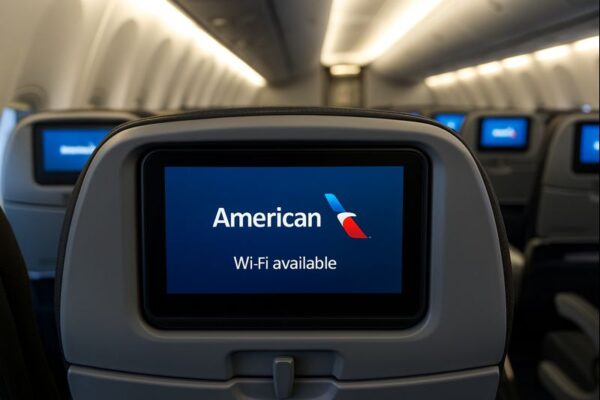
American Airlines is preparing for one of its most ambitious upgrades to date. The carrier will introduce free in-flight Wi-Fi for AAdvantage members, marking a major shift in U.S. air travel. The testing phase begins in December 2025. A full rollout is planned for early 2026. This move aims to meet the rising demand for fast, reliable connectivity in the sky and to keep pace with other major U.S. airlines that have already expanded free Wi-Fi services.
Testing Phase Begins in Late 2025
American Airlines will start by offering the service on a small selection of flights. The goal is simple: test the network, study real-time performance, and refine the experience before the nationwide rollout.
Passengers will not receive advance notice about the test flights. Instead, flight attendants will make in-cabin announcements. This approach allows the airline to monitor demand without overwhelming the system during the early phase.
The free Wi-Fi will run on aircraft equipped with Viasat or Intelsat systems. These are high-speed networks already used across much of the airline’s narrowbody fleet. However, aircraft using Panasonic systems—primarily widebody jets—will not be part of the early trial. As a result, long-haul international flights will not offer free Wi-Fi during the testing period.
Fleet Upgrades to Expand Connectivity
American Airlines currently operates a mixed fleet with different digital infrastructures. To prepare for the launch, the airline is upgrading many of its long-haul aircraft. Several Boeing 777-300ER and 777-200ER aircraft are already undergoing modifications to install Viasat systems.
By the end of 2026, American expects that about 90% of its fleet will support free Wi-Fi. This includes most narrowbody jets, which operate the bulk of domestic and regional services. The upgrades will allow the airline to extend free Wi-Fi to long-haul flights in the next phase of the rollout.
Aircraft modernization projects are already in motion. American is aligning the upgrades with its broader cabin refresh program, which includes new seating configurations, improved lighting, and better entertainment options. Together, these changes are designed to enhance the overall travel experience.
Why Free Wi-Fi Matters to Travelers
Reliable connectivity has become a top priority for modern travelers. Many passengers want to work, communicate, and stream content during flights. Business travelers rely on Wi-Fi to maintain productivity. Families value the ability to keep children entertained. Free Wi-Fi also supports digital boarding passes, loyalty apps, and contactless services, which are now standard in U.S. aviation.
American Airlines recognizes this shift. By offering complimentary Wi-Fi, the airline hopes to strengthen its AAdvantage program. The benefit encourages passengers to enroll, remain active, and book more flights. It also creates a smoother digital experience from check-in to landing, which has become a strong competitive advantage in today’s airline industry.
Strong Competition Among U.S. Carriers
The race to offer free Wi-Fi is heating up. Delta Air Lines already provides complimentary connectivity to its SkyMiles members on most domestic aircraft. United Airlines has expanded its high-speed service using Starlink technology, bringing faster satellite coverage to many routes.
For American Airlines, the new offering helps close the gap. It also positions the carrier for future technological advancements. As turbulence-free satellite networks expand worldwide, airlines that embrace early upgrades are more likely to deliver a consistent passenger experience across their fleets.
Benefits for Tourism and Business Travel
The rollout also supports the tourism sector. Travelers visiting the United States often rely on digital navigation tools, mobile research, and communication apps. Free in-flight Wi-Fi makes their journey smoother from the moment they board.
Business travelers will also gain from better connectivity during transcontinental flights. Many fly long routes linking major hubs such as New York, Los Angeles, Chicago, and Miami. Access to free Wi-Fi supports remote work and increases productivity across these high-traffic routes.
The move aligns with ongoing improvements in U.S. aviation infrastructure and reflects the country’s push toward modern, tech-driven travel solutions.
Full Launch Expected in January 2026
American Airlines plans to activate full systemwide access starting January 2026. By then, most narrowbody aircraft and a growing number of widebody jets will be ready. The airline expects both domestic and international passengers to benefit.
This expansion will mark one of the largest free Wi-Fi rollouts in the world. It will also set a new standard for U.S. air travel. Passengers can expect smoother streaming, more stable video calls, and faster downloads during flights.
A New Era of Connected Travel
American Airlines’ free Wi-Fi initiative is more than a technological upgrade. It represents a shift toward a fully connected travel environment. With more aircraft set to join the program, the airline is building a future where passengers can remain online from takeoff to landing.
As U.S. air travel evolves, features like free Wi-Fi, refreshed cabins, and enhanced entertainment systems will define the next generation of flying. American Airlines’ early commitment signals its intention to lead that transformation.
For more travel news like this, keep reading Global Travel Wire