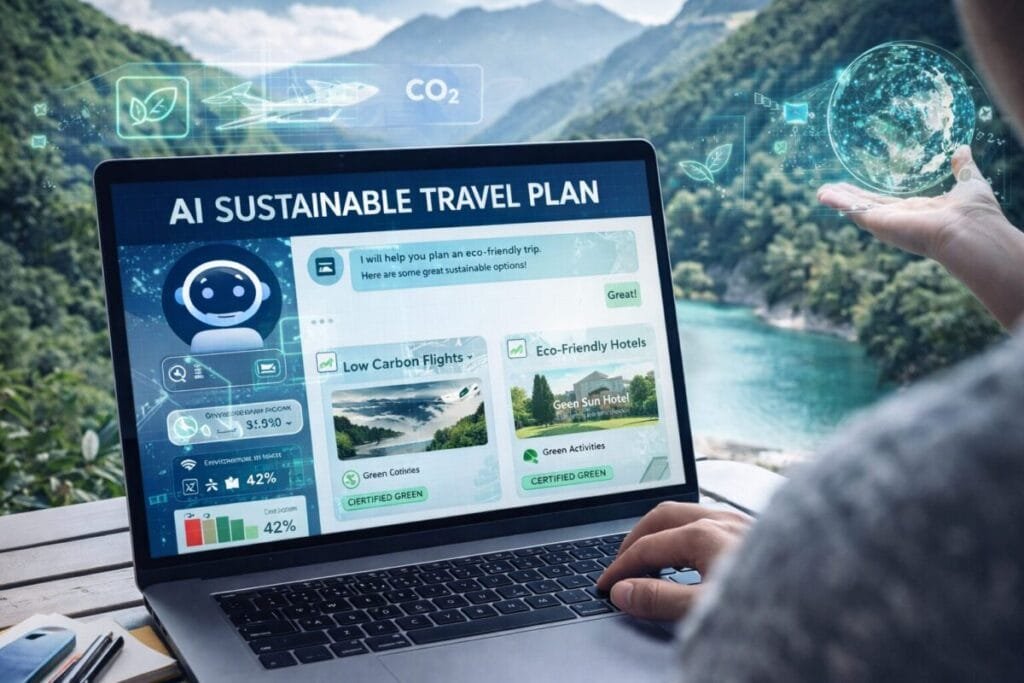
The travel industry continues to evolve rapidly as artificial intelligence reshapes how people plan and experience trips. In 2026, AI tools have become essential for travelers who want efficient planning combined with environmentally responsible choices.
Travelers increasingly seek eco-friendly options that reduce environmental impact while maintaining comfort and convenience. AI platforms now analyze vast datasets to recommend greener transportation, sustainable accommodations, and responsible activities. This shift supports global tourism efforts that promote sustainability and climate awareness.
Industry experts believe AI will play a major role in encouraging responsible travel behavior. By simplifying planning and highlighting sustainable options, technology helps travelers make informed decisions that align with environmental values.
Smart Planning Tools Simplify Eco-Conscious Travel
AI-powered planning tools allow travelers to organize trips faster than traditional methods. These platforms compare flights, trains, accommodations, and local experiences while highlighting low-emission options. Travelers receive recommendations tailored to their preferences and sustainability goals.
Modern AI systems evaluate factors such as carbon emissions, energy-efficient hotels, and local transportation choices. Travelers can quickly compare options without extensive manual research. This automation saves time and encourages more people to adopt eco-friendly travel habits.
Sustainable tourism organizations emphasize the importance of informed decision-making. AI tools make this process easier by presenting clear comparisons between traditional and environmentally responsible alternatives.
Personalized Recommendations Support Responsible Choices
One of AI’s most significant advantages lies in personalization. Instead of offering generic suggestions, intelligent systems analyze traveler preferences, budget, and sustainability priorities. The result is a customized itinerary designed to meet individual needs.
For example, travelers who prefer rail journeys over flights receive train-based routes when available. Those interested in eco-certified accommodations receive filtered recommendations that match sustainability standards.
Personalization improves satisfaction while supporting responsible travel behavior. Travelers enjoy tailored experiences that reflect both their interests and environmental values. This combination increases confidence in choosing sustainable options.
Real-Time Updates Improve Efficiency and Reduce Waste
AI systems provide real-time updates that help travelers adapt quickly to changing conditions. Weather disruptions, flight delays, or local events often affect travel plans. AI tools monitor these changes and suggest alternative solutions immediately.
This adaptability reduces wasted time and unnecessary resource consumption. Travelers avoid long delays, unnecessary travel segments, or inefficient routes. Efficient planning supports sustainability by minimizing excess travel and emissions.
Real-time insights also improve traveler safety and comfort. Notifications provide timely information that helps travelers stay organized and prepared throughout their journey.
Eco-Friendly Travel Tools Gain Popularity
Several AI-driven platforms now focus specifically on sustainable tourism planning. These tools allow users to set environmental goals before building itineraries. Travelers can prioritize eco-certified accommodations, low-carbon transportation, and locally owned businesses.
Tourism organizations encourage technology adoption because digital solutions increase awareness of sustainable practices. Travelers often discover green alternatives that they might not have considered independently.
As more users adopt AI tools, demand for sustainable travel options continues to grow. Hotels, airlines, and tour operators respond by improving environmental performance to remain competitive in the evolving market.
AI Encourages Data-Driven Tourism Management
Artificial intelligence benefits not only travelers but also tourism operators. Data insights help businesses understand visitor behavior and adjust services accordingly. Predictive analytics can forecast travel demand, which allows destinations to manage crowds and protect natural resources.
Governments and tourism boards increasingly use digital tools to support sustainable development goals. AI-driven data helps policymakers balance economic growth with environmental protection. This approach ensures tourism remains beneficial for both communities and ecosystems.
Growing Trust in AI Travel Planning
Recent industry research suggests that a growing percentage of travelers rely on AI recommendations when planning trips. Users appreciate accurate insights, personalized suggestions, and simplified decision-making.
Trust continues to grow as platforms demonstrate reliability and transparency. Travelers recognize that AI enhances efficiency while maintaining control over final decisions. The technology acts as a guide rather than a replacement for personal judgment.
Education also plays a role in adoption. Travelers who understand sustainability concepts often rely on AI tools to help implement eco-friendly practices more easily.
Practical Tips for Using AI in Sustainable Travel Planning
Travelers can maximize AI benefits by defining sustainability goals before starting their planning process. Clear priorities help systems generate more relevant recommendations. For example, travelers may focus on reducing emissions, supporting local communities, or minimizing waste.
Combining AI suggestions with independent research ensures balanced decision-making. Travelers should verify important details such as certifications, reviews, and local regulations. This approach provides both efficiency and reliability.
AI tools work best when travelers actively engage with them. Adjusting preferences and exploring alternative recommendations often leads to more creative and sustainable travel solutions.
The Future of Eco-Friendly Travel Powered by AI
Artificial intelligence continues to redefine the relationship between technology and tourism. As systems evolve, travelers will gain access to even more advanced planning features, including predictive itinerary adjustments and deeper sustainability insights.
Future innovations may include automated carbon tracking, smarter route optimization, and immersive digital assistants that guide travelers throughout their journeys. These developments will further integrate sustainability into everyday travel planning.
The growing adoption of AI signals a shift toward responsible tourism as a mainstream practice. Technology helps travelers align personal values with practical choices, making eco-friendly travel easier and more accessible than ever.
By combining intelligent automation with sustainability principles, the travel industry enters a new era where responsible exploration becomes both convenient and rewarding.
For more travel news like this, keep reading Global Travel Wire