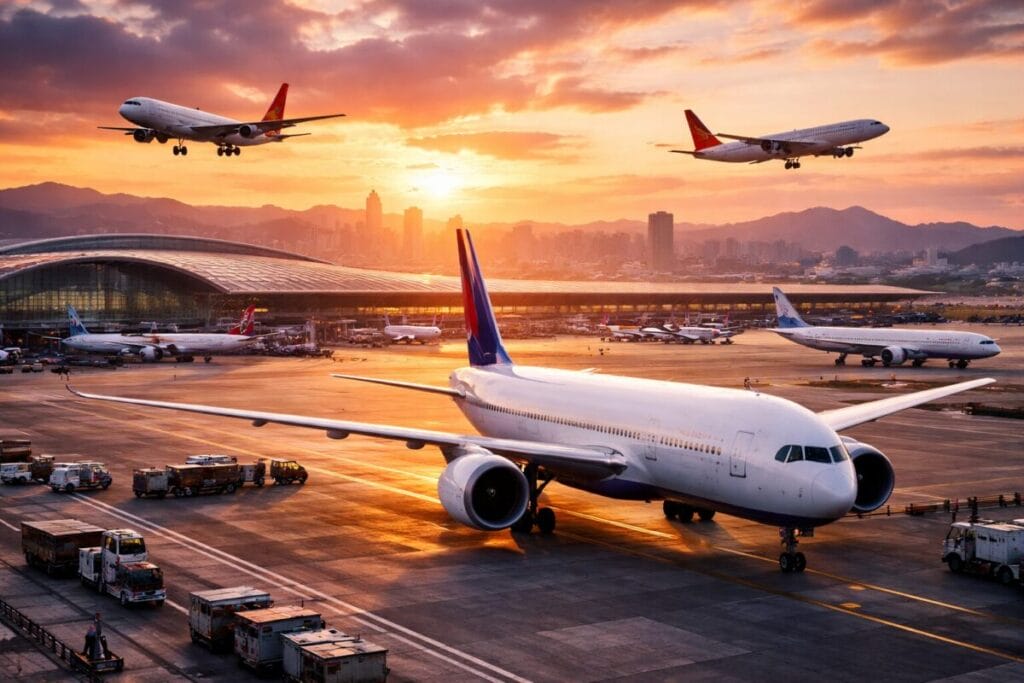
Asia-Pacific airlines continue to dominate global aviation performance in 2025. The region now holds the largest share of worldwide passenger demand. Airlines based in Asia-Pacific account for over one-third of global revenue passenger kilometers. This share places them ahead of European and North American carriers.
Strong regional demand drives this leadership. Expanding middle-class travel, restored international routes, and tourism recovery support sustained growth. Governments across the region also prioritize aviation as an economic driver. These factors strengthen Asia-Pacific’s position in global air travel.
Passenger Demand and Capacity Rise Together
Airlines across Asia-Pacific recorded solid traffic growth during 2025. Passenger demand increased faster than capacity. This trend improved efficiency and profitability across many carriers.
Available seat capacity expanded steadily to meet returning travelers. International routes achieved record-high load factors. Airlines filled more seats while controlling operational expansion. This balance reflects disciplined planning across the region.
Popular hubs such as Singapore, Tokyo, Seoul, and Bangkok experienced strong inbound traffic. Leisure and business travel both contributed to demand growth. Airlines focused on restoring connectivity rather than rapid overexpansion.
Supply Chain Disruptions Slow Full Recovery
Despite strong performance, airlines face serious operational constraints. Aircraft delivery delays remain the biggest challenge. Engine availability and maintenance backlogs limit fleet expansion.
Manufacturers struggle to meet demand due to labor shortages and component delays. Airlines extend the service life of existing aircraft to fill capacity gaps. This approach increases maintenance pressure and operating costs.
Industry estimates place supply chain losses in the billions. Airlines absorb higher expenses while attempting to protect ticket affordability. These pressures reduce potential profit gains despite high passenger volumes.
Aircraft Orders Remain Constrained
Airlines show limited appetite for new aircraft orders in the near term. Order backlogs already stretch many years into the future. Manufacturers prioritize fulfilling existing commitments over new sales.
Uncertainty around global trade policies influences purchasing decisions. Airlines prefer flexibility over long-term capital commitments. Leasing arrangements offer a practical alternative during this period.
Lower fuel prices provide partial cost relief. However, operational uncertainty continues to shape cautious planning strategies. Airlines focus on efficiency rather than rapid fleet expansion.
Aging Fleets Create Operational Pressure
Aircraft fleets across Asia-Pacific continue to age. Many carriers operate planes older than pre-pandemic averages. Aging fleets increase maintenance demands and reduce fuel efficiency.
Airlines invest more resources in inspections, repairs, and spare parts. These costs limit budget flexibility for service upgrades. Production recovery timelines suggest relief may not arrive before 2027.
Leasing markets remain active across the region. Airlines use leased aircraft to bridge supply gaps and maintain schedules. This strategy offers short-term stability amid manufacturing delays.
Aerospace Manufacturing Shifts Across Asia
The Asia-Pacific aerospace sector continues to diversify. Manufacturing activity expands beyond traditional hubs. Countries such as India and Malaysia grow their aerospace capabilities rapidly.
Governments support local manufacturing through investment incentives and skills programs. Composite materials and precision components drive growth opportunities. Manufacturers benefit from global demand for diversified sourcing.
Airframe producers increasingly rely on multiple suppliers. This shift strengthens supply chain resilience across Southeast Asia. The region positions itself as a long-term aerospace manufacturing partner.
Defense Aviation Gains Momentum
Military aviation markets gain importance across Asia-Pacific. Regional governments increase defense spending amid shifting security priorities. Domestic manufacturers seek greater participation in defense programs.
Countries invest in aircraft maintenance, unmanned systems, and advanced materials. Defense-related aviation activity complements commercial sector growth. This diversification supports industry stability during market fluctuations.
Aviation exhibitions and trade events highlight growing defense ambitions. Regional players showcase capabilities to international partners. This trend reshapes the broader aerospace ecosystem.
What Travelers Should Expect in the Coming Years
Air travel demand across Asia-Pacific will remain strong. Flights will continue to operate at high capacity levels. Popular routes may experience limited seat availability.
Early booking will remain essential for competitive pricing. Airlines prioritize yield management and seat optimization. Travelers should plan well in advance for peak travel periods.
Older aircraft may remain in service longer. Passengers seeking newer cabins should research fleet details before booking. Flexibility will help travelers navigate schedule changes and capacity constraints.
Outlook for Asia-Pacific Aviation
Asia-Pacific airlines enter the next decade with confidence and caution. Strong demand supports continued leadership in global aviation. Structural challenges require careful management and strategic planning.
Airlines will focus on efficiency, reliability, and customer experience. Governments and manufacturers must align to resolve supply chain bottlenecks. Collaboration will define the region’s success.
Asia-Pacific aviation will continue shaping global travel trends. The region remains a central force in the future of air transport.
For more travel news like this, keep reading Global Travel Wire