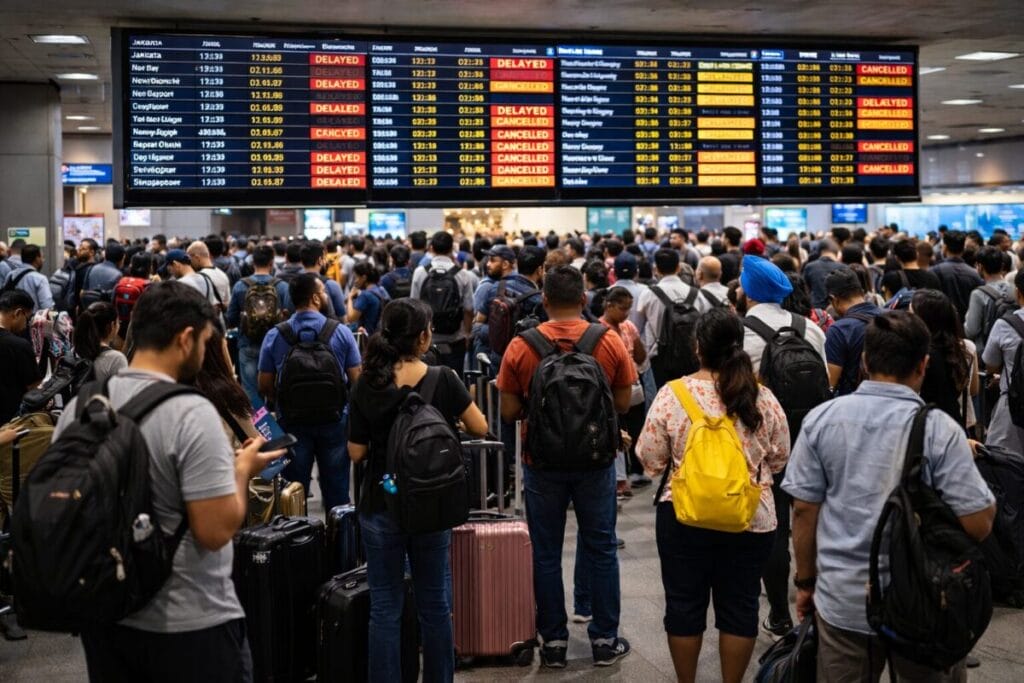
Thousands of passengers across Asia faced chaotic travel conditions as airports in India, Japan, Thailand, Singapore, Malaysia and Indonesia dealt with widespread airline delays and cancellations. The disruptions stranded travelers in terminals and forced mass itinerary changes across major transit hubs. Airlines struggled to maintain schedules as delays mounted throughout the day and spilled into the evening peak.
Indira Gandhi International Airport in Delhi recorded the highest disruption volume among the affected airports. Hundreds of delayed departures clogged the terminal and sparked long wait times for passengers seeking rebooking options. The problem quickly spread across Asia as major airlines attempted to recover slots and restore normal operations.
Asia Experiences Severe Congestion Rather Than Grounding
The disruption pattern differed from typical weather shutdown scenarios. Delays far outnumbered cancellations, suggesting congested runways, staffing challenges and strained slot allocations rather than grounded equipment. More than two thousand delays and fewer than one hundred cancellations were recorded across the affected airports.
Airports such as Singapore Changi and Kuala Lumpur International saw hundreds of delayed flights without a single cancellation. Transit passengers filled lounges and food courts while crews worked to turn aircraft quickly. Many travelers described confusion over departure windows as airlines adjusted slot times throughout the afternoon.
Delhi Leads Region in Disruption Intensity
Delhi topped the leaderboards with more than six hundred delays and dozens of cancellations. IndiGo, Air India and Air India Express faced heavy operational stress across domestic and international routes. Long-haul connections faced the risk of misalignment as inbound passengers attempted to catch onward flights to Europe, Southeast Asia and the Middle East.
Travelers in Delhi reported long lines at information counters and gate areas as airlines issued rolling updates. Baggage delays further complicated travel plans for passengers attempting to connect to secondary cities or international gateways.
Singapore and Kuala Lumpur Face Heavy Terminal Congestion
Singapore Changi, one of Asia’s busiest transfer hubs, recorded nearly four hundred delays. Singapore Airlines and Scoot shouldered the majority of schedule impacts. Passengers struggled to adjust bookings for onward flights to Australia, Japan and Southeast Asian leisure destinations. Terminal monitors flashed updated departure times throughout the day as crews worked to reduce turnaround delays.
Kuala Lumpur International also recorded more than three hundred delays. AirAsia and its affiliates accounted for a large segment of the regional disruptions. Malaysia Airlines also dealt with schedule pressure on flights connecting Kuala Lumpur with Bangkok, Singapore, Jakarta and other major Southeast Asian cities.
Bangkok and Mumbai Experience Regional Travel Strain
Bangkok’s Suvarnabhumi Airport recorded more than three hundred delays as Thai Airways, Thai VietJet Air and regional carriers fought to maintain schedules. Passengers traveling to beach destinations such as Phuket and Koh Samui faced lengthy rebookings during the early evening peak.
Mumbai also logged more than three hundred delays and several cancellations. IndiGo and Air India played a major role in the disruption scope as domestic flights backed up during the afternoon. Flight crewing and slot availability intensified as Mumbai attempted to push evening flights through heavy congestion.
Indonesia and China Also Report Major Travel Backlogs
Jakarta’s Soekarno-Hatta International Airport experienced more than two hundred delays and a dozen cancellations. Batik Air and Lion Air suffered the highest impact as passengers waited for revised boarding times. Travelers connecting to Bali endured afternoon rebooking and overnight hotel stays in some cases.
China’s Chengdu Tianfu Airport recorded hundreds of delays and nearly ten cancellations. Domestic carriers bore the bulk of the schedule interruptions. Tokyo Haneda also reported more than one hundred delays and several cancellations, impacting Japan Airlines and ANA routes to domestic and regional destinations.
Airlines Struggle with Network Complexity
IndiGo led all carriers with more than four hundred delays and dozens of cancellations across Indian hubs. Singapore Airlines also recorded high volumes of delays across Singapore, Bangkok and Phuket. AirAsia’s network absorbed more than two hundred delays across Malaysia, Singapore and Thailand. Scoot, Batik Air and Air India also posted high disruption totals across different regions.
Airlines that rely on tight turnarounds and high aircraft utilization felt the consequences immediately. Analysts note that carriers across Asia operate dense schedules with limited buffers, which increases vulnerability during peak travel windows.
Travelers Seek Rebooking Solutions
Passengers across multiple airports pulled out mobile phones to monitor airline apps and boarding screens. Some travelers contacted airlines directly to check for hotel arrangements or onward travel options. Others checked for open seats at alternative airports to bypass heavy congestion.
Travel advisors recommended that passengers monitor multiple flights, avoid tight same-day connections and hold travel insurance for complex itineraries. Families traveling for holidays or weddings faced stress as connections evaporated and hotels adjusted check-in times for delayed guests.
Conclusion
Asia’s aviation network endured significant strain as delays surged across eleven major airports. The disruptions affected both low-cost and full-service airlines and touched cities across India, Southeast Asia, Japan and China. Travelers confronted long waits, missed connections and restructured itineraries as airlines struggled to restore schedules. The event underscored how interconnected Asian air travel has become and how rapidly delays in major hubs can cascade across entire regions.
For more travel news like this, keep reading Global Travel Wire