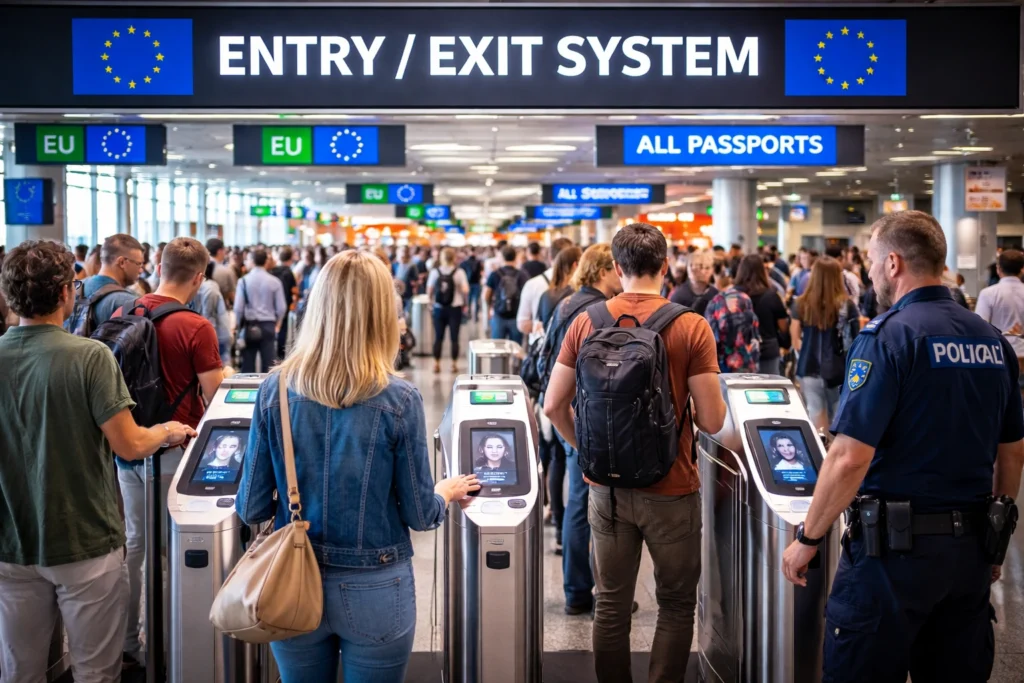
Athens International Airport has issued a warning about possible travel delays. The delays will begin from March 30, 2026.
The European Union will introduce a new Entry Exit System across the Schengen area. This system replaces manual passport stamping with biometric checks.
Airport authorities expect longer processing times during the early stages. Travelers should prepare for additional procedures at border control.
EU Entry Exit System Brings Major Changes
The new system will record entries and exits digitally. It will collect fingerprints, facial images, and passport details.
Authorities aim to improve border management and security through this system. The change reflects a broader shift toward digital travel solutions.
However, the initial rollout may slow down passenger processing. Travelers must adapt to new procedures at airports and border points.
Who Will Be Affected by the New Rules
The system applies to non-EU travelers visiting the Schengen region. It covers both visa-required and visa-exempt visitors.
Travelers can stay for up to 90 days within a 180-day period. Each entry and exit will be recorded digitally.
Border authorities will track overstays more efficiently. This feature strengthens compliance with visa regulations.
Short-Term Impact on Travel and Tourism
The introduction of biometric checks may cause temporary disruptions. Passenger flow could slow during peak travel periods.
Athens Airport expects longer queues at passport control counters. Travelers may need extra time to complete registration.
This situation could affect flight schedules if delays increase. Airlines may also adjust boarding times to manage passenger flow.
Despite these challenges, the system supports long-term improvements. It aims to create a more secure and efficient travel environment.
What Travelers Should Expect at Athens Airport
Airport officials advise passengers to arrive early for departures. Travelers should reach the airport at least two and a half hours before flights.
Additional time will help complete biometric checks and security procedures. Late arrivals may risk missing flights due to longer processing times.
Passengers should keep documents ready and follow instructions from staff. This preparation can reduce delays during the process.
How the Biometric Registration Process Works
Travelers will complete biometric registration at border control. They must present passports and provide fingerprints and facial scans.
Some airports may offer self-service kiosks for faster processing. These machines allow travelers to scan documents and submit data.
After initial registration, passengers will meet border officials for verification. This step ensures accuracy and security.
First-time users may take longer to complete the process. However, repeat travelers may experience faster processing later.
Gradual Rollout Across Europe
The EU has introduced the Entry Exit System in phases since 2025. Full implementation will continue across all member states.
This gradual rollout allows authorities to test and refine the system. It also helps airports prepare for increased passenger volumes.
Over time, the system will become more efficient and automated. Travelers will benefit from faster border checks in the future.
Long-Term Benefits for Tourism
The Entry Exit System supports the growth of European tourism. It improves security while simplifying border procedures.
Automated systems will reduce reliance on manual checks. This change will speed up processing once fully implemented.
Tourists will enjoy smoother travel experiences across the Schengen region. The system will also help manage increasing visitor numbers.
Preparing for a New Travel Experience
Travelers should stay informed about new procedures before their trip. Awareness can help avoid confusion and delays.
Airports and airlines may provide updated guidelines for passengers. Following these instructions will improve the travel experience.
Planning ahead remains essential during the transition period. Early arrival and preparation will reduce stress for travelers.
Conclusion
Athens International Airport has highlighted the challenges of the new EU Entry Exit System. The introduction of biometric checks will change the travel process across Europe.
Passengers may face delays during the early stages of implementation. However, the system will improve efficiency and security over time.
As Europe adapts to digital border management, travelers will benefit from smoother and safer journeys.
For more travel news like this, keep reading Global Travel Wire