New Zealand’s tourism industry is preparing for one of its most challenging cruise seasons in recent years. Auckland, the nation’s largest city and busiest port, is facing a 40% reduction in cruise ship arrivals. Tauranga, Marlborough, and other regional ports are also expected to feel the impact, raising concerns about the future of the country’s cruise tourism sector.
This decline has significant economic implications. Cruise passengers bring direct spending power to local businesses, from restaurants and souvenir shops to tour operators and transport providers. For Auckland alone, cruise tourism generated around $201 million in the 2023/24 season, underscoring just how important the sector is for the city’s economy.
Auckland at the Center of Concern
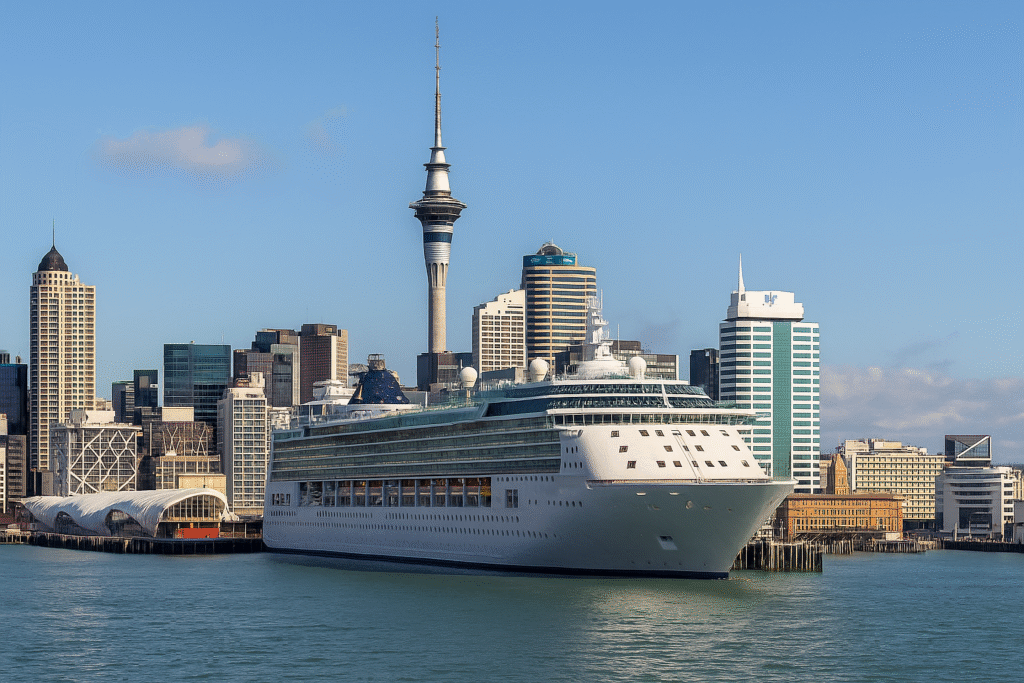
Auckland’s bustling waterfront has long been a hub of activity during the cruise season. Visitors disembark to explore landmarks, shop, and enjoy cultural attractions, leaving a strong imprint on the city’s tourism and retail economy. With fewer ships expected this season, the waterfront could appear quieter, raising alarms for businesses dependent on cruise traffic.
Karen Thompson-Smith, head of Auckland Council’s tourism division, has noted that the drop in arrivals could affect not only tourism operators but also small businesses across the central city. The loss of cruise passengers impacts everything from day tours to cafes and local markets.
Tauranga and Marlborough Also Brace for Losses
The ripple effect of this decline extends beyond Auckland. Tauranga, one of the most popular cruise destinations in the Bay of Plenty, relies heavily on passenger arrivals. Cruise tourists often use Tauranga as a gateway to Rotorua’s geothermal attractions and Maori cultural experiences. With fewer ships scheduled, local operators may face reduced bookings and job uncertainty.
Marlborough, renowned for its wine tours and scenic landscapes, is also preparing for a downturn. Regional leaders acknowledge the broader challenge for ports outside Auckland, where tourism is more closely tied to cruise arrivals.
Why the Drop in Arrivals?
The reduction is not due to declining traveler interest. In fact, demand for New Zealand’s dramatic coastlines, indigenous culture, and outdoor experiences remains strong. Instead, the problem lies in how cruise companies plan itineraries years in advance.
Several factors are working against New Zealand:
- Logistical challenges: The long distance from key markets makes it harder to fit New Zealand into global cruise schedules.
- High operational costs: Rising port fees and docking expenses reduce the country’s competitiveness compared to alternatives in Asia or Australia.
- Weather risks: The South Pacific’s unpredictable conditions make long-haul itineraries less appealing for some operators.
For cruise companies balancing costs, efficiency, and profitability, New Zealand has become a tougher destination to prioritize despite its strong appeal.
Lingering Effects of the Pandemic
The cruise industry worldwide is still rebounding from the COVID-19 pandemic, which stalled global operations for months. Many cruise lines continue to make cautious decisions about which ports to serve, focusing on destinations that are logistically simpler and more cost-effective.
New Zealand, while attractive, faces additional scrutiny because of past logistical barriers and its relatively small port infrastructure. This has placed the country at a disadvantage as operators finalize itineraries.
The Economic Ripple Effect
Cruise ship visits are more than just a tourism boost—they create a multiplier effect across the economy. Passengers and crew members spend on food, excursions, and shopping, while operators contribute through port fees and ship services.
The downturn is expected to hit:
- Hospitality venues: Cafes, bars, and restaurants near ports.
- Retail outlets: Shops selling souvenirs, clothing, and local products.
- Tour operators: Companies providing excursions to attractions like Rotorua, Waiheke Island, and Marlborough wineries.
- Transport services: Buses, shuttles, and taxis that cater to cruise traffic.
With fewer arrivals, the circulation of revenue across these sectors will inevitably shrink, raising concerns for both urban centers and regional towns.
Hope for Recovery
Despite the current downturn, industry insiders remain cautiously optimistic. Tourism leaders believe that if New Zealand can improve port facilities, lower docking costs, and streamline operations, it can regain its competitiveness.
Investments in infrastructure modernization and enhanced visitor experiences are already being discussed. By offering cruise passengers smoother disembarkation, better shore facilities, and unique cultural programming, the country hopes to stand out in future itineraries.
Marketing efforts also remain strong. New Zealand continues to promote its natural beauty, Maori heritage, and adventure activities to international cruise operators. The goal is to remind the world that the country offers a combination of landscapes and culture that is difficult to match.
Diversifying Beyond Cruise Tourism
New Zealand is also exploring ways to reduce its reliance on cruise arrivals. Tourism boards are expanding promotion of eco-tourism, cultural immersion, and adventure activities. Hiking, wildlife watching, and Maori cultural experiences are being marketed as integral to New Zealand’s tourism identity.
This strategy not only helps offset cruise losses but also attracts travelers seeking longer, independent stays, which may generate more per-visitor spending than day-tripping cruise passengers.
Long-Term Strategies for Sustainability
The government, alongside industry partners, is prioritizing long-term recovery and resilience. Key strategies include:
- Refining port operations to make itineraries more attractive.
- Building partnerships with global cruise operators.
- Enhancing sustainability practices to appeal to eco-conscious travelers.
- Promoting responsible tourism that minimizes environmental impact.
These efforts aim to position New Zealand not just as a cruise destination, but as a comprehensive tourism hub that offers enriching, low-impact experiences.
Conclusion: Navigating Rough Seas with Optimism
The projected 40% decline in cruise ship arrivals is a serious challenge for Auckland, Tauranga, and New Zealand’s wider tourism economy. Yet the country has shown resilience in the past, bouncing back from global downturns and unexpected challenges.
By investing in infrastructure, marketing its unique offerings, and diversifying tourism beyond cruises, New Zealand is working to secure its place on the global travel map. While the upcoming season may be difficult, the long-term horizon suggests that New Zealand’s cruise tourism industry can recover—and perhaps emerge stronger, more sustainable, and more resilient than ever.
For more travel news like this, keep reading Global Travel Wire