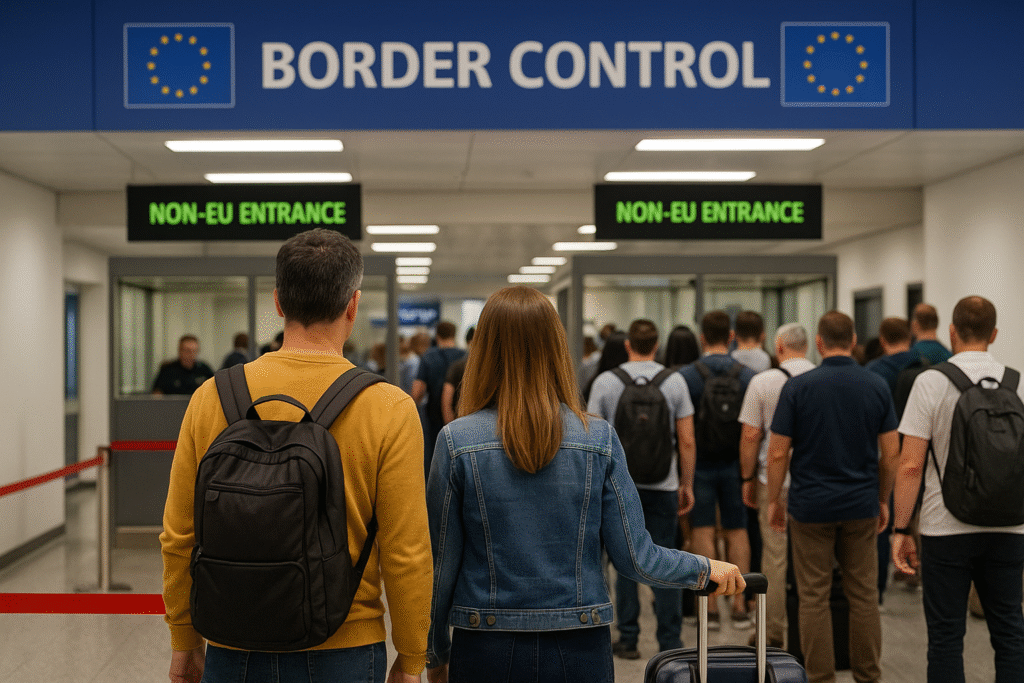
Europe Brings Big Changes for Travellers
Australian tourists planning a European holiday should prepare for a new way of crossing borders. Starting this week, Europe will begin rolling out the European Entry/Exit System (EES). This digital system replaces the old practice of stamping passports at border control. Instead, travellers must register personal details and biometric data, including fingerprints and facial scans, when entering the Schengen Zone.
Officials say the new approach will strengthen security, reduce illegal migration, and modernize travel across the continent. While the changes aim to improve efficiency, Australians should expect longer waits at border checkpoints in the early stages.
What the Schengen Zone Means for Australians
The Schengen Zone is a border-free travel area that covers 29 countries in Europe. Most of these are EU members, but it also includes non-EU nations such as Iceland, Liechtenstein, Norway, and Switzerland. With Schengen rules, travellers can move between countries without additional checks, which makes multi-country trips much easier.
The United Kingdom does not belong to the Schengen Zone, so Australians visiting the UK will still go through traditional border controls. The new EES rules apply only to Schengen countries.
What the New Entry/Exit System Involves
The EES replaces manual passport stamping with a fully digital process. Australians visiting Europe for up to 90 days must now provide the following:
- Passport details and travel documents
- Fingerprints for biometric records
- A facial image for identity verification
Border authorities will use the system to track entries and exits automatically. The data will help detect overstays, fraudulent documents, and potential security risks. It will also give law enforcement access to accurate travel records, which the EU believes is key to fighting crime and terrorism.
Why Europe Introduced the EES
The EU has developed the system in response to rising security challenges and the need for modern border management. Traditional stamps in passports are easy to lose, misread, or falsify. A digital system reduces human error and speeds up document checks.
The move also reflects Europe’s broader strategy to address irregular migration. By using biometric verification, the system will make it harder for travellers to overstay or re-enter under different identities.
Countries Where the Rules Apply
The EES applies to all Schengen members. That includes popular destinations for Australians such as France, Germany, Spain, Italy, and Greece. Other participating countries are:
- Non-EU Schengen States: Iceland, Liechtenstein, Norway, and Switzerland.
- EU Schengen States: Austria, Belgium, Bulgaria, Croatia, Czechia, Denmark, Estonia, Finland, Hungary, Latvia, Lithuania, Luxembourg, Malta, Netherlands, Poland, Portugal, Romania, Slovakia, Slovenia, and Sweden.
Australians visiting any of these countries will need to complete the new digital entry requirements.
What Australian Travellers Should Expect
For many Australians, the biggest impact will be longer border waits during the rollout phase. Travellers may spend extra time registering their biometric data at airports, seaports, or land crossings. Authorities are preparing for delays, especially during peak travel seasons.
To help manage the transition, many Schengen countries will offer self-service kiosks at airports and some may introduce mobile apps. These tools will let travellers complete parts of the registration themselves, reducing time spent with border officials.
Timeline for the Changes
The system officially begins on October 12, but not every border crossing will switch immediately. Each country will adopt the new technology at its own pace. The EU expects the system to be fully in place by April 10, 2026.
During the transition, some Australians may experience delays while others may still pass through traditional border checks, depending on the country of entry.
Preparing for Smooth Travel
Australians heading to Europe should take a few steps to avoid unnecessary stress:
- Arrive early at airports – Expect longer processing times, especially in major hubs such as Paris, Rome, and Frankfurt.
- Have documents ready – Ensure your passport is valid and keep all travel details accessible.
- Use self-service options – Take advantage of kiosks or mobile tools where available.
- Stay updated – Check local embassy websites and airport announcements for the latest border requirements.
The Bigger Picture for Australian Tourism
While the initial impact may feel inconvenient, the EES will ultimately benefit Australian tourists. A digital system means more secure travel, smoother data checks, and less risk of overstays creating problems for future visits.
Tourism operators in Europe also believe the system will help authorities handle the millions of visitors the continent receives each year. By keeping border processes modern and secure, the EU hopes to improve the overall travel experience.
Final Thoughts
The European Entry/Exit System marks a new era for international travel. Australians visiting Europe will need to adapt to biometric registration and longer waits, at least during the rollout period. However, the benefits of improved security and streamlined border management will outweigh the short-term delays.
For more travel news like this, keep reading Global Travel Wire