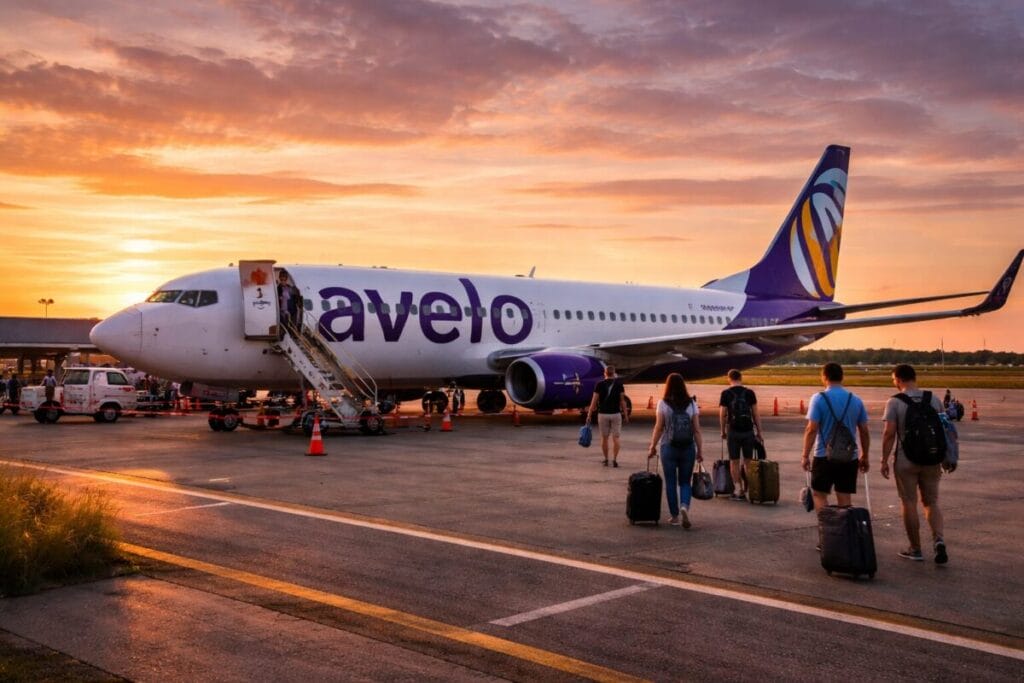
The U.S. leisure travel market faces a significant shift as Avelo Airlines reduces its nonstop flight network by nearly 29% compared with last year. The change affects the airline’s spring and early summer 2026 schedules and signals a strategic reset rather than a short-term adjustment.
Avelo built its brand around simple point-to-point routes and affordable fares. The carrier focused on connecting smaller airports directly, allowing travelers to avoid busy hubs. Now, the reduced schedule means fewer routes, fewer weekly departures, and more limited nonstop choices.
For many travelers, especially those in secondary cities, this change may alter travel planning for upcoming holidays and weekend trips.
What Flights Are Being Reduced
The schedule reductions appear most clearly in the airline’s second-quarter operations. Thousands of flights have been removed compared to the same period last year. Some routes now operate fewer times per week. Others disappear entirely.
Passengers may notice fewer departure-day options. Popular leisure destinations may still remain on the map, but travelers might need to adjust travel dates to match available flights.
In markets where Avelo provided the only nonstop low-cost option, the cuts could have a stronger impact. Travelers in these regions may need to consider connecting flights or alternative airlines.
How Travelers Will Feel the Impact
Reduced flight frequency often leads to changes beyond scheduling. Limited seat availability can cause ticket prices to fluctuate more frequently. Travelers may need to book earlier to secure lower fares or preferred departure times.
Weekend travel could become more competitive. Many leisure travelers rely on Friday or Sunday flights. When airlines reduce frequency, these peak departures fill faster.
Flexibility will become essential. Travelers may need to consider nearby airports, midweek departures, or longer itineraries. While the airline still offers budget-friendly options, convenience may decrease in some markets.
The Strategy Behind the Network Reset
The flight reduction comes after the airline began restructuring its operations earlier in the year. The company aims to improve efficiency and create a more sustainable business model.
As part of the restructuring, several crew bases are closing. The airline also plans to simplify its fleet by removing certain aircraft types. By focusing on more efficient planes, the carrier hopes to reduce operating costs and improve reliability.
Airlines often adjust their networks after rapid growth phases. Expanding too quickly can lead to operational challenges. A more focused route map may help the airline strengthen performance in key markets rather than spreading resources too thin.
Secondary Airports Face New Challenges
Avelo’s growth strategy relied heavily on underserved secondary airports. These smaller facilities offered faster check-in processes and fewer delays compared to major hubs. Travelers appreciated shorter security lines and easier access.
With the network shrinking, some secondary airports may lose direct connections. For communities that depended on nonstop flights, this shift could reduce accessibility and increase travel time.
Passengers may need to drive longer distances to reach larger airports. Others may need to connect through traditional hubs operated by legacy airlines. This transition may change the cost and convenience equation for many travelers.
The Bigger Picture for Low-Cost Leisure Travel
The airline industry continues to adjust to evolving travel demand, fuel costs, and operational realities. Ultra-low-cost carriers often experiment with route networks to identify profitable markets. When demand shifts or costs increase, airlines refine their strategies.
Avelo’s decision reflects a broader trend among budget airlines. Many carriers now prioritize efficiency over rapid expansion. Instead of launching many new routes, airlines focus on routes that deliver consistent passenger demand.
For travelers, this means fewer experimental routes but potentially more reliable schedules over time.
Practical Tips for Travelers Planning Trips
Travelers should monitor their bookings closely, especially for spring and summer travel periods. Schedule adjustments may affect departure times or flight availability.
Booking early may help secure preferred routes and prices. Travelers should also compare nearby airports and alternative travel dates to maintain flexibility.
Those planning short leisure trips may need to consider slightly longer journeys or connecting flights. While nonstop options may decline in certain markets, the broader travel network still offers multiple ways to reach popular destinations.
Future Outlook: A Leaner but Focused Airline
Although the current reduction may frustrate some passengers, the long-term goal appears to be stability. A streamlined fleet and concentrated route network could help the airline operate more efficiently.
If the strategy succeeds, the airline may expand again in the future with stronger financial footing. For now, travelers should expect a leaner schedule and fewer nonstop options from select smaller airports.
The coming months will reveal whether the restructuring delivers improved reliability and sustainable growth. Until then, flexibility and early planning will remain key for budget-conscious leisure travelers navigating this new travel reality.
For more travel news like this, keep reading Global Travel Wire