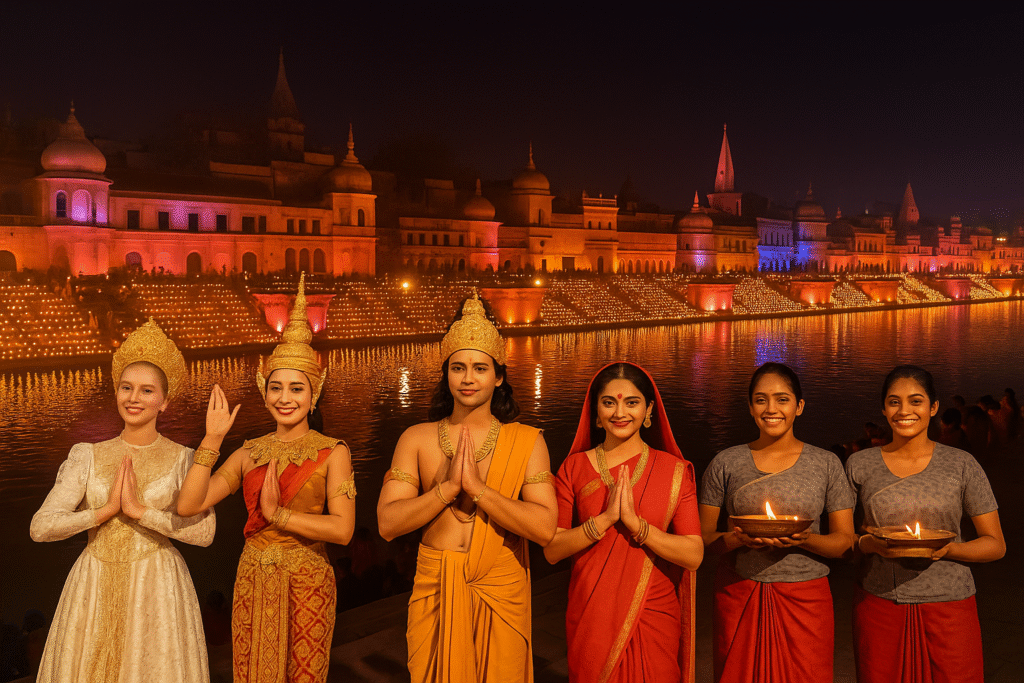
This year’s Ayodhya Deepotsav, marking its ninth edition, is poised to transform a regional celebration into a global cultural festival. From October 17 to 20, Ayodhya will not only light up with millions of earthen lamps across its 56 ghats and temples, but it will also host international Ramlila performances from Russia, Thailand, Indonesia, Nepal, and Sri Lanka. This ambitious move underscores Ayodhya’s mission to become a premier destination for cultural and spiritual tourism.
Deepotsav’s Expanding Global Vision
Deepotsav, which commemorates Lord Ram’s return to Ayodhya and the triumph of light over darkness, has long captured the imagination of pilgrims and cultural tourists. In 2025, the festival takes a bold step forward. Coupling its traditional spectacle of diya illumination with cross-cultural Ramlila performances, it aims to widen its appeal and bring fresh interpretations to the Ramayana.
The illumination is expected to be spectacular: millions of diyas arranged along the banks of the Saryu River, temples, and ghats will produce a breathtaking visual narrative. This year, performances by Russian, Thai, Indonesian, Nepali, and Sri Lankan artists will inject new artistic energy into the epic’s retelling—each troupe bringing their own interpretive lens to iconic scenes.
International Ramlila: A Cultural Dialogue
Foreign participation in this year’s Deepotsav is especially significant. Close to 90 artists from these countries will adapt episodes such as Rama’s Swayamvara, Sita’s abduction, the battle with Ravana, and the return to Ayodhya—all through their local performance styles. Russian performers may emphasize dramatic staging and orchestration; Thai artists could bring dance-theater traditions; Indonesians may blend shadow play, gamelan, and Balinese movement; Nepali troupes will highlight their own storytelling traditions; and Sri Lankan groups may integrate Kandyan or folk dance elements.
These multicultural performances are more than artistic experiments—they reflect how the Ramayana resonates far beyond Indian borders. The festival’s organizers view it as a bridge between nations, strengthening shared cultural threads and expanding Ayodhya’s reach as a global pilgrimage and arts destination.
Ayodhya’s Evolving Role in Spiritual & Cultural Tourism
Once primarily known as a pilgrimage site tied to the Ram Janmabhoomi narrative, Ayodhya is now positioning itself as a hub for heritage, performance, and immersive travel. Deepotsav is central to that transformation. As thousands of domestic and foreign travelers converge on the city during the festival, the event becomes a showcase not just of devotion but of local artistry, hospitality, and cultural vitality.
The festival draws tourists who otherwise might not visit Ayodhya—not just pilgrims but those seeking immersive cultural experiences. With thoughtfully designed festival infrastructure, guided walks along the ghats, craft and food stalls, and curated cultural walks, the city is crafting a broader tourism proposition.
This evolution helps support local artisans, food vendors, performers, and small businesses. The festival becomes a stage not only for devotional performers but for craftsmen, artisans, and local cultural entrepreneurs to present their work to a global audience.
Economic & Social Ripples
The arrival of international artists and augmented visitor numbers promise a significant boost to the local economy. Hospitality, transport, retail, food, and related services stand to gain strongly during the festival window. Additionally, the international spotlight can elevate Ayodhya’s brand, drawing repeat and off-peak tourist interest in the longer run.
Local governance is aiming to turn Deepotsav into a sustainable model—one that balances the surge in visitors with environmental care, infrastructure resilience, and community benefit. The lighting of diyas, for instance, may use eco-friendly materials; waste management plans and crowd control systems are expected to be intensively deployed. This cautious planning helps maintain the sanctity and aesthetics of the festival while protecting sensitive riverbank zones and historic ghats.
Challenges & Strategic Considerations
Executing such an ambitious festival does come with risks. Coordinating international troupes, synchronizing performances, and managing logistics—especially across borders—requires exceptional planning. Ensuring translation, rehearsal time, and cultural acclimatization will be vital.
Large crowds also bring safety, crowd control, and infrastructure stress. The organizers must ensure the ghats, walkways, lighting, sanitation, and medical facilities are all prepared for influxes of visitors. Moreover, while deep spiritual symbolism is central to Deepotsav, the organizers must maintain balance so that cultural spectacle does not overshadow devotion.
Finally, sustaining the momentum post-festival is critical. Cultivating interest beyond these core dates, creating year-round cultural draws, and weaving global narratives around Ayodhya will ensure that the city’s tourism potential isn’t restricted to a few days.
Looking Ahead: Ayodhya’s Bright Future
If Deepotsav 2025 fulfills its global ambitions, Ayodhya will emerge as more than a pilgrimage site—it will be recognized as one of India’s leading cultural tourism destinations. The blend of devotional fervor, artistic exchange, and mass spectacle can redefine how people perceive religious travel: not passive worship, but active participation in heritage storytelling.
In the years ahead, Ayodhya can expand its festival calendar, invite more global collaborations, and host thematic exhibitions, workshops, and performing arts residencies. With greater connectivity, better facilities, and sustained cultural programming, Ayodhya has the potential to become a must-visit on the global cultural tourism map.
As Deepotsav 2025 approaches, the world will watch how Ayodhya weaves the flame of its spiritual tradition together with the energetic voices of foreign performers—lighting not only lamps, but new pathways for cultural engagement and sustainable tourism.
For more travel news like this, keep reading Global Travel Wire