
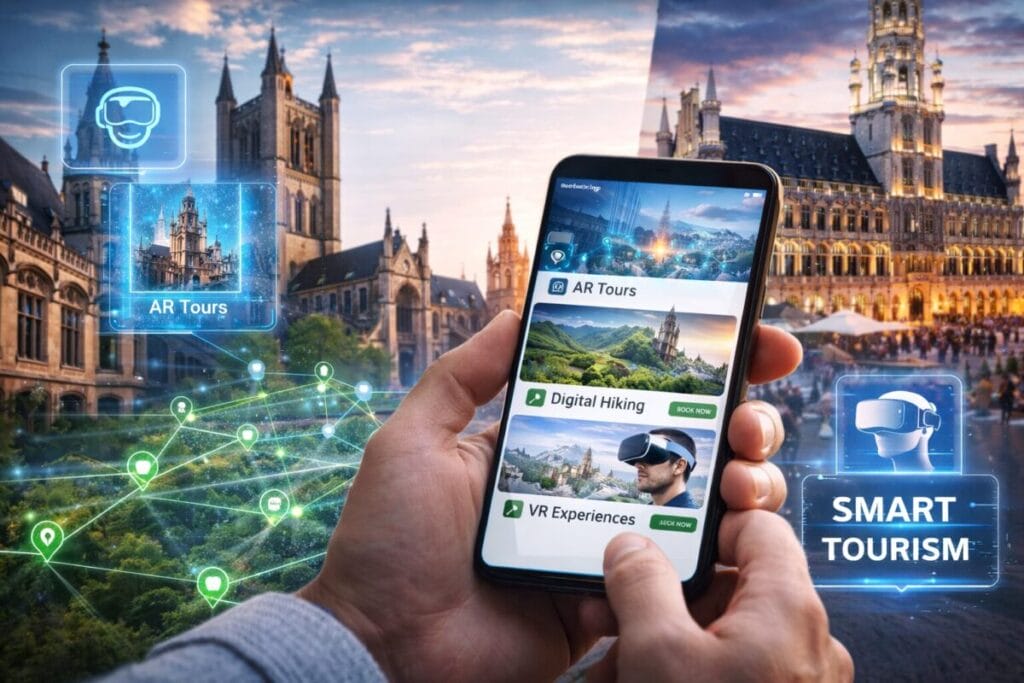
Belgium, a country celebrated for its cobblestone streets, medieval architecture, and lush forests, is stepping confidently—if cautiously—into the digital tourism age. Though not yet leading in immersive technologies, Belgium’s measured approach to smart tourism is creating a unique model that harmonizes innovation with authenticity. From award-winning AR experiences in Ghent to digitally guided hikes in the Ardennes, Belgium is shaping a modern travel narrative that honors its past while preparing for the future.
Gradual, Thoughtful Integration of Technology
As Belgium continues to recover and rebuild from the impacts of the COVID-19 pandemic, its tourism industry is seeing renewed focus. Forecasts suggest the sector will contribute nearly €39 billion to the national economy by 2025, accounting for over 6% of GDP and employing nearly 400,000 people. To support this growth, Belgium is aligning with the European Union’s Digital Decade goals, launching a €913 million digital roadmap featuring 166 tailored initiatives.
This roadmap emphasizes digital infrastructure such as high-speed internet and 5G access—areas where Belgium now outpaces many EU peers. However, when it comes to digital tools tailored specifically to tourism, the approach is far more selective. Instead of racing to transform all heritage sites into tech showcases, Belgium is opting for targeted, high-impact innovations that enhance visitor engagement while maintaining cultural integrity.
Ghent’s Augmented Reality Masterpiece
One of the country’s most compelling examples of immersive tourism is found in Ghent. The city has become a pioneer in augmented reality (AR) thanks to the innovative tour of the Ghent Altarpiece in St. Bavo’s Cathedral. Utilizing Microsoft HoloLens 2 headsets, visitors embark on a 60-minute AR journey through history, art, and culture.
This immersive experience brings to life pivotal historical moments—like the 1566 iconoclastic riots or the WWII rescue efforts of the Monuments Men—while offering close-up visuals of Van Eyck’s iconic masterpiece. Available in nine languages and tailored for children, tourists, and art experts alike, this AR tour has set a new European benchmark for how technology can complement art interpretation.
Brussels Embracing Immersive Experiences
In the capital, Brussels is gradually integrating immersive technology into its cultural offerings. Unlike Ghent’s permanent AR fixture, Brussels is focusing on limited-time events and exhibitions.
The Royal Military Museum’s upcoming feature, Napoleon, The Immersive Saga, scheduled for early 2025, will offer a 27-minute free-roaming VR experience that allows visitors to interact with key episodes from Napoleon’s life. Meanwhile, Jules Verne 200 – The Immersive Journey at Galerie Horta combines projection mapping, VR, and interactive sets to celebrate the visionary author.
These experimental projects mark Brussels’ cautious steps into immersive tourism while preserving its historical sites through more conventional guided experiences.
Supporting Traditional Tourism with Smart Tools
Instead of overhauling its historic sites with flashy tech, Belgium is enhancing traditional tourism through smart digital infrastructure. Cities like Bruges and Leuven remain committed to maintaining their medieval charm, using mobile apps and audio guides to assist visitors rather than distract from the experience.
Museums are also quietly evolving. Many now feature interactive screens, digitized archives, and occasionally augmented content. These digital enhancements are implemented selectively, enriching learning without overwhelming the cultural experience.
Nature and Tech: A Balance in the Ardennes
Belgium’s Ardennes region exemplifies the perfect blend of nature and digital accessibility. In October 2023, the region launched a virtual hiking node network in Wallonia through the NodeMapp Hike app. This system allows hikers to plan personalized routes, access GPX files for offline navigation, and stay updated on real-time trail accessibility—such as hunting season closures.
Platforms like Komoot and AllTrails offer route mapping, terrain ratings, and community reviews. While these tools don’t replace the hands-on beauty of nature, they do improve safety, accessibility, and convenience for both locals and international visitors.
Preserving Culture While Promoting Innovation
Belgium’s approach prioritizes the preservation of cultural and historical identity while selectively embracing smart tourism innovations. In 2024, during its presidency of the EU Council, Belgium emphasized sustainability, circular economy principles, and the responsible digital transformation of tourism.
Research by Brussels-based universities highlights the delicate balance between rapid technological adoption and long-term sustainability. Many stakeholders express concern about digital fatigue, potential job displacement, and the carbon footprint associated with tech-heavy tourism models.
This caution has led Belgium to favor educational and workforce development initiatives. Digital skills training is now a major focus, ensuring that tourism professionals can navigate new tools effectively while continuing to offer authentic experiences.
Addressing Workforce and Growth Challenges
Despite promising growth projections, Belgium’s tourism sector faces a shortage of skilled workers. Over 90% of tourism SMEs report hiring difficulties, prompting investment in upskilling programs, particularly in digital literacy and customer service technologies.
Meanwhile, compound annual growth is expected to remain just below the global average through 2035. To remain competitive, Belgium will need to balance strategic digital investments with initiatives that protect its cultural and ecological assets.
Conclusion: A Smart Tourism Model Rooted in Culture
Belgium’s smart tourism evolution isn’t about high-speed change—it’s about thoughtful integration. The country is building a tourism model rooted in cultural respect, enhanced by digital tools, and designed for sustainable growth.
From the awe-inspiring AR tour in Ghent to the digital hiking networks of the Ardennes, Belgium proves that innovation doesn’t need to replace heritage—it can elevate it. This measured, intentional approach positions Belgium as a leader in sustainable, tech-enhanced tourism, offering a template for other nations seeking to modernize without losing their identity.
For more travel news like this, keep reading Global Travel Wire