













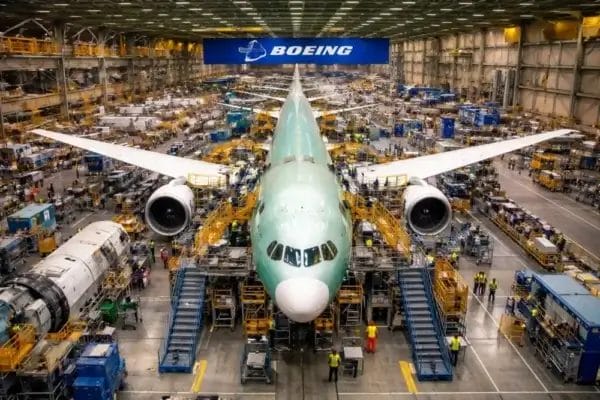
The global aviation industry faces new challenges as supply chain disruptions intensify. Boeing has asked its suppliers to review risks linked to the Middle East conflict. This move highlights growing concerns about logistics and transportation routes.
Although the region does not produce many aircraft parts, it plays a key role in global shipping. Many components travel through this area before reaching assembly lines. As tensions rise, delays and higher costs have started to affect operations.
These changes may influence how quickly airlines receive new aircraft. In turn, travelers could experience indirect effects on flights and ticket prices.
Middle East Routes Play a Critical Role in Aviation Logistics
Global aircraft production depends on a complex network of suppliers. Parts move between continents before final assembly. The Middle East acts as a major transit corridor linking Europe, Asia, and North America.
Shipping routes such as the Strait of Hormuz remain vital for global trade. Any disruption in these routes can slow down deliveries. This situation increases transit times for essential aircraft components.
As a result, manufacturers must adjust their logistics strategies. They must also prepare for potential delays in production schedules.
Rising Costs Add Pressure on Aircraft Manufacturing
Fuel prices have climbed close to 100 dollars per barrel due to geopolitical tensions. This increase has raised transportation and production costs. Shipping companies have also introduced surcharges for high-risk routes.
These added costs affect the entire aviation supply chain. Manufacturers must pay more to transport parts and materials. Airlines may also face higher costs when acquiring new aircraft.
Eventually, these expenses can influence ticket pricing. Travelers may notice higher fares as airlines adjust to rising operational costs.
Aircraft Delivery Delays Could Affect Airline Operations
Aircraft production relies on timely delivery of thousands of components. Even small delays can disrupt final assembly. Boeing must ensure that every part arrives on schedule.
If delays occur, airlines may receive fewer aircraft than planned. This situation can limit fleet expansion and reduce capacity. Airlines may need to extend the use of older planes.
Older aircraft often require more maintenance and consume more fuel. This can lead to increased operational costs and potential delays.
Impact on Flight Availability and Travel Experience
Travelers may experience changes in flight availability due to supply chain disruptions. Airlines may reduce routes or delay new services. Popular routes could become more crowded during peak seasons.
In addition, airlines may adjust schedules to match available aircraft. This can result in fewer flight options for passengers. Travelers may need to plan trips earlier to secure seats.
Despite these challenges, airlines continue to prioritize safety and reliability. They aim to maintain service quality while adapting to changing conditions.
Industry Responds With Strategic Adjustments
Boeing has taken proactive steps to address supply chain risks. The company has asked suppliers to assess vulnerabilities and suggest solutions. This approach helps identify potential issues before they escalate.
Other aircraft manufacturers have also started monitoring the situation. The entire aviation industry recognizes the importance of stable logistics networks. Companies are exploring alternative routes and suppliers to reduce risks.
Some manufacturers may shift production closer to key markets. This strategy can improve efficiency and reduce dependence on distant supply chains.
Long-Term Effects on Aviation Innovation
Supply chain disruptions can influence innovation in the aviation sector. Companies may redirect resources to manage logistics challenges. This shift can slow the development of new technologies.
However, these challenges can also encourage innovation. Manufacturers may invest in local production and advanced logistics systems. This approach can create a more resilient supply chain.
In the long term, these changes may improve efficiency and reduce future disruptions.
What Travelers Should Expect in 2026
Travelers should prepare for potential changes in the aviation landscape. Ticket prices may rise due to increased costs across the industry. Flight schedules may also become more limited in certain regions.
Booking early can help travelers secure better options. Flexible travel plans can also reduce the impact of sudden changes. Staying informed about airline updates will remain important.
Despite these challenges, global travel continues to recover and grow. Demand for flights remains strong across many markets.
Conclusion
Boeing’s supply chain challenges highlight the complex nature of global aviation. Disruptions in key transit routes can affect aircraft production and delivery. These changes can influence airline operations and traveler experiences.
The industry continues to adapt through strategic planning and innovation. Airlines and manufacturers are working to maintain stability in uncertain conditions.
For travelers, the key takeaway remains clear. Global events can shape travel experiences, even from a distance. However, strong demand and industry resilience will keep the world connected.
For more travel news like this, keep reading Global Travel Wire