
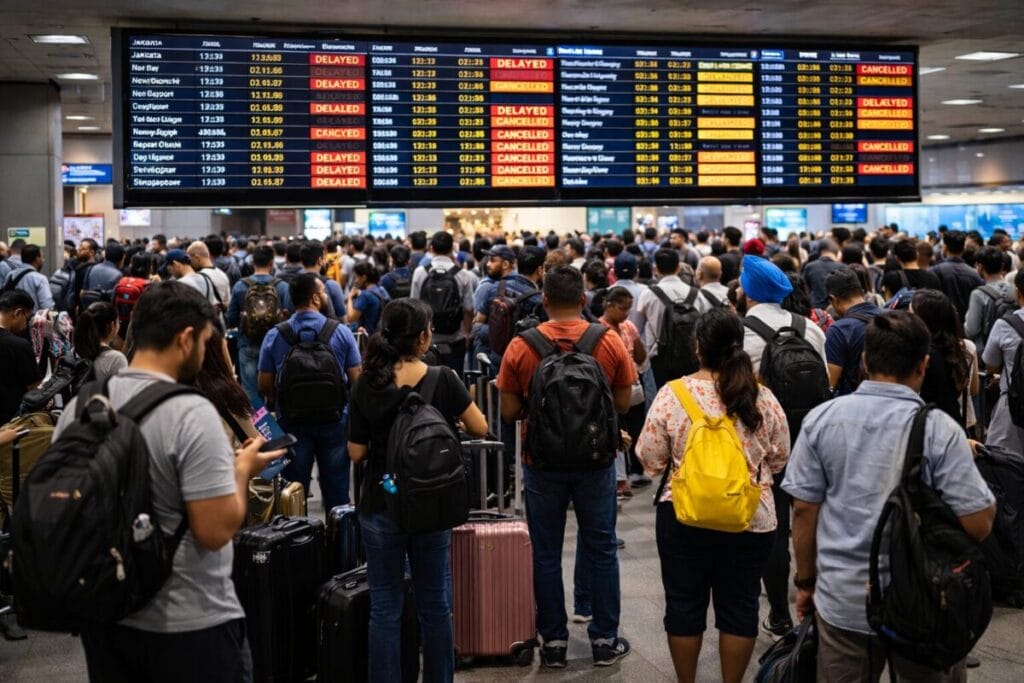
Boston Logan International Airport faced a difficult operational day as airlines canceled hundreds of flights and delayed hundreds more. Travelers confronted long lines, missed connections and last-minute rebooking as the disruptions spread across the country. Boston ranked among the most impacted airports in the United States during the period, with more than two hundred cancellations and more than two hundred delays recorded before the evening peak.
The disruption strained airport terminals and airline schedules for several hours. Passengers checked phones for updates and queued at customer service counters in search of new itineraries. The delays rippled into other major markets as airlines adjusted schedules to restore order.
Regional Carriers Lead Cancellation Totals
Republic Airways suffered the largest cancellation numbers among carriers serving Boston. The regional operator canceled dozens of flights and delayed many more as its schedule buckled under operational pressure. JetBlue took the second-largest hit among the disrupted carriers, with dozens of cancellations and more than seventy delays across its Boston network.
American Airlines and Delta Air Lines also dealt with cancellations and high delay counts. United Airlines, Spirit Airlines and several international carriers experienced moderate delays but fewer cancellations compared with the regional operators. Some international flights from Europe and Canada also reported schedule shifts due to congestion at Boston.
Boston Serves as Both Origin and Destination Bottleneck
Boston’s role as a disruption hub intensified the travel chaos. The airport ranked as the most affected origin and destination point during the period, complicating recovery efforts. Aircraft struggled to rotate through scheduled routes, forcing airlines to push back departure windows or cancel outright to realign schedules.
Many of the cancellations involved short-haul flights that feed major hubs. Travelers headed for New York, Washington and Philadelphia faced heavy rebooking pressure due to limited remaining seat availability. The problem compounded as passengers attempted to switch to later flights only to find those flights already oversold.
East Coast and Midwest Airports Absorb the Shock
Airports across the East Coast, Midwest and Florida struggled with elevated disruptions linked to Boston’s cancellations. Washington Reagan National saw rising cancellation percentages. New York LaGuardia and JFK also posted delays due to disrupted feeder flights from Boston.
Miami, Orlando and Chicago O’Hare faced delay clusters due to aircraft and crew positioning gaps. Dallas–Fort Worth and Charlotte Douglas also noted increased rebooking pressure from passengers rerouting through southern hubs. Travel advisors reported that families heading to Florida resorts and business travelers moving between Northeastern financial hubs experienced the largest inconveniences.
Airline-Level Impacts and Operational Dynamics
Regional carriers felt the most intense strain as they connected Boston to smaller cities. Republic Airways, which operates for major U.S. airlines, canceled more than eighty flights and delayed more than fifty. JetBlue and Delta faced the highest delay counts among major carriers due to their large Boston presence. American Airlines logged dozens of cancellations as well.
Jazz Aviation, which operates for Air Canada, suffered disruption across its limited Boston frequency. Spirit Airlines saw a handful of cancellations and delays, creating bottlenecks for passengers flying to and from Florida markets. Southwest Airlines also posted delays as it worked to maintain throughput on its point-to-point network.
Analysts note that regional airlines struggle more during these events because they lack spare aircraft and crew. Mainline carriers can redeploy larger fleets and draw on secondary hubs, while regional schedules often depend on tightly choreographed aircraft cycles.
Passenger Experience and Travel Recommendations
Airports filled with travelers seeking solutions. Customer service desks formed long lines while call centers experienced heavy volumes. Airline apps and messaging platforms provided real-time flight updates and rebooking options. Passengers monitored alternative airports for workable routing opportunities.
Travel experts offered practical guidance to disrupted passengers. They urged travelers to rebook through airline apps first due to limited gate staffing. Travelers also needed to maintain documentation of delays for compensation eligibility under specific airline policies. Passengers connecting through Washington, New York or Florida hubs faced elevated connection risk and needed additional buffer time.
Families traveling with children struggled with long waits, while business travelers attempted to shift meetings or switch to remote participation. Hotels near the airport reported increased bookings due to missed evening departures and overnight layovers.
Broader Tourism and Economic Considerations
The travel industry felt the economic effects of the Boston disruptions. Airlines lost revenue from canceled flights, while airports faced staffing coordination challenges. Ride-share companies and rental car counters experienced spikes in demand as travelers searched for ground transport alternatives. Food and beverage concessions saw longer wait times due to displaced passengers spending more hours inside the terminals.
Boston’s role as a gateway city means disruptions impact both domestic tourism and international arrivals. International visitors connecting through Boston struggled to preserve onward itineraries to Florida, Chicago and Washington. Tourism analysts warned that repeated cancellations during peak travel periods can dent traveler confidence and discourage discretionary trips.
Conclusion
Boston Logan’s disruptions illustrate how concentrated cancellation events can shape nationwide travel outcomes. Regional carriers bore the largest cancellation burden, while major airlines fought persistent delays across dozens of U.S. cities. Passengers navigated rebooking hurdles and long delays as airlines worked to restore normal operations. The incident underscored the importance of network resilience, real-time communication tools and passenger flexibility during high-pressure travel periods.
For more travel news like this, keep reading Global Travel Wire