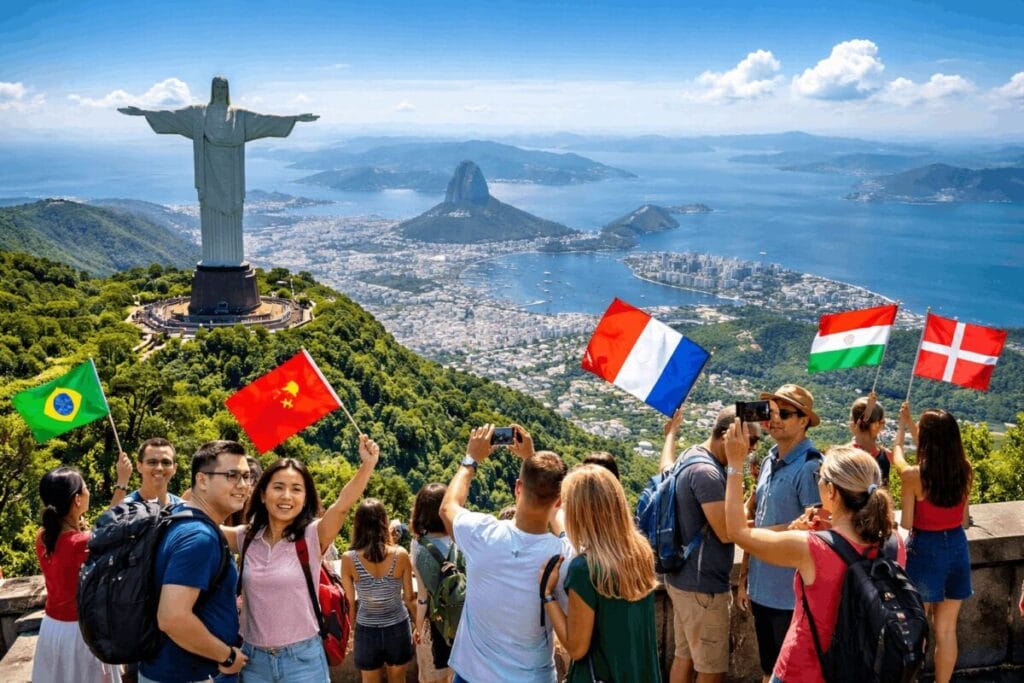
Brazil has introduced a major visa-free travel expansion designed to attract more international visitors and strengthen its position as a leading global tourism destination. The new policy includes travelers from China, Hungary, Denmark, France, Jamaica, the Bahamas, Ireland, and several other countries. Officials expect the move to significantly boost tourism revenue, increase business travel, and support economic recovery in the coming years.
The updated entry rules allow eligible visitors to enter Brazil without a traditional visa for short-term stays. By simplifying travel procedures, the country aims to remove long-standing barriers that discouraged potential travelers.
A Strategic Shift Toward Easier International Access
Brazil’s tourism authorities are focusing on accessibility and competitiveness in the global travel market. The visa-free policy allows travelers from approved countries to stay for up to 30 days, with possible extensions reaching 90 days within a 12-month period depending on nationality.
This policy reflects Brazil’s broader strategy to expand inbound tourism after pandemic-related disruptions. Simplifying entry procedures reduces administrative delays and improves travel planning for tourists and business professionals alike.
The decision also aligns with reciprocal agreements with several nations, including China, which recently eased entry rules for Brazilian citizens. Such bilateral cooperation supports smoother travel flows and encourages cross-border tourism.
Countries Benefiting from the New Visa-Free Policy
The expanded visa-free list covers nations across Europe, Asia, the Americas, Africa, and Oceania. European travelers from countries such as France, Hungary, Denmark, Ireland, Germany, Italy, Spain, Portugal, Poland, Sweden, Switzerland, and the Netherlands now benefit from simplified access.
In the Caribbean and Americas, countries including Jamaica, the Bahamas, Mexico, Costa Rica, Panama, Colombia, Argentina, Chile, and Peru are part of the initiative. Asian destinations include China, Hong Kong, Japan, South Korea, Malaysia, and Singapore.
The policy also extends to selected African and Pacific nations such as South Africa, Seychelles, Namibia, New Zealand, Fiji, and Vanuatu. While visa-free entry makes travel easier, visitors must still meet standard entry requirements like proof of accommodation, return tickets, and sufficient funds.
Why China’s Inclusion Matters for Brazil’s Tourism Industry
China’s addition stands out as a key milestone. Before the pandemic, China represented one of Brazil’s fastest-growing long-haul visitor markets. Chinese travelers showed strong interest in Brazil’s natural landscapes, cultural attractions, and business opportunities.
Destinations like Rio de Janeiro, the Amazon region, and Foz do Iguaçu are expected to see rising visitor numbers. São Paulo, known as a business hub, may experience increased corporate travel as executives find it easier to enter without complex visa procedures.
Tourism authorities believe that easing entry requirements for Chinese nationals will stimulate demand for flights, accommodations, guided tours, and retail experiences. Many hospitality providers are already adapting services to meet cultural expectations, including multilingual support and tailored tourism packages.
Economic Benefits Across Aviation, Hospitality, and Tourism Services
The visa-free policy is expected to deliver economic gains across multiple sectors. Airlines anticipate stronger international bookings as travel demand grows. Increased flight frequency on long-haul routes connecting Brazil with Asia and Europe could follow.
Hotels and resorts in major destinations like Rio de Janeiro, Salvador, and Florianópolis are preparing for higher occupancy rates. Luxury properties are expanding personalized services to attract high-spending international travelers.
Tour operators also expect new opportunities. Packages focusing on eco-tourism, cultural heritage, and adventure travel are likely to attract visitors seeking unique experiences. Brazil’s biodiversity and vibrant culture remain strong selling points for international tourists.
Supporting Brazil’s Long-Term Tourism and Economic Strategy
The visa-free expansion forms part of a wider national strategy aimed at strengthening international partnerships and attracting foreign investment. Authorities are targeting key sectors such as renewable energy, infrastructure development, and technology collaboration.
Brazil’s vast natural resources and growing renewable energy industry continue to draw interest from international investors. Simplified travel rules allow business leaders and entrepreneurs to explore opportunities more easily, which may lead to stronger economic cooperation.
At the same time, tourism diversification remains a priority. By expanding access to travelers from different regions, Brazil reduces dependence on a limited number of source markets.
Entry Conditions and Limitations Travelers Should Know
Although the policy removes traditional visa requirements, travelers must still comply with certain conditions. Entry officers may request documentation confirming onward travel, accommodation bookings, and proof of financial means.
The visa-free arrangement applies mainly to short stays for tourism or business meetings. Those planning extended employment or long-term residence must apply for appropriate visas.
Visitors should also respect permitted stay durations. Overstaying could lead to fines or future entry restrictions.
Brazil Positions Itself as a More Accessible Global Destination
The new visa-free travel expansion marks a significant shift in Brazil’s tourism strategy. By welcoming travelers from a broader range of countries, the nation aims to accelerate tourism growth and reinforce its reputation as an accessible international destination.
Industry experts expect rising visitor numbers, stronger cultural exchange, and increased economic activity across travel-related sectors. With simplified entry rules and growing global interest, Brazil is preparing for a new phase of tourism expansion that could reshape its international tourism landscape in the years ahead.
For more travel news like this, keep reading Global Travel Wire