Brazil Surges Ahead in Global Tourism Boom as U.S. Growth Stalls Behind Emerging Destinations
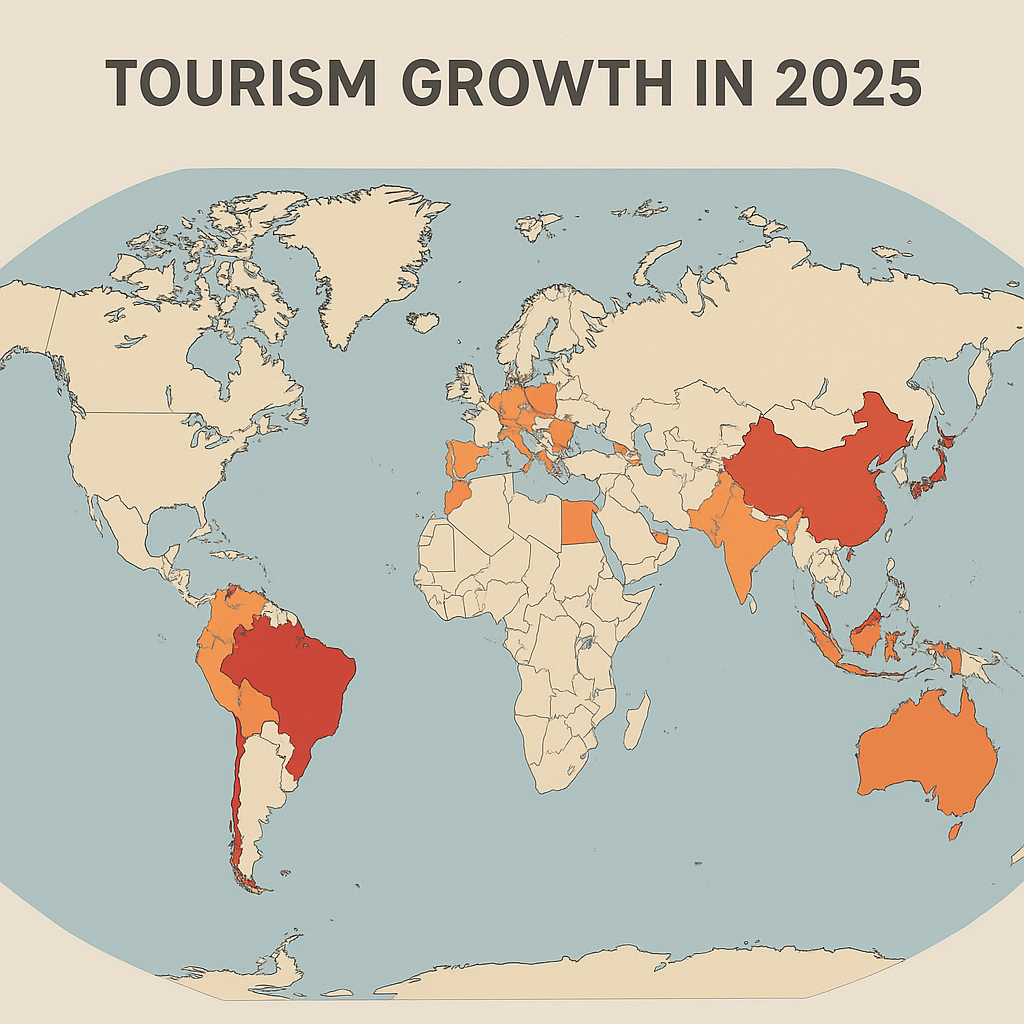
In 2025, global travel is undergoing a dramatic realignment—and Brazil has just catapulted to the front of the pack. Joining the ranks of Paraguay, Chile, The Gambia, North Macedonia, and Malta, Brazil is now leading a global tourism boom that’s catching the world by surprise. Meanwhile, the United States finds itself lagging behind, with modest growth figures that contrast sharply with the exponential spikes seen across smaller, more agile destinations.
Brazil’s Tourism Takes Flight
Brazil’s resurgence in the global travel market is unmistakable. In early 2025, international arrivals surged by 48%, according to industry analysts and government data. Fueled by favorable exchange rates and affordable domestic air travel, Brazil is attracting not just Carnival-goers but year-round adventurers flocking to Rio de Janeiro, Salvador, the Amazon, and emerging eco-tourism hubs.
New partnerships with budget airlines in Latin America, visa simplifications for European and Asian tourists, and investments in sustainable tourism have made Brazil a compelling value-for-money destination. Moreover, the Ministry of Tourism reports that travel spending is outpacing pre-pandemic figures, showing travelers’ renewed confidence in Brazil’s diverse offerings—from colonial towns like Paraty to surfing hotspots in Santa Catarina.
Paraguay Emerges as a Dark Horse
Paraguay, once overshadowed by its South American neighbors, has shocked analysts with a 53% increase in tourist arrivals in the first quarter of 2025. Without flashy marketing campaigns or mega-resorts, Paraguay is luring in travelers with authentic, unspoiled experiences. Budget-conscious tourists are venturing to places like the Ybycuí National Park, the Jesuit ruins, and the Chaco wilderness.
Improved cross-border bus routes with Brazil and Argentina and a rise in eco-lodges are contributing to its organic growth. With average daily visitor spending remaining low, Paraguay is positioned as South America’s premier budget-friendly adventure zone.
Chile Converts Geography into Gold
With a parallel 48% rise in visitor numbers, Chile is demonstrating the power of geographical diversity. From the Atacama Desert to the glaciers of Patagonia, Chile has mastered the art of selling contrasts. The country has revamped its border procedures, introduced visa-free travel for key markets, and ramped up digital infrastructure to attract remote workers and digital nomads.
Valparaíso, Santiago, and Puerto Varas are welcoming increased cruise and backpacker traffic, boosted by streamlined entry processes and improved safety ratings. Chile’s success lies in offering immersive experiences with sustainability at the core.
Gambia’s Authentic Charm Captivates West Africa
In West Africa, The Gambia is turning heads with a 46% growth in tourism, drawing European travelers in particular. The coastal nation thrives not on luxury, but on authenticity—welcoming communities, serene beaches, and immersive culture.
Despite limited infrastructure, grassroots initiatives and partnerships with small travel agencies across Europe have powered its rise. UK charter flights and seasonal packages have made Gambia more accessible than ever, offering beach holidays at a fraction of Mediterranean prices.
Malta, North Macedonia, and the European Edge
Malta, North Macedonia, Lithuania, and Latvia have emerged as boutique travel magnets. Malta’s blend of history, architecture, and boutique hospitality has helped the island nation post a 19% tourism increase. Valletta’s popularity among cruise travelers remains unmatched.
North Macedonia, bolstered by strategic flight links and budget appeal, has experienced a 22% rise in visitors. Lake Ohrid and the capital Skopje are gaining traction among younger European travelers seeking affordability and authenticity. Similarly, Lithuania and Latvia are winning with cultural richness, historic architecture, and rail linkups like the Vilnius–Warsaw corridor.
Finland’s Arctic Strategy and Japan’s Dominance
Finland has grown 15% in tourist arrivals by appealing to remote workers and nature lovers. Its “Work from the Arctic” campaign invites visitors to mix business with adventure in Lapland’s quiet forests. Travelers from Germany, the UK, and the Netherlands are flocking to Finland for tranquility, safety, and sustainability.
Japan, on the other hand, remains in a league of its own. The country recorded a 28.4% increase in tourist spending, not just visitation. With a weak yen, tourists are extending stays and spending more. From cherry blossoms and sumo tournaments to Michelin-starred dining and temple visits, Japan’s blend of traditional culture and futuristic appeal continues to set global benchmarks.
U.S. Tourism Faces a Slow Climb
In stark contrast, the United States reported only 3–5% growth in the same period. High prices, complex visa processes, urban overcrowding, and political uncertainty are deterring international visitors. Many cities like New York, San Francisco, and Los Angeles are now viewed as expensive and over-commercialized, lacking the charm or novelty that new global favorites provide.
Despite hosting iconic attractions, the U.S. is facing stiff competition from countries that offer more for less. With a shift in traveler behavior favoring intimate, authentic, and affordable experiences, the U.S. must rethink its strategy.
A Global Tourism Map Redrawn
As of mid-2025, the global tourism landscape is being dramatically redrawn. Budget travelers, digital nomads, eco-tourists, and cultural seekers are exploring beyond the usual hotspots. Smaller nations are proving that smart policies, strategic infrastructure, and local charm can drive explosive growth.
If the United States and other slow-growth destinations do not pivot toward sustainable, experience-rich tourism, they risk losing market share to nations that are redefining what modern travelers truly value.
For more travel news like this, keep reading Global Travel Wire