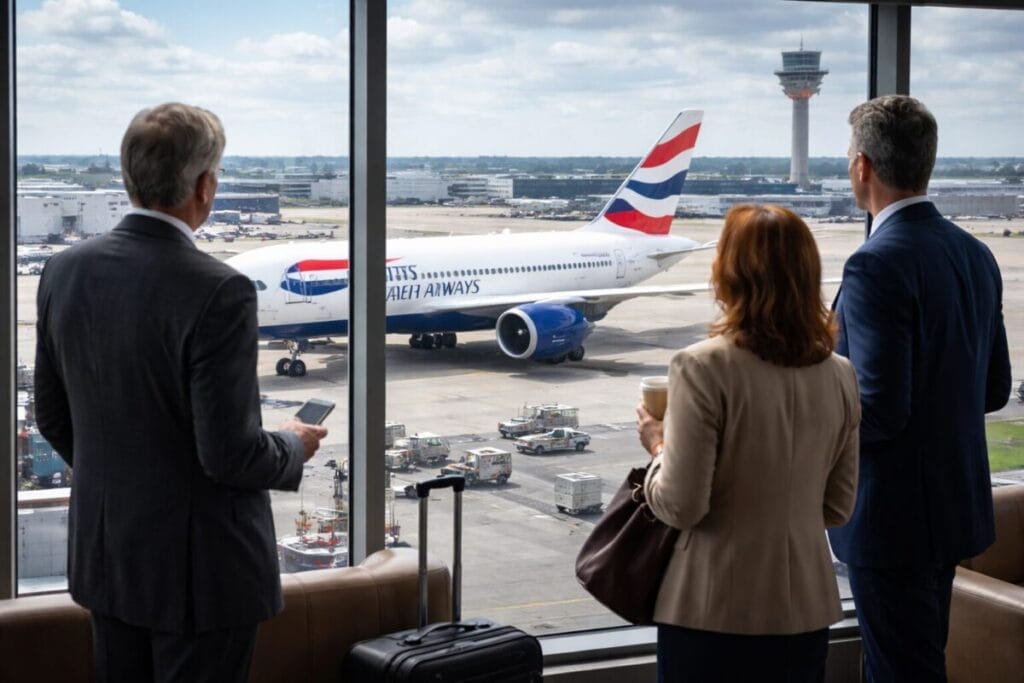
British Airways is encountering rising discontent from some of its most loyal and high-spending travelers. Changes to the carrier’s loyalty structure have ignited debate in the United Kingdom and key long-haul markets. Elite passengers are now questioning whether loyalty still offers meaningful value in an era of revenue-based rewards.
Elite Flyers Voice Growing Frustration
The controversy intensified after a well-known UK journalist publicly criticized the airline’s direction. His remarks highlighted concerns among elite frequent flyers who have supported the national carrier for decades. Many claim that recognition for consistent long-term flying has weakened, while spending now dominates status calculations.
Frequent flyers in the United Kingdom, Europe, the United States, and Australia have echoed these concerns. Their shared view is that the emotional connection once linked to the airline’s brand has faded.
Shift to Revenue-Based Rewards Redefines Access
The most notable change involves the transformation of the British Airways Club loyalty program. Instead of awarding status based on miles flown or sectors completed, the scheme now prioritizes annual spending. Under this updated framework, elite travelers must meet higher financial thresholds to retain their tier status.
For those aiming to maintain the top tiers, the financial requirement has surged. Critics argue that the cost to remain within the highest circles exceeds what many global business travelers can realistically achieve, even when flying in premium cabins.
Rising Requirements Influence Consumer Behavior
These higher thresholds have altered booking behavior. Many elite customers previously routed travel through London to safeguard their status. That calculation has changed. Under the new model, distance flown offers less benefit and spending intensity matters more.
Travel agents and premium travel planners have reported that some long-haul passengers are now evaluating alternative carriers that provide clearer loyalty returns for similar spend levels.
Operational Consistency Under the Spotlight
Critics have also raised operational concerns, particularly around London Heathrow, the airline’s main hub. Elite boarding groups have been a point of contention. A recently introduced boarding tier designed to recognize top-status travelers has been inconsistently implemented at departure gates. As a result, elite members report boarding alongside general passengers, reducing the impact of the benefit.
Orderly and structured boarding has long been perceived as part of the premium experience, especially for a flag carrier representing the United Kingdom. Any decline in consistency is viewed as symbolic of deeper service challenges.
Comparison with Global Competitors Intensifies
British Airways now competes more directly with major premium carriers across the Middle East and Asia-Pacific. Airlines such as Qatar Airways, Emirates, Singapore Airlines, and Etihad invest heavily in service and loyalty transparency. Their lounges and onboard products frequently receive high customer satisfaction ratings, particularly from long-haul business travelers.
For customers flying between Europe, the United States, and Australia, these airlines are increasingly attractive alternatives. British Airways still benefits from its Heathrow hub and extensive transatlantic network, but customer loyalty is less guaranteed in the current environment.
Service Culture and Morale Perceptions Surface
Beyond the mechanics of status recognition, some frequent flyers have expressed concerns about service culture and staff morale. They note a perceived decline in pride among crew and frontline teams compared to earlier periods of the airline’s history. While subjective, these comments add to a narrative that the airline is balancing cost pressures with expectations for premium service.
Industry analysts note that the broader aviation sector has undergone similar transitions as carriers seek to improve profitability. The challenge lies in avoiding damage to brand identity along the way.
Airline Response and Passenger Pushback
British Airways has acknowledged customer feedback and has responded through customer service channels. However, elite travelers claim that the explanations offered have not addressed deeper structural issues surrounding loyalty, value, and recognition.
Long-time customers argue that the brand has underestimated the sentimental component of loyalty. For many, loyalty was not only transactional but part of a national identity and travel culture linked to London as a global gateway.
Broader Discontent Reveals a Loyalty Crossroads
The situation raises questions about whether traditional loyalty models can survive in a more revenue-driven era. Some elite travelers have slowed their earning strategies, while others are testing competing frequent flyer programs. There is speculation that British Airways may adjust thresholds or benefits if retention data signals risk.
The carrier still holds strategic advantages, including strong brand recognition, global alliances, and a competitive transatlantic network. Yet the trust of its highest-value passengers is now under scrutiny.
Outlook: Balancing Loyalty and Modernization
British Airways faces a pivotal moment. As competition increases and customers become more selective, the airline must determine how to modernize its business model without discarding the loyalty foundations that built its brand. Elite travelers remain valuable not only for revenue, but also for influence, reputation, and long-term market stability.
For now, British Airways must walk a careful line between revenue optimization and preserving the loyalty that shaped its legacy across the United Kingdom and around the world.
For more travel news like this, keep reading Global Travel Wire