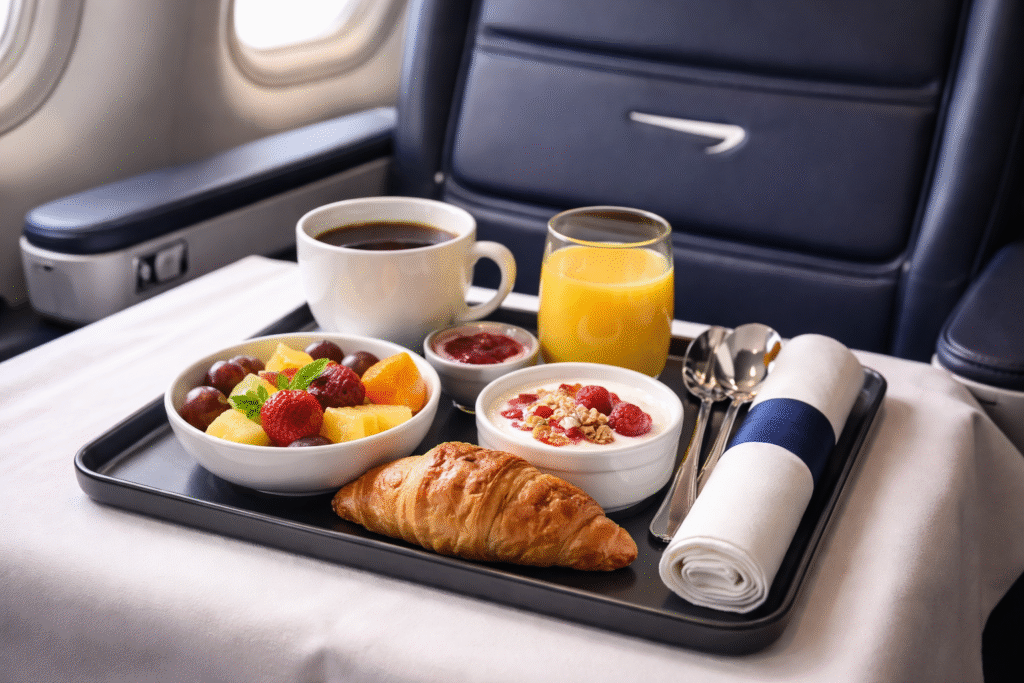
British Airways is preparing for a notable change to its short-haul premium service. From January 7, 2026, the airline will stop serving hot breakfasts on several short Club Europe flights. The update affects key routes linking the United Kingdom with nearby European and domestic destinations.
The move signals a shift in how premium short-haul travel is defined across Europe. While British Airways will continue to position Club Europe as a business-focused cabin, the onboard dining experience will look different on the shortest flights.
What Is Changing in Club Europe Breakfast Service
Passengers flying Club Europe on select routes will no longer receive a choice of hot breakfast dishes. Instead, British Airways will introduce a lighter, standardized breakfast tray.
The new meal will include fresh fruit, yogurt, and a warm pastry. The airline aims to simplify service while maintaining a premium feel. Drinks and other cabin benefits will remain unchanged.
This update applies only to specific routes and does not affect the full European network.
Routes Included in the New Breakfast Policy
The revised breakfast service will apply to short flights operating from London Heathrow and London Gatwick. Affected destinations include Amsterdam, Belfast, Brussels, Dublin, Jersey, Manchester, Newcastle, and Paris Charles de Gaulle.
These routes rank among the busiest and shortest in the British Airways network. Most have flight times between 45 and 60 minutes. They serve business travelers, government officials, and frequent commuters.
All other European Club Europe flights will continue to offer a full hot breakfast.
Why These Routes Were Selected
British Airways selected routes with very short flight durations. On these sectors, cabin crew face tight service windows. Delivering full hot meals limits time for passenger interaction and cabin preparation.
The airline believes a simpler breakfast will improve consistency and reduce pressure during early-morning departures. It also allows crews to focus more on service flow and customer care.
Still, many travelers note that full hot breakfasts were delivered on these routes for years without major issues.
How This Compares With Other European Airlines
Across Europe, light breakfasts are already common on short premium flights. Many major carriers serve cold meals or simple trays on routes under one hour.
British Airways stood apart by offering hot breakfasts on very short flights. That approach reinforced its image as a traditional full-service airline.
With this change, the airline moves closer to European norms. The distinction that once set Club Europe apart on short routes becomes less pronounced.
Cultural Expectations and Passenger Perception
In the UK, a hot breakfast carries strong cultural value. Many travelers associate it with comfort and premium service. This expectation often extends to air travel, especially in business class cabins.
Passengers from other European countries often prefer lighter morning meals. For them, the new service may feel more aligned with personal habits.
Frequent UK-based travelers, however, may view the change as a downgrade. Expectations in premium cabins tend to center on value, not just efficiency.
Impact on Business and Frequent Travelers
Club Europe tickets come at a clear price premium. Business travelers often choose the cabin for flexibility, comfort, and service quality.
A lighter breakfast may suit some passengers, especially on early flights. Others may feel the experience no longer matches the fare level.
For frequent flyers who rely on short-haul routes several times a week, small changes can strongly influence brand loyalty.
Cost Control and Operational Strategy
Airline catering adds significant cost, especially on high-frequency routes. Simplifying meals reduces preparation time, food waste, and logistics complexity.
The revised breakfast aligns with wider cost-control efforts across the airline industry. Many carriers continue to reassess legacy services introduced when operating costs were lower.
British Airways has adjusted onboard services before, sometimes reversing decisions after customer feedback. This history suggests future changes remain possible.
What This Means for European Tourism and Travel
Short-haul flights between the UK and nearby European countries support tourism, trade, and daily business travel. Changes in onboard service shape how travelers perceive the overall journey.
While the new breakfast policy is unlikely to reduce demand, it reflects a gradual reshaping of premium travel standards in Europe.
Airlines now balance service tradition with efficiency and profitability more closely than ever.
The Bottom Line
From January 7, 2026, British Airways will end hot breakfast service on eight short Club Europe routes. Passengers will receive a lighter meal featuring fruit, yogurt, and a pastry.
The change focuses on operational efficiency and cost management. It also marks a subtle shift in the premium short-haul experience across the UK and Europe.
For travelers, the update highlights how even small service details continue to evolve in modern air travel.
For more travel news like this, keep reading Global Travel Wire