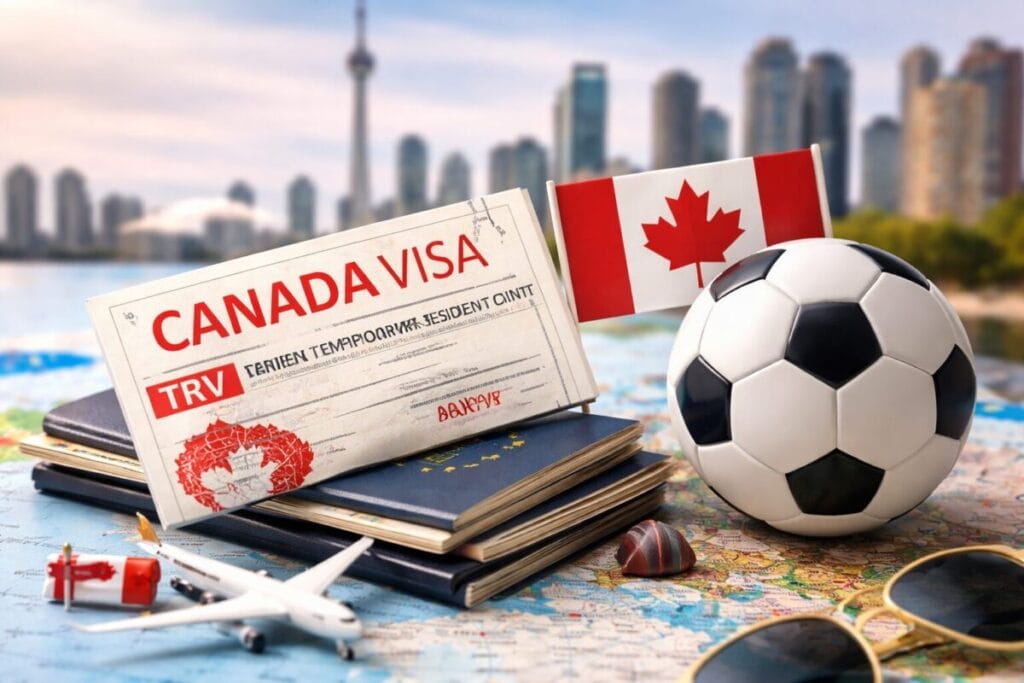
Canada has unveiled a temporary biometrics waiver to speed up visa processing for FIFA-invited personnel attending the 2026 FIFA World Cup. The policy removes a key administrative step for eligible foreign nationals. It aims to ensure faster entry and smoother travel arrangements.
The waiver will apply from November 25, 2025, to July 20, 2026. During this period, approved invitees will not need to submit fingerprints and photographs when applying for a Temporary Resident Visa.
The move supports Canada’s preparations as a host nation for the global tournament.
What the New Visa Policy Means
Under standard immigration rules, most Temporary Resident Visa applicants must provide biometric data. This step often requires appointments at designated centers. Waiting times can delay travel plans.
The new policy changes that for FIFA-accredited individuals. Eligible applicants can skip the biometrics stage entirely. This reduces processing pressure and saves valuable time.
Applicants must still meet Canada’s admissibility standards. Security, criminal, and health checks remain in place. The waiver does not replace visa approval requirements. It simply removes one procedural layer.
Who Qualifies for the Biometrics Waiver?
The policy covers a broad range of FIFA-invited personnel linked directly to tournament operations.
Players and Team Officials
All officially invited players will qualify. This includes squad members representing participating nations. Coaches, assistant coaches, analysts, fitness experts, and medical staff also fall under the exemption.
Match Officials
Referees and match officials appointed for tournament fixtures are eligible. Their travel will face fewer administrative hurdles.
FIFA Administrative Staff
Operational and organizational staff working under FIFA accreditation will benefit. Their presence remains essential for tournament logistics.
Commercial Representatives
Selected representatives of official sponsors and commercial partners qualify if they hold formal FIFA invitations.
Accredited Media
Journalists, broadcasters, photographers, and technical media crews with FIFA accreditation are also included.
The eligibility requirement centers on an official invitation letter from FIFA and compliance with immigration standards.
Switzerland, UK, Germany, France and 22+ European Nations Set to Benefit
The impact of the biometrics waiver will be especially visible across Europe. Many leading football nations and tournament stakeholders are based there.
Countries likely to benefit include:
- Switzerland
- United Kingdom
- Germany
- France
- Spain
- Denmark
- Sweden
- Italy
- Ireland
- Netherlands
- Belgium
- Portugal
- Poland
- Austria
- Czech Republic
- Croatia
- Greece
- Romania
- Bulgaria
- Finland
- Slovakia
- Serbia
- Slovenia
- Estonia
- Latvia
- Lithuania
- Hungary
These nations supply a large share of players, referees, technical experts, and media professionals for international tournaments.
For them, the waiver means faster visa approvals and fewer delays before departure.
Faster Processing and Reduced Delays
The removal of biometric appointments will shorten application timelines. Many applicants previously faced long waiting periods for available collection slots.
Now, FIFA invitees can submit visa applications without scheduling biometric visits. This change helps them focus on training, logistics, and match preparation.
The streamlined process also reduces congestion at visa centers. Canadian immigration authorities can redirect resources toward other categories of applicants.
Temporary Work Permit Flexibility
Canada has also introduced temporary work permit exemptions tied to tournament participation. These measures allow eligible individuals to perform approved roles during the World Cup without navigating complex employment authorizations.
Such flexibility proves critical for a multi-nation event. Teams, officials, and media often move between host cities. Reduced paperwork allows smoother cross-border coordination.
Canada’s Broader 2026 World Cup Strategy
Canada is co-hosting the 2026 FIFA World Cup alongside the United States and Mexico. The tournament will attract millions of fans and thousands of accredited personnel.
Authorities are investing heavily in infrastructure upgrades. Airports, public transport systems, stadium facilities, and security operations are undergoing modernization. Major host cities are preparing to handle large visitor volumes.
Immigration efficiency forms a key part of this strategy. The biometrics waiver aligns with broader goals to ensure seamless entry for essential personnel.
General visitors and fans will still follow standard visa or electronic travel authorization procedures. However, processing systems are expected to operate with enhanced efficiency during the tournament period.
Why This Policy Matters for European Nationals
European countries dominate global football at both club and international levels. Many World Cup participants will travel from Europe.
By eliminating biometric requirements, Canada reduces uncertainty for teams and organizers. Travel plans can proceed with greater predictability.
The policy also strengthens diplomatic and sporting ties. It signals Canada’s commitment to welcoming international partners and stakeholders.
For media organizations, faster entry ensures uninterrupted coverage. For teams, it allows greater focus on performance rather than paperwork.
A Proactive Move to Support Global Sport
Hosting a global tournament requires precision planning. Visa bottlenecks could disrupt schedules and preparations.
Canada’s biometrics waiver addresses that risk directly. It simplifies travel for those central to tournament success. It also demonstrates readiness to manage large-scale international events.
The 2026 FIFA World Cup will rank among the biggest sporting gatherings in history. Efficient immigration procedures will play a decisive role in its success.
By easing entry rules for Switzerland, the United Kingdom, Germany, France, Spain, Denmark, Sweden, and more than twenty-two European nations, Canada positions itself as a prepared and welcoming host.
The temporary biometrics waiver stands as a strategic step toward delivering a smooth, secure, and world-class World Cup experience.
For more travel news like this, keep reading Global Travel Wire