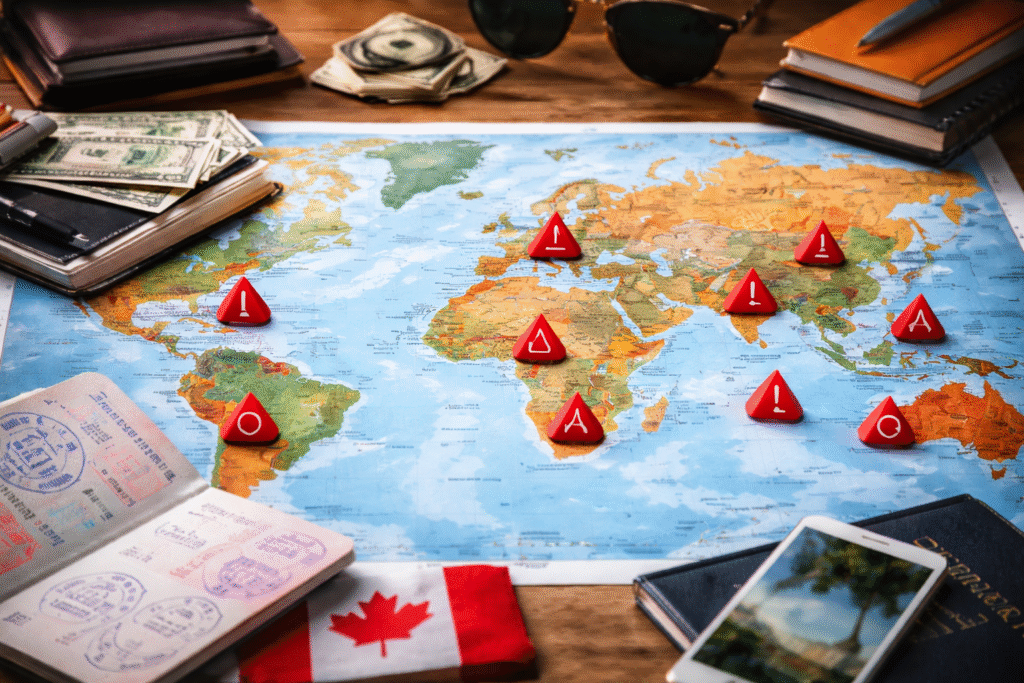
Canada has expanded its urgent travel advisory to include several major tourism destinations across Europe, South America, and the Middle East. The updated advisory highlights rising security concerns, visa complications, and political instability in nations such as Germany, Sweden, France, Turkey, Italy, Brazil, Saudi Arabia, and Mexico. Travelers are urged to stay informed, remain cautious, and monitor local developments before and during travel.
Growing Global Security Concerns
The new advisory reflects a shift in global travel conditions. Many popular tourism destinations are facing elevated terrorism threats, organized crime activity, civil unrest, and regulatory changes. These developments affect airports, public attractions, festivals, and dense urban areas. Travelers may also encounter new visa requirements, increased identity checks, and longer security screening times.
Canadian officials emphasize that travel remains possible to many affected destinations, but thorough preparation is now essential. Tourists are encouraged to research local laws, health rules, and customs before departure, as these factors now vary widely between regions.
Germany: Extremism Concerns and Visa Changes
Germany has seen an increase in far-right extremism and politically motivated attacks. While everyday tourism remains active in cities like Berlin, Munich, and Frankfurt, authorities report higher risks during religious events, major holidays, and political gatherings. Public spaces such as squares, markets, transit hubs, and airports continue to be sensitive zones for potential threats.
Germany has also introduced updated border and visa systems designed to enhance biometric screening. These changes have caused delays for non-EU tourists and created longer processing timelines. Travelers are advised to arrive early for border controls and ensure passports remain valid for the required period. Despite the challenges, Germany remains a leading tourism destination for culture, art, and history.
Sweden: Terror Alerts and Urban Crime Risks
Sweden is facing ongoing concerns related to extremist violence and organized criminal activity. Major cities have reported increases in gang-related shootings and explosives incidents. Although tourists are rarely direct targets, the risk of being near a violent event is higher in certain districts.
Petty crime remains frequent in crowded transport networks and at top attractions. Visitors are reminded to secure bags, avoid displaying valuables, and be alert in train stations and airports. Sweden continues to attract nature and culture travelers, but situational awareness is strongly recommended.
France: Terror Threats and Tourist Crime
France continues to maintain heightened security measurements following past attacks in Paris, Nice, and Lyon. Government buildings, airports, religious sites, and crowded tourist zones remain under tight surveillance. Seasonal events such as Christmas markets and summer festivals also draw additional security attention.
Pickpocketing remains a persistent issue in the Paris metro and major museums. Groups often target foreign travelers, particularly during peak visitor seasons. Travelers are encouraged to use secure money belts, avoid distraction techniques, and maintain awareness in busy metro lines and near major monuments.
Turkey: Border Tensions and Civil Unrest
Turkey continues to experience regional instability due to conflicts near the borders with Syria and Iraq. Some southeastern provinces see frequent confrontations between armed groups and military forces. Travelers are advised to avoid unnecessary travel to these areas and check local alerts before moving between regions.
Large political demonstrations occur in major cities, sometimes without warning. These gatherings can disrupt traffic and public transit. Visitors should avoid protests, follow instructions from security personnel, and plan extra time for airport transfers.
Italy: Petty Theft and Cyber Risks
Italy remains one of Europe’s most visited nations, but crime targeting travelers is widespread in tourist-heavy zones. Pickpockets are common in Rome, Milan, Florence, Venice, and Naples. Theft often occurs in train stations, buses, markets, and busy café districts.
Italian authorities have also reported increases in digital fraud and cybercrime aimed at travelers through unsecured public Wi-Fi. Visitors are encouraged to disable banking apps on public networks and use secure hotel connections for sensitive activity.
Brazil: High Crime and Border Instability
Brazil continues to struggle with violent crime in major cities. Carjackings, armed robberies, and assaults have been reported in urban centers, beach districts, and nightlife zones. Border areas experience clashes between criminal organizations and security forces, making these regions especially dangerous for tourists.
Travelers should remain cautious at night, use registered taxis, and avoid remote areas. Despite safety concerns, Brazil remains a top destination for cultural festivals, beaches, and eco-tourism.
Saudi Arabia: Regional Tensions and Strict Laws
Saudi Arabia faces regional tensions linked to conflict zones in the Middle East. Terrorism concerns persist near critical infrastructure. In addition, visitors must comply with strict local laws regarding dress, public behavior, and digital communication. Violations can result in serious penalties.
Mexico: Cartel Violence and Kidnapping Risks
Mexico continues to report high levels of cartel activity in several states. Kidnappings, extortion, and gang violence remain concerns. Tourist zones are safer but not immune to risk. Travelers are encouraged to use official transport services and avoid isolated routes.
Tourists Urged to Plan Carefully
Canada’s advisory highlights the importance of travel awareness, preparation, and research. Tourists should review local alerts, carry copies of identification, and register travel plans. While global tourism remains active, modern travel requires a stronger focus on safety and compliance.
For more travel news like this, keep reading Global Travel Wire