Canada has issued a revised travel advisory for Israel, Jerusalem, and Palestine as regional instability continues to affect tourism, safety, and cross-border movement. The update reflects evolving security threats, transport disruptions, and access limitations that travelers must consider before planning a trip.
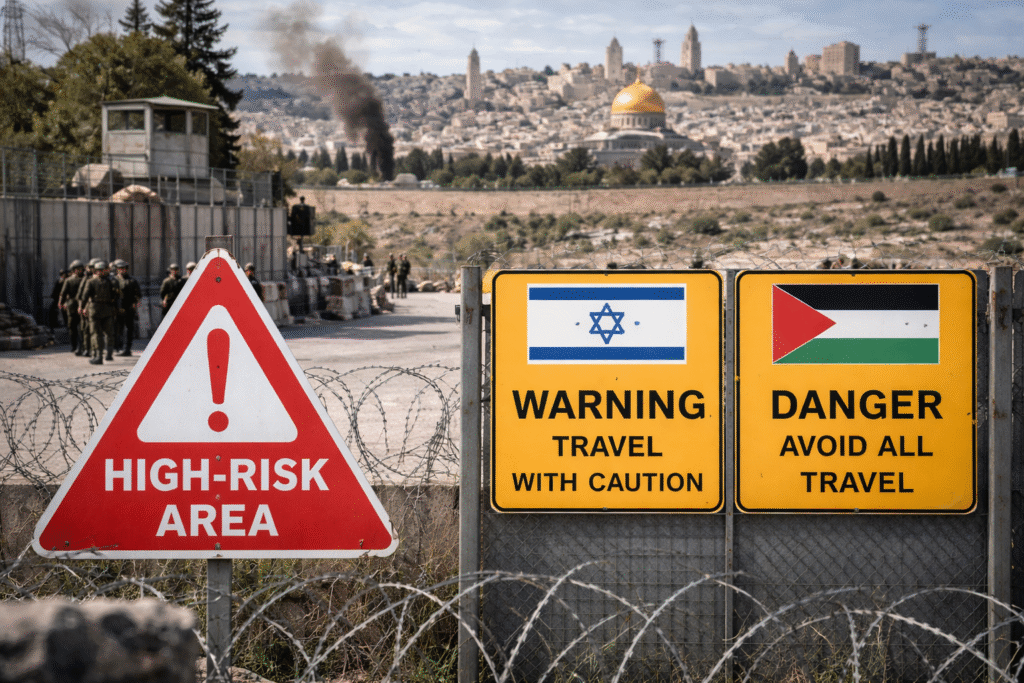
The advisory places Israel under a high degree of caution. Palestine is listed as a destination to avoid entirely. Jerusalem receives a separate warning, advising travelers to postpone non-essential visits. The Canadian government stresses that conditions can change quickly, often without warning, affecting airports, roads, borders, and tourist areas.
Updated Risk Levels Explained
Israel: High Degree of Caution
Canada advises travelers to exercise a high degree of caution when visiting Israel. Security incidents can occur suddenly in public spaces, transport hubs, and popular tourist locations. Missile alerts, armed responses, and localized lockdowns remain possible.
Authorities warn that even stable areas may face sudden disruptions. Travelers should expect enhanced security checks and possible delays across cities and transport systems.
Palestine: Avoid All Travel
All travel to Palestine is strongly discouraged. This includes the Gaza Strip and the West Bank. The advisory highlights extreme security volatility, humanitarian challenges, and widespread infrastructure damage.
Movement is heavily restricted. Access to medical care, food, water, and fuel remains uncertain. Tourism services are largely unavailable, making travel unsafe and impractical.
Jerusalem: Non-Essential Travel Discouraged
Jerusalem is listed separately due to its unique security situation. Canada advises against non-essential travel to the city. Tensions can rise quickly, leading to road closures, restricted access to religious sites, and increased security operations.
Visitors may face sudden curfews, delays, and limited mobility across neighborhoods.
Border Areas Face Elevated Threats
Canada identifies several border zones as extremely high-risk. Areas near the borders with Syria, Lebanon, and Gaza face ongoing military activity. Rocket fire, air defense operations, and armed clashes remain possible.
Travel near these borders is discouraged due to the risk of sudden escalation. Some highways and regional roads may close without notice. Signage and access rules can change rapidly.
Land crossings with Jordan and Egypt remain open but may face reduced hours or sudden shutdowns. Travelers using overland routes should prepare for delays and limited services.
Security Concerns Impact Tourism
The advisory notes that the regional security environment remains unstable. Past escalations have involved rockets, drones, and air defense systems. Falling debris has landed in populated areas during previous conflicts.
Politically motivated violence continues to pose risks. Incidents have included stabbings, shootings, vehicle attacks, and mob violence. Tourist sites, public transport areas, and markets may become targets during heightened tensions.
Protests and strikes occur regularly. These events can disrupt public transport and essential services. Demonstrations may escalate quickly, leading to clashes and crowd-control measures.
Air Travel and Transportation Disruptions
Commercial flights continue to operate through Israel’s main international airport. However, Canada warns that a major escalation could lead to flight cancellations or airspace restrictions. Travelers should expect last-minute schedule changes.
Road conditions vary widely. Major highways in Israel are well maintained but may close during security incidents. In contrast, roads in Gaza have suffered extensive damage. Travel there is extremely limited.
Roads in the West Bank are often in poor condition. Checkpoints, curfews, and closures can significantly extend travel times. Route planning remains unpredictable.
Public transportation in Israel continues to function. Buses and trains operate regularly, though security checks are common at stations and terminals.
Gaza Strip: Severe Travel Restrictions
Canada describes the Gaza Strip as nearly inaccessible. The region faces widespread infrastructure destruction and shortages of basic supplies. Electricity, water, medical services, and telecommunications remain unreliable.
Entry and exit are highly restricted. Even humanitarian movements face delays and uncertainty. Communication blackouts can occur without warning, complicating travel coordination.
A naval blockade remains in place along Gaza’s coastline. Attempts to cross by sea have resulted in interceptions, detentions, and serious safety incidents. Maritime travel is not feasible.
West Bank: Movement Limits and Ongoing Clashes
Security conditions in the West Bank remain tense. Clashes occur frequently between security forces, armed groups, and settlers. Military operations in cities and towns can begin with little notice.
Checkpoints and roadblocks are widespread. Curfews may be imposed during security operations. Areas near the separation barrier face higher risk and tighter restrictions.
These conditions make tourism difficult and unpredictable. Travelers may face sudden detours, long delays, or denied access to certain locations.
What Travelers Should Consider
Canada urges travelers to closely monitor official updates before and during any trip. Those already in the region should follow local instructions, avoid crowds, and maintain flexible travel plans.
Travel insurance, emergency planning, and awareness of exit routes remain critical. The advisory makes clear that safety conditions can change fast, with limited warning, across Israel, Jerusalem, and Palestine.
For most travelers, postponing non-essential travel remains the safest option under current conditions.
For more travel news like this, keep reading Global Travel Wire