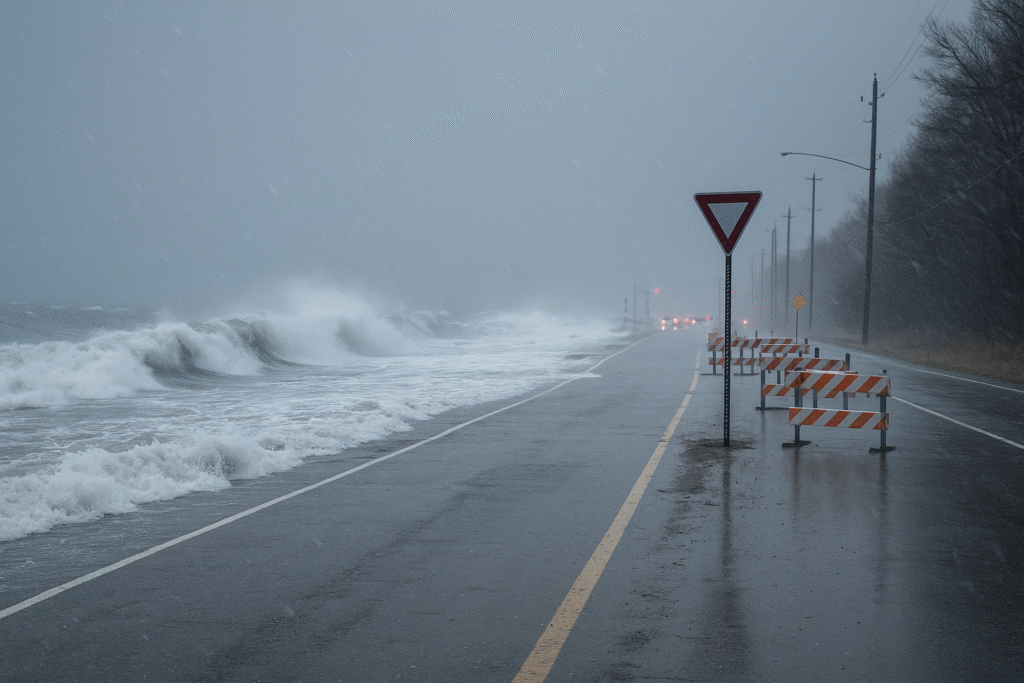
Canada’s national weather service has issued urgent warnings for the Atlantic, Pacific and Arctic coasts. These alerts affect key tourism provinces and territories including Newfoundland and Labrador, British Columbia, Yukon and Nunavut. Tourists and residents alike must prepare for heavy rain, strong winds, blizzards and storm-surge flooding.
Eastern Atlantic: Flooding and Rainfall in Newfoundland
On the Atlantic side, the Avalon Peninsula in Newfoundland and Labrador faces substantial rainfall. Rainfall amounts between 50 and 75 mm are expected through Friday into Saturday, with thunderstorms potentially boosting totals locally. Poor drainage and low terrain could trigger flash flooding of roads and walkways. Visitors should avoid vulnerable low-lying areas and keep an eye on local transport bulletins.
Western Pacific: High Winds & Rain in British Columbia
British Columbia’s southwestern coast is under wind and rainfall alerts. Regions such as Vancouver Island, the Sunshine Coast and the Fraser Canyon may see gusts reaching up to 90 km/h and rainfall amounts possibly hitting 140 mm in places. The frontal system sweeping the area raises risks of road flooding and downed trees. Tourists planning scenic drives or ferry rides should reschedule where possible and secure outdoor belongings.
Northern Coasts: Storm Surge in Yukon
Along Yukon’s Arctic coastline, particularly near Herschel Island and Qikiqtaruk Territorial Park, a storm surge warning is in effect. Coastal water levels could rise as much as 25 cm above normal, producing moderate flooding and the potential for shoreline damage. Those exploring remote coastline areas or working on marine craft need to exercise caution and check local advisories.
Arctic Interior: Blizzard Conditions in Nunavut
In Nunavut, the community of Resolute is set to face blizzard conditions from Friday into Saturday. Winds may reach 80 km/h with visibility near zero due to blowing snow. Travel in and out of the area is strongly discouraged unless absolutely required. Emergency kits, mobile communication and notifying others of itineraries are essential for safety.
Tourism Impacts and Travel Disruption
These extreme weather systems threaten more than just the scenery—they pose hazards to infrastructure and transport networks. Flights, ferries, scenic drives and camping adventures may suffer cancellations or dangerous conditions. Power outages, tree damage and flooded roads further complicate logistics. Tour operators, lodges and tour-bus services must monitor warnings and communicate with guests promptly.
Safety Tips for Visitors and Residents
- Check the latest updates via the official weather app or website.
- Avoid unnecessary travel in affected regions—choose alternative dates if possible.
- Secure outdoor gear, tents, and rental equipment in high-wind zones.
- Carry an emergency kit with food, water, first-aid supplies and a charged mobile phone.
- In case of power outages, have flashlights, batteries and portable chargers ready.
- Near water, especially coastal zones or rivers, stay clear of flooding risk areas and avoid entering fast-moving currents.
- Inform someone of your travel plans if venturing into remote areas under blizzard threat.
Why These Alerts Matter
The national weather and environment department sets clear criteria for issuing severe alerts: for example, a blizzard warning requires winds of 40 km/h or greater, combined with heavy snow or blowing snow reducing visibility to under 400 m for at least four hours. Coastal flooding warnings hinge on predicted water levels exceeding known local high-tide benchmarks. This means travellers and tourism businesses face real, measurable risk—not just forecast talk.
What Tour Operators Should Do
Tourism operators in impacted zones should:
- Review itineraries and reroute activities away from high-hazard areas.
- Communicate proactively with guests about changing weather conditions and safety procedures.
- Prepare for cancellations or delays and update cancellation policies where needed.
- Ensure staff are trained on emergency response, whether for coastal flooding, loss of power, or white-out conditions.
- Monitor official updates multiple times a day until the systems pass.
Final Word
Across Canada’s coasts and deep Arctic regions, nature is reminding us that weather can change fast—and tourism plans must adapt accordingly. Whether you’re chasing the northern lights in Nunavut, hiking coastal trails in British Columbia, or island-hopping around Newfoundland, staying alert and flexible is more than good advice—it’s essential. The warnings in place today underscore the need for readiness and respect for the elements.
For more travel news like this, keep reading Global Travel Wire