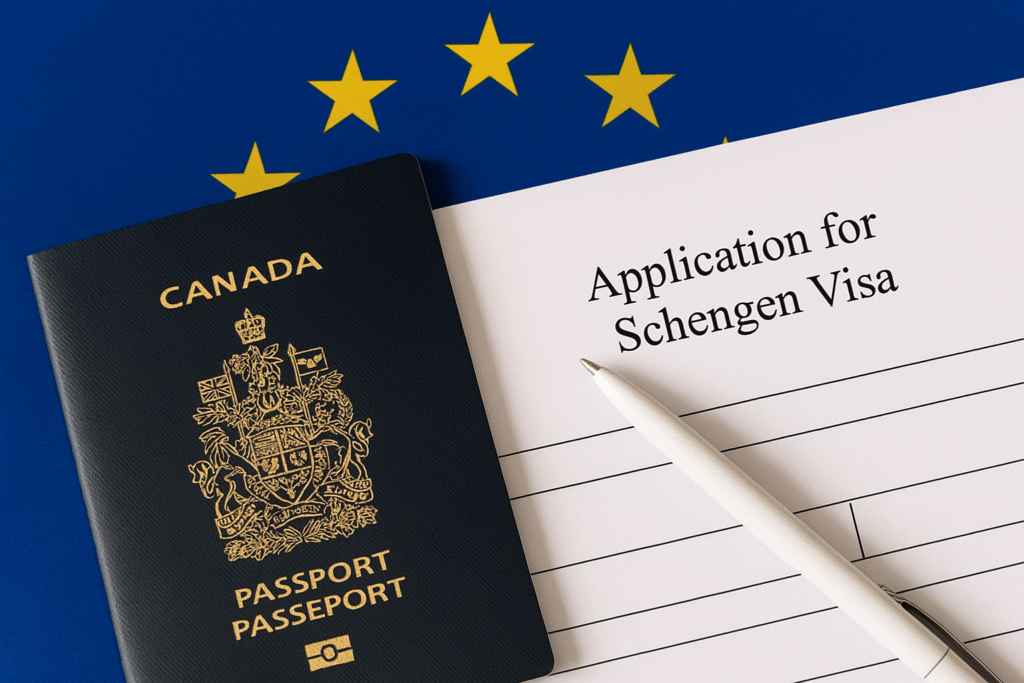
The European Union has approved a landmark reform reshaping how nations enjoy visa-free access to the Schengen Area. Canada, South Africa, Mexico, Japan, Brazil, Costa Rica, Singapore, and many more are now directly affected.
The European Parliament granted Brussels new authority to suspend visa-free entry if a country poses security risks, violates human rights, or disregards international obligations. This step redefines travel as a conditional privilege rather than an automatic right.
The reform highlights that access to Europe is tied to governance, cooperation, and respect for international standards.
Why the Reform Was Introduced
Visa-free entry has long symbolized trust between Europe and its partner nations. Citizens from 61 countries enjoy this benefit, enabling them to visit Europe for up to 90 days within any 180-day period without a visa.
The system has fueled tourism, trade, and cultural exchange. Yet, EU leaders saw weaknesses. Until now, suspensions were only possible for overstays, crime, or clear threats.
Gaps existed in addressing political misuse, rights abuses, and indirect risks. The new reform closes these loopholes.
Key Changes in the EU Visa Policy
The legislation brings several critical shifts:
- Hybrid threats: Governments using migration or visa policies for political pressure risk suspension.
- Golden passport schemes: Countries selling citizenship through investment will face scrutiny.
- Human rights violations: Serious abuses can now trigger immediate action.
- International law: Failure to honor global court rulings will carry consequences.
- Policy misalignment: Non-cooperation with EU visa standards can result in suspension.
This expansion sends a clear message: Europe’s openness is rooted in responsibility and trust.
Accountability at Government and Official Level
A significant feature of the reform is targeting individuals, not whole populations.
Previously, visa suspension meant ordinary citizens faced the fallout of government actions. Under the new rules, the EU can apply restrictions directly to government officials linked to abuses.
This allows for fairer and more precise enforcement, protecting travelers who are not responsible for political decisions.
Numerical Triggers for Enforcement
The law also introduces measurable criteria:
- A 30% rise in visa overstays or criminal cases could prompt suspension.
- If 20% of asylum claims from a country are recognized, the EU may investigate misuse.
Still, the European Commission holds discretion to weigh exceptional cases.
What This Means for Travelers
For tourists, students, and business visitors, nothing changes immediately. Citizens of the 61 visa-free nations, including Canada and Japan, can still visit Europe without extra paperwork.
However, access could be suspended if their government violates the new rules. This highlights the need for stable governance and cooperation.
For EU citizens, the reform ensures reciprocity. If another country imposes restrictions on them, the EU can respond in kind.
Benefits of the New Framework
The updated rules bring several advantages:
- Stronger protection for EU citizens.
- A direct incentive for countries to uphold human rights.
- Better fairness, as sanctions can focus on leaders instead of ordinary people.
- Flexibility to respond to modern threats quickly.
- Reinforced trust in the Schengen travel system.
Countries Currently Enjoying Visa-Free Travel
As of October 2025, the visa-free list includes nations across every continent. Among them are:
Canada, United States, Brazil, Japan, Singapore, Mexico, Australia, South Korea, Costa Rica, South Africa, and 51 others.
The EU also grants special arrangements for Hong Kong, Macao, and Taiwan under defined conditions. Reciprocity remains a guiding principle: Europe expects the same openness in return.
How the Reform Will Be Applied
Once ratified by the EU Council and published, the European Commission can act swiftly.
- Temporary suspensions may occur during investigations.
- Permanent bans can follow repeated violations.
- Officials responsible for breaches can face targeted sanctions.
The reform passed with overwhelming support in the European Parliament, signaling unity in balancing openness with security.
Past Examples of Enforcement
So far, the EU has only suspended visa-free access once. Vanuatu lost its status due to its citizenship-by-investment program, which raised security alarms.
This shows the EU acts cautiously, applying suspensions only in serious cases.
Global Implications
This reform carries weight beyond Europe. It positions visa-free access as both a travel benefit and a diplomatic tool.
Nations seeking to maintain the privilege must uphold rights, cooperate on migration, and respect law. Leaders who fail to do so risk consequences, while citizens may still be protected from blanket bans.
For the tourism industry, the changes highlight how travel policies are tied to security and diplomacy. Visitors planning trips to Europe can be reassured that the system is built on fairness, accountability, and safety.
Key Takeaways
- Visa-free access can now be suspended for human rights breaches, golden passport schemes, or hybrid threats.
- Governments and officials face accountability, not entire populations.
- Clear benchmarks like visa overstays and asylum claims guide enforcement.
- 61 nations, including Canada, remain eligible for Schengen travel—unless violations occur.
- Reciprocity ensures EU citizens enjoy equal treatment abroad.
Conclusion
The EU’s travel reform marks a pivotal shift in global mobility rules. By linking visa-free access with human rights, security, and cooperation, Europe underlines a central truth: entry into the Schengen Area is a privilege, not an entitlement.
For Canada, South Africa, Japan, Brazil, and dozens more nations, the message is clear. Respect shared values, uphold security, and ensure rights—or risk losing the freedom to travel without visas.
This historic step strengthens Europe’s role in shaping responsible global travel while safeguarding the integrity of its borders and the trust of its citizens.
For more travel news like this, keep reading Global Travel Wire