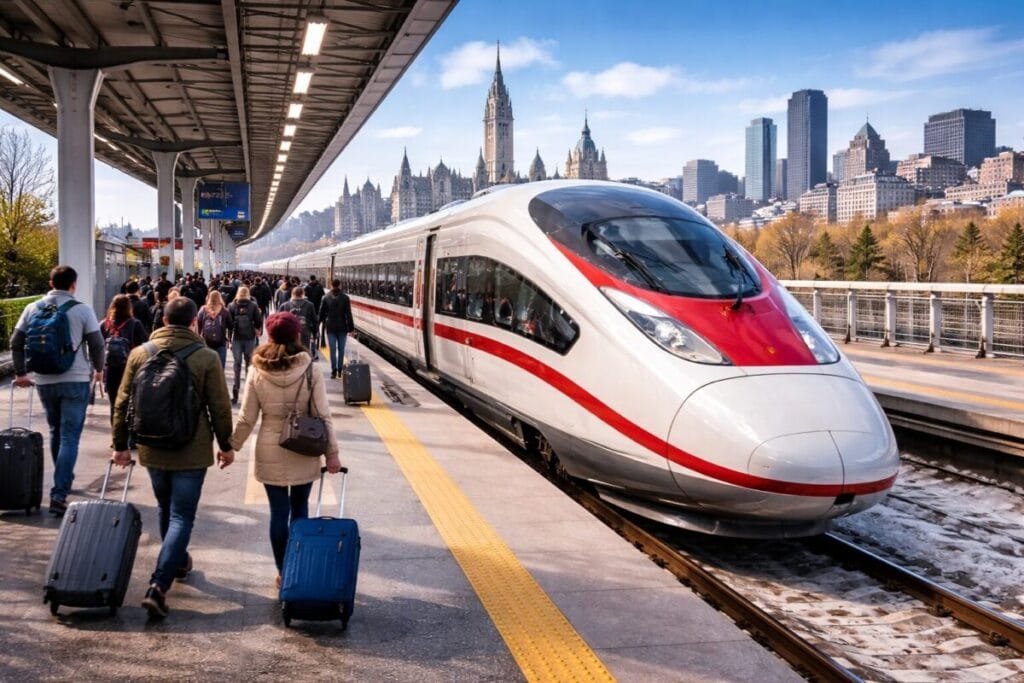
Canada will soon begin construction on its first high-speed rail network. The project will launch with a dedicated line connecting Ottawa and Montreal, marking a major shift in Canadian transportation. The development introduces modern, fast, and efficient rail travel between two major cities, offering an alternative to congested highways and short-haul flights. Project planners expect the line to enhance mobility for residents, travelers, and businesses while supporting long-term national growth.
Construction is scheduled to begin in 2029. Preparatory work has already started as project leaders align technical plans, workforce development, and community engagement. The rail line stands as a large-scale infrastructure investment with long-term economic and environmental benefits for the country.
Economic Growth and Job Creation Expected
The high-speed rail project is expected to generate thousands of jobs across engineering, construction, and skilled trades. Workers in fields such as electrical systems, surveying, and crane operation will play essential roles during the building phase. Workforce training programs are being planned to equip Canadians with the skills required for the project. These programs aim to expand the country’s talent pipeline ahead of the 2029 groundbreaking.
Economic analysts estimate that the rail line will support productivity growth by improving mobility between Ottawa and Montreal. Faster travel reduces time costs for businesses, government agencies, and commuters. Business leaders believe the network could boost Canada’s GDP by up to $25 billion over time. Improved transportation infrastructure also strengthens Canada’s appeal for international investment and multinational partnerships.
Strengthening Regional and National Connectivity
The corridor between Ottawa and Montreal represents one of the most important economic and political axes in Canada. Government offices, financial institutions, and service industries rely on reliable travel between the two cities. The new rail line will support tourism as well, providing visitors with a faster alternative to driving. Travelers will gain a smoother journey between cultural attractions, festivals, museums, and historic districts found in both cities.
Planners expect the project to create a foundation for future network expansion. Additional segments could link Toronto, Quebec City, and other major centers over time. Several provinces have expressed interest in improved rail connectivity, especially as populations grow and urban congestion increases.
Sustainability and Climate Goals Drive Project Support
The rail line aligns with Canada’s broader climate goals. The federal government continues to promote sustainable transportation options that reduce emissions from road and air travel. High-speed rail produces lower emissions per passenger than cars and airplanes, especially when powered through clean electricity. Travelers gain a reliable and fast travel mode that reduces congestion on highways and lowers domestic aviation demand.
Environmental planners expect the Ottawa–Montreal line to reduce greenhouse gas emissions while supporting efforts to shift Canadians toward public transportation. The rail project will contribute to Canada’s commitments under national climate frameworks that aim to reduce carbon output and invest in resilient infrastructure.
Focus on Community Engagement and Accessibility
Project leadership emphasizes early engagement with communities and businesses. These consultations aim to ensure that the route, stations, and supporting facilities match the needs of local residents. Community feedback will influence station placement, corridor alignment, and access planning. Early discussions also help identify environmental concerns and reduce the risk of major delays during construction.
Accessibility will play a key role in station design. Modern rail hubs will offer multimodal connections with public transit, cycling networks, and pedestrian routes. Tourism officials believe the stations will attract visitors and stimulate surrounding districts through new restaurants, hotels, and retail activity.
Improving Future Travel Choices for Canadians
High-speed rail will expand travel choices for Canadians who currently rely on driving or flying for intercity travel. Road congestion between Ottawa and Montreal continues to rise during peak weekends and holiday periods. Domestic flights remain convenient but carry higher costs and produce more emissions. High-speed rail offers a competitive third option that combines comfort, reliability, and sustainability.
Future passengers can expect spacious seating, digital connectivity, and improved onboard comfort. Rail travel appeals to business travelers, students, families, and tourists who value ease of boarding and minimal airport-style procedures.
Positioning Canada for Global Competitiveness
Many advanced economies support high-speed rail networks as essential national infrastructure. Countries in Europe and Asia operate extensive networks that link population centers, reduce emissions, and support tourism. Canada’s adoption of high-speed rail offers strategic advantages in global competitiveness and innovation.
The Ottawa–Montreal project also signals Canada’s intent to modernize its transportation sector. The shift strengthens the country’s ability to manage population growth and support mobility demands across multiple regions.
A Transformational Project With Long-Term Benefits
The Ottawa–Montreal high-speed rail line represents a new chapter for Canadian infrastructure. It supports sustainable travel, economic growth, job creation, and regional connectivity. With construction set to begin in 2029, the coming years will focus on planning, engagement, and skilled labor preparation.
The project sets the stage for a modern transportation network that will serve Canadians for generations. As development advances, Canada moves closer to a future where high-speed rail becomes a practical and efficient way to travel between major cities.
For more travel news like this, keep reading Global Travel Wire