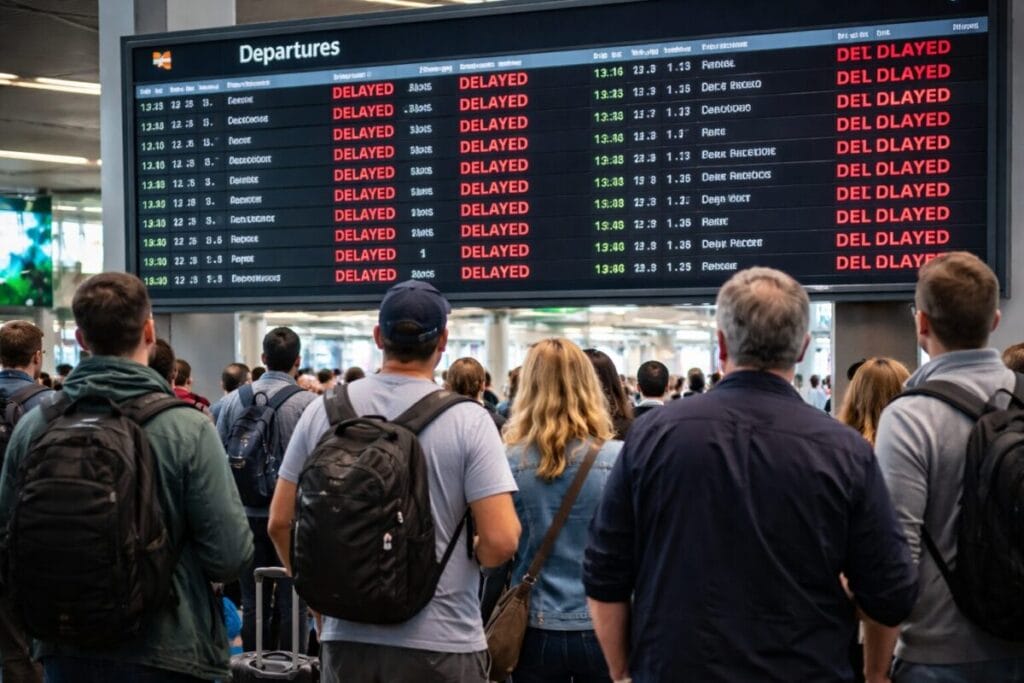
Canada’s aviation network is under pressure as widespread flight disruptions affect travelers across the country. A total of 122 flights were delayed and 78 flights were cancelled, creating uncertainty at major airports and across leading airlines. Routes connecting cities like Calgary, Ottawa, Toronto, Montreal, and Vancouver faced the biggest impact.
The disruptions came during a period of strong travel demand. Weather disturbances, air traffic congestion, and operational constraints added to the strain. Passengers with tight connections and business schedules faced the most inconvenience.
Airlines advised travelers to stay alert, check flight updates frequently, and prepare for sudden changes.
Toronto Pearson Leads in Disruptions
Toronto Pearson International Airport (YYZ)
Toronto Pearson, Canada’s busiest airport, recorded the highest level of disruption. The airport reported 57 cancellations and 54 delays in a single day. Both domestic and international flights were affected.
High passenger volumes, weather variability, and staffing pressures contributed to the situation. Travelers departing from or connecting through Toronto faced longer wait times and frequent schedule changes.
Passengers were advised to arrive early and stay flexible with rebooking options.
Montreal and Vancouver See Continued Delays
Montréal–Trudeau International Airport (YUL)
Montreal reported 12 cancellations and 24 delays. Peak travel hours saw the greatest impact. Travelers experienced slower boarding, delayed departures, and missed connections.
Airlines worked to reroute passengers where possible. Many travelers faced extended layovers as crews and aircraft rotations adjusted.
Vancouver International Airport (YVR)
Vancouver experienced lighter but noticeable disruption. The airport recorded 4 cancellations and 15 delays. Weather conditions and air traffic flow management played a role.
Although operations continued largely as planned, travelers were encouraged to monitor flight status closely.
Regional Airports Also Affected
Halifax Stanfield International Airport (YHZ)
Halifax reported 3 cancellations and 7 delays. While disruptions remained limited, travelers still faced short delays and schedule shifts.
Calgary International Airport (YYC)
Calgary saw 13 delayed flights with no cancellations reported. Heavy air traffic and weather changes contributed to slower departures. Travelers were advised to allow extra buffer time.
Ottawa Macdonald–Cartier International Airport (YOW)
Ottawa recorded 2 cancellations and 9 delays. Though impact levels stayed moderate, business travelers faced challenges due to schedule sensitivity.
Airlines Facing the Most Pressure
Air Canada
Air Canada reported the highest number of disruptions. The airline recorded 15 cancellations and 23 delays. Operational challenges, aircraft rotation issues, and network-wide congestion played a role.
Passengers were encouraged to use digital tools for rebooking and compensation options.
WestJet
WestJet experienced 2 cancellations and 10 delays. While lower than Air Canada, the delays affected connecting passengers and regional routes.
Delta Air Lines
Delta reported 2 cancellations with no major delays. Operations remained relatively stable, though travelers were still advised to check updates.
Porter Airlines
Porter experienced just 1 delay and no cancellations. Most flights continued as scheduled.
PAL Airlines
PAL Airlines reported 1 cancellation and 1 delay. The impact remained minimal but required some travelers to adjust plans.
Republic Airways
Republic Airways recorded 1 delay with no cancellations.
Total Flight Cancellations Across Canada
Across all airlines and airports, a total of 42 confirmed cancellations were reported among the major carriers listed. Air Canada accounted for the largest share, followed by smaller contributions from WestJet, Delta, and PAL Airlines.
While the total number may appear modest, even limited cancellations can disrupt entire travel chains. Missed connections, hotel stays, and rebooked flights added stress for passengers.
What Travelers Should Do Now
Stay Updated
Check flight status frequently using airline apps or airport displays. Conditions can change quickly.
Communicate Early
Contact airlines as soon as delays or cancellations appear. Early action improves rebooking options.
Arrive Earlier Than Usual
Extra time at the airport helps manage security delays, gate changes, and reassignments.
Plan for Flexibility
Avoid tight connections when possible. Keep backup travel options in mind.
Consider Insurance
Travel insurance can reduce financial impact from delays, meals, or overnight stays.
Outlook for Canadian Air Travel
Canada’s air travel system continues to recover amid rising passenger demand. Infrastructure constraints, seasonal weather, and staffing challenges remain key pressure points. Airlines and airports are adjusting schedules and resources to stabilize operations.
Travelers can expect gradual improvement, but short-term disruptions may continue during busy travel periods.
Conclusion
Canada is facing notable air travel disruption, with over 200 flights delayed or cancelled across major airports. Toronto, Montreal, and Calgary were among the most affected hubs. Air Canada and WestJet saw the highest airline-level impact.
While airlines are working to support passengers, flexibility and preparation remain essential. Staying informed and proactive can help reduce stress and keep travel plans on track as Canada’s aviation system navigates ongoing challenges.
For more travel news like this, keep reading Global Travel Wire