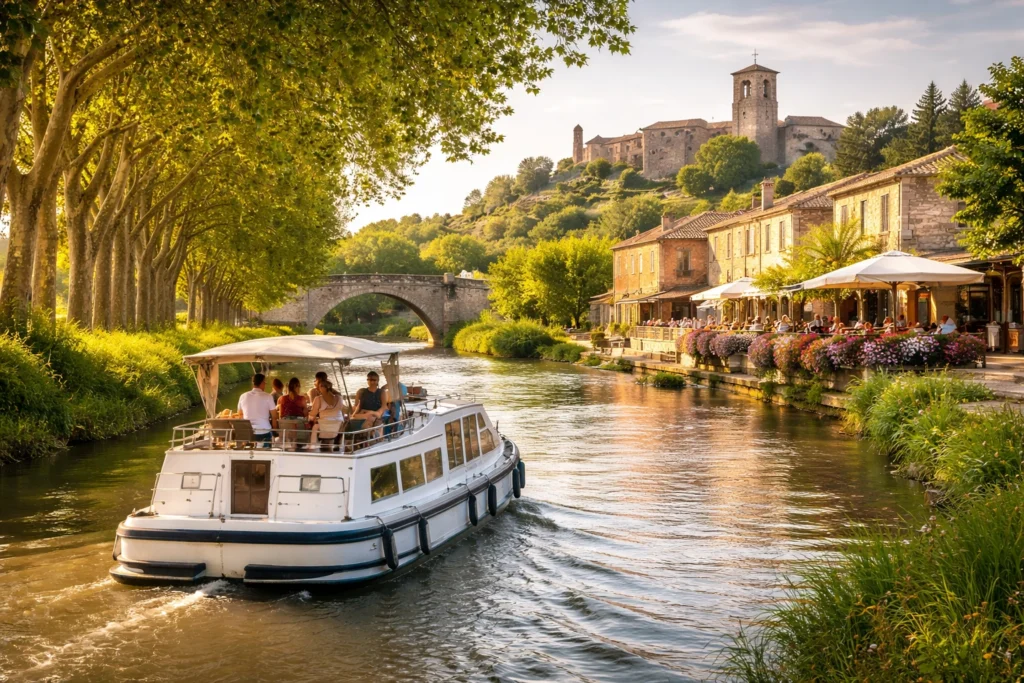
The Canal du Midi continues to attract global travelers seeking slow tourism and cultural depth. This historic waterway links the Atlantic to the Mediterranean and remains one of Europe’s most iconic travel routes.
Built in the 17th century, the canal transformed trade and transport in southern France. Today, it stands as a UNESCO World Heritage Site, recognized for both engineering brilliance and artistic design.
According to official tourism insights, more than 70,000 visitors explore the canal each year. Notably, nearly three-quarters of them arrive from outside France .
From Engineering Marvel to Tourism Icon
French engineer Pierre-Paul Riquet designed the canal in the 1600s. He created a solution to connect two seas while avoiding long and risky maritime routes.
The canal stretches nearly 200 kilometers. However, its winding path adds extra distance, offering travelers scenic diversity along the journey.
Initially, the canal carried goods like wheat and wine. Over time, it evolved into a tourism hotspot that blends history, nature, and leisure travel.
Toulouse to Carcassonne: A Scenic Start
The journey often begins in Toulouse, known as the “Pink City.” This section offers peaceful countryside views with sunflower fields and historic windmills.
Travelers can explore unique features such as the oval-shaped lock basins at Négra. These structures highlight the canal’s innovative design.
Further along, the Seuil de Naurouze marks the canal’s highest point. Here, water flows toward both the Atlantic and Mediterranean, making it a key engineering achievement.
Culinary and Cultural Stops Along the Route
The town of Castelnaudary offers a rich culinary experience. It is famous for cassoulet, a traditional French dish with deep historical roots.
Meanwhile, the canal boosted the town’s growth over centuries. Today, visitors enjoy waterfront terraces and scenic views from restored windmills.
As the route continues, Carcassonne stands out for its medieval fortress. Although popular, experts recommend visiting outside peak summer months for a better experience.
Beyond Carcassonne: Villages and Vineyards
Past Carcassonne, the canal becomes more picturesque. Travelers pass through villages like Trèbes, known for its marina and weekly markets.
Additionally, regions such as Saint-Chinian offer wine tourism and outdoor activities. Visitors can enjoy cycling, kayaking, and vineyard tours.
The route also features historic landmarks like the Malpas Tunnel, the world’s oldest canal tunnel. This engineering feat still serves boats, cyclists, and walkers today.
Unique Experiences on the Water
Tourists can explore the canal in several ways. Many choose self-drive boats, which do not require a license.
Companies offer day boats, houseboats, and guided cruises. These options cater to families, couples, and groups seeking flexible travel experiences.
Water-based tourism has grown steadily along the canal. As a result, local businesses now provide kayaking, paddleboarding, and cycling services.
The Fonseranes Locks and Final Stretch
Near Béziers, travelers encounter the famous Fonseranes locks. This series allows boats to descend over 20 meters in elevation.
The site attracts visitors who gather to watch boats navigate the locks. It also highlights the canal’s technical sophistication.
From here, the landscape opens up toward the Mediterranean coast. The atmosphere becomes more relaxed, with increased leisure activity along the water.
Arrival at the Mediterranean Coast
The canal ends near the Étang de Thau before reaching Sète, a vibrant port town. This final destination offers beaches, seafood markets, and cultural festivals.
Sète also connects travelers to major cities like Marseille and Avignon. Therefore, it serves as both an endpoint and a gateway for further exploration.
Visitors often extend their stay here to unwind after the journey. The town’s canals and coastal charm provide a fitting conclusion.
Tourism Impact and Growing Demand
The Canal du Midi plays a vital role in regional tourism. It supports hotels, restaurants, and local artisans across southern France.
Moreover, the rise of slow travel has increased demand for canal experiences. Travelers now seek immersive journeys rather than fast-paced itineraries.
This trend benefits both rural communities and sustainable tourism initiatives. The canal offers a low-impact way to explore heritage and landscapes.
A Timeless Journey Through Southern France
The Canal du Midi remains a symbol of innovation and cultural heritage. Its blend of history, scenery, and leisure makes it a standout destination.
For international travelers, it offers a unique way to experience France beyond major cities. Whether by boat, bike, or foot, the journey delivers unforgettable moments.
Ultimately, this historic waterway continues to connect not just seas, but also cultures, travelers, and generations.
For more travel news like this, keep reading Global Travel Wire