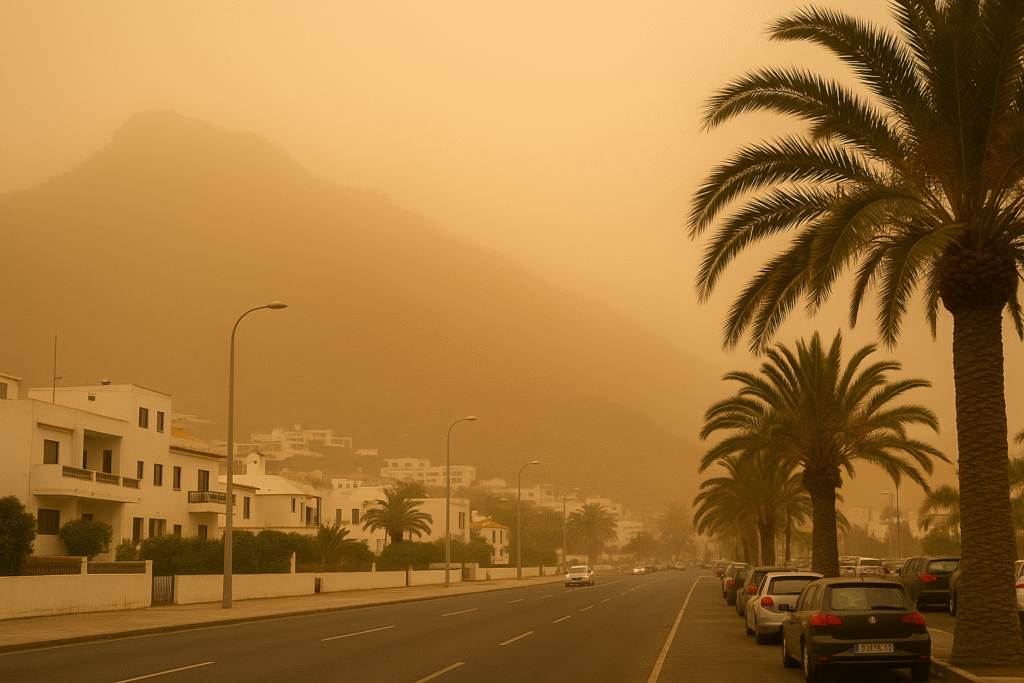
The Canary Islands, Spain’s treasured holiday destination, are experiencing an intense weather episode marked by a calima dust storm and a heatwave. Spanish authorities have issued pre-alerts across all seven islands—Tenerife, Gran Canaria, Lanzarote, Fuerteventura, La Palma, La Gomera, and El Hierro. The national meteorological agency, AEMET, has declared yellow warnings, urging both locals and tourists to remain cautious.
This unusual combination of Sahara dust clouds and soaring temperatures is expected to linger for several days, impacting visibility, outdoor activities, and overall health conditions. Tourists planning to visit in September 2025 are being advised to adjust their itineraries, prioritize safety, and stay updated with local weather alerts.
What Is Calima?
Calima is a weather phenomenon that occurs when powerful winds transport fine dust particles from the Sahara Desert over the Atlantic, enveloping the Canary Islands in a hazy cloud. These tiny dust particles significantly reduce air quality, creating murky skies and affecting visibility across coastal and mountainous areas.
Though calima is not unusual in the islands, this year’s event is compounded by an extreme heatwave, intensifying the discomfort and health risks. Travelers may find outdoor excursions challenging as the dusty conditions settle over popular tourist spots and even beach areas, which are typically less affected.
Forecast: Heatwave and Reduced Visibility
Weather forecasts predict temperatures rising to 36°C in Gran Canaria, with some southern zones potentially exceeding 37°C. Lanzarote and Fuerteventura will also see highs near 34°C, making this one of the hottest Septembers in recent years.
Visibility is expected to drop to around 3,000 metres, especially across the southern slopes and high-altitude regions. The dusty haze is anticipated to spread to lower-lying coastal towns, affecting driving conditions and outdoor tourism activities such as hiking and sightseeing. Authorities expect the calima and heatwave conditions to persist until mid-week, with warnings in effect until Tuesday evening.
Health Concerns: Who Is Most at Risk?
The greatest concern during calima is its impact on respiratory health. Dust particles carried by the winds are fine enough to penetrate deep into the lungs, causing irritation. Individuals with asthma, chronic bronchitis, or chronic obstructive pulmonary disease (COPD) are particularly vulnerable.
Even healthy travelers may experience temporary symptoms such as sore throat, eye irritation, coughing, or shortness of breath. Prolonged exposure could worsen these effects. High temperatures also increase the risk of dehydration, heat exhaustion, and heatstroke, especially for elderly people, children, and those with cardiovascular conditions.
Tourists are advised to be vigilant for symptoms like dizziness, excessive sweating, chest tightness, or difficulty breathing, and to seek medical care if needed.
Safety Tips for Tourists
To ensure safe travel during this weather episode, both locals and visitors are encouraged to adopt preventive measures:
1. Limit Outdoor Exposure
Staying indoors during the hottest hours of the day reduces exposure to both dust and high temperatures. Tourists should take advantage of air-conditioned accommodation and avoid unnecessary outdoor activities.
2. Stay Hydrated
With temperatures soaring, hydration is crucial. Travelers should drink water regularly and avoid alcohol or caffeine, which may worsen dehydration.
3. Protect Respiratory Health
Masks such as FFP2 or N95 can help filter harmful dust particles. Keeping windows closed and using indoor air purifiers will further reduce exposure. Those with existing conditions should carry prescribed medications at all times.
4. Avoid Physical Exertion
Strenuous activities like hiking or cycling should be postponed. If exercise is unavoidable, it should be done early in the morning or later in the evening when temperatures are lower.
5. Monitor Local Updates
AEMET and local authorities issue regular weather alerts. Staying informed helps travelers adjust schedules and avoid risky conditions.
6. Drive with Caution
Reduced visibility poses challenges for drivers. Tourists renting cars should maintain safe distances, use headlights, and avoid unnecessary trips during peak dust periods.
Impact on Tourism
The Canary Islands remain one of Spain’s most visited destinations, attracting millions annually for their beaches, volcanic landscapes, and mild climate. While calima and heatwaves are natural phenomena, they do influence travel experiences. Outdoor attractions, hiking routes like Tenerife’s Mount Teide or Gran Canaria’s Roque Nublo, may become difficult or unsafe to access.
Hotels and tourism operators are adapting by offering more indoor entertainment and wellness activities. Many resorts are also providing guidance to visitors, reminding them about hydration, rest, and safe scheduling of excursions.
Despite the temporary weather disruption, the islands’ appeal remains strong. Tourists are encouraged to plan flexible itineraries, allowing for indoor relaxation during peak hours and outdoor exploration in safer conditions.
Conclusion
The Canary Islands are currently under a dual weather challenge—a calima dust storm and an intense heatwave. While the event poses health and safety concerns, informed travelers can still enjoy their stay with proper precautions. By limiting outdoor exposure, staying hydrated, and keeping up with local weather updates, visitors can minimize risks.
September 2025 highlights the importance of responsible tourism and preparedness. The Canary Islands continue to offer natural beauty and cultural richness, but travelers must remain alert and prioritize well-being during extreme weather events.
For more travel news like this, keep reading Global Travel Wire