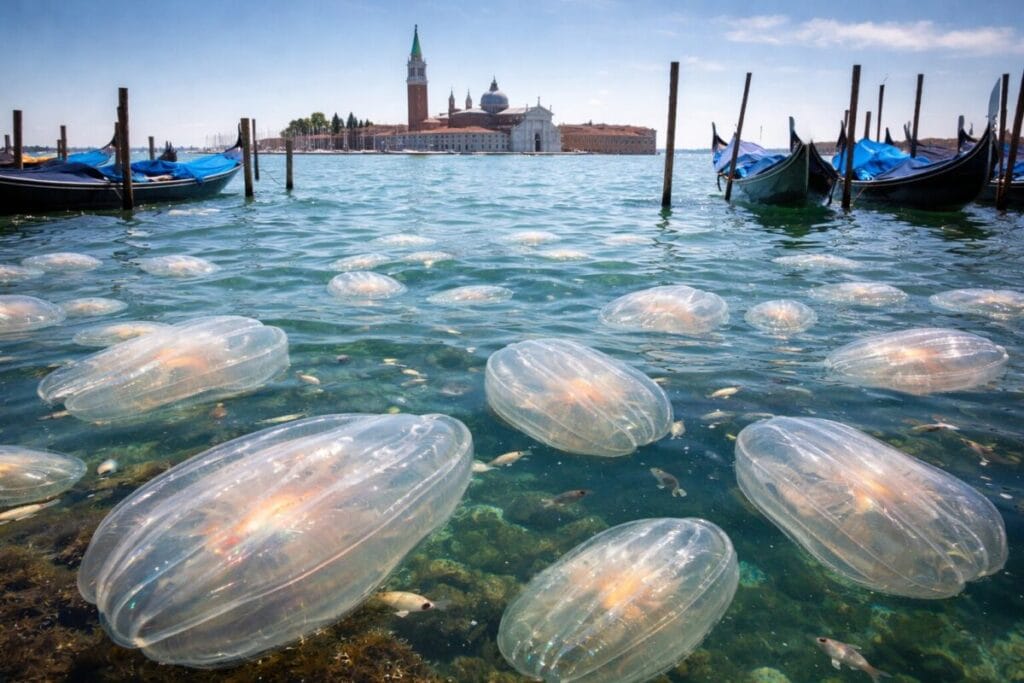
Venice is facing a new environmental crisis. An invasive jellyfish species has overrun the Venice Lagoon. The sudden spread is alarming scientists, fishermen, and tourism operators alike. The species, known as the warty comb jelly or sea walnut, multiplies fast and disrupts fragile marine systems.
This development adds pressure to a city already struggling with climate change, rising sea levels, and overtourism. The lagoon is central to Venice’s identity. Any disruption to its health directly affects the city’s economy and global appeal.
What Is the Warty Comb Jelly?
The warty comb jelly is a small, transparent marine organism. It is famous for its cannibalistic behavior. When food runs low, it feeds on its own larvae. This trait allows it to survive harsh conditions and expand quickly.
Its reproduction rate is extremely high. A single jelly can produce thousands of eggs. In enclosed waters like the Venice Lagoon, this leads to rapid population explosions.
Why the Venice Lagoon Is at Risk
The Venice Lagoon is shallow and semi-enclosed. These features make it vulnerable to invasive species. Warmer water temperatures now persist for longer periods each year. Salinity levels have also shifted due to reduced freshwater flow and sea-level rise.
These changes have created ideal conditions for the comb jelly. Decades ago, the lagoon could not support this species. Today, it acts as a perfect breeding ground.
Impact on Local Fisheries
Local fisheries are among the first to feel the damage. Fishermen report nets clogged with jellyfish instead of fish. This increases labor and reduces catch quality. In many cases, nets become unusable.
The comb jelly feeds on fish eggs, larvae, and plankton. These are essential to fish reproduction. As a result, fish stocks decline even before reaching maturity. Small-scale fishermen face falling incomes and rising uncertainty.
Fishing traditions in Venice date back centuries. This invasion threatens not just jobs, but cultural heritage tied to lagoon life.
Disruption to the Marine Ecosystem
The ecological impact goes beyond fishing. Plankton forms the base of the marine food chain. When comb jellies consume large amounts of it, the balance collapses.
Native species struggle to compete. Biodiversity declines. Over time, the lagoon risks becoming dominated by a few resilient organisms. This reduces its ability to recover from future environmental stress.
Such imbalance can also worsen water quality. Algal blooms may increase. Oxygen levels may drop during warmer months.
Growing Concerns for Venice Tourism
Tourism is the backbone of Venice’s economy. Millions of visitors come each year for gondola rides, lagoon cruises, and waterfront views. The jellyfish invasion threatens these experiences.
Cloudy waters filled with jellyfish reduce visual appeal. Boat operators report difficulties navigating dense clusters. In some areas, recreational water activities may face restrictions.
While the comb jelly does not sting humans, its presence still causes concern among visitors. Perception matters in tourism. Even minor ecological issues can influence travel decisions.
Climate Change Behind the Spread
Experts link the invasion to broader climate trends. Rising sea temperatures allow non-native species to survive winters. Extreme weather alters water circulation and salinity.
Global shipping also plays a role. Jellyfish larvae often travel in ballast water from cargo ships. Once released, they settle into new habitats if conditions allow.
Venice’s lagoon now reflects a global pattern. Coastal regions worldwide report similar invasions. This signals a systemic problem, not an isolated event.
What Authorities Are Doing
Local authorities and marine scientists are monitoring the situation closely. Regular surveys now track jellyfish density and movement. Data helps predict future blooms.
Some proposals include mechanical removal in critical fishing zones. Others focus on restoring natural predators that can limit jellyfish numbers.
Long-term plans aim to improve lagoon water circulation. Reducing pollution and nutrient runoff is also a priority. Healthier ecosystems resist invasions more effectively.
Role of Sustainable Tourism
Tourism operators are adapting. Some promote educational experiences focused on lagoon ecology. Guided tours now explain environmental challenges and conservation efforts.
There is also renewed interest in spreading tourism beyond peak seasons and crowded areas. This reduces pressure on the lagoon and supports sustainable travel models.
Visitor awareness plays a key role. Responsible tourism helps protect Venice’s delicate balance.
A Warning for Coastal Destinations
The cannibal jellyfish invasion is more than a local issue. It highlights how climate change reshapes iconic destinations. Venice serves as a warning for other coastal cities.
Without coordinated action, similar invasions may become common. Protecting marine ecosystems is no longer optional. It is essential for economic survival.
Venice at a Turning Point
Venice remains one of the world’s most enchanting cities. Its art, history, and waterways still inspire millions. Yet, environmental threats are growing more complex.
The jellyfish invasion is a wake-up call. How Venice responds will shape its future. Strong science, smart policy, and sustainable tourism can still protect the lagoon.
The world is watching. Venice’s fight against invasive species may guide other destinations facing the same uncertain waters.
For more travel news like this, keep reading Global Travel Wire