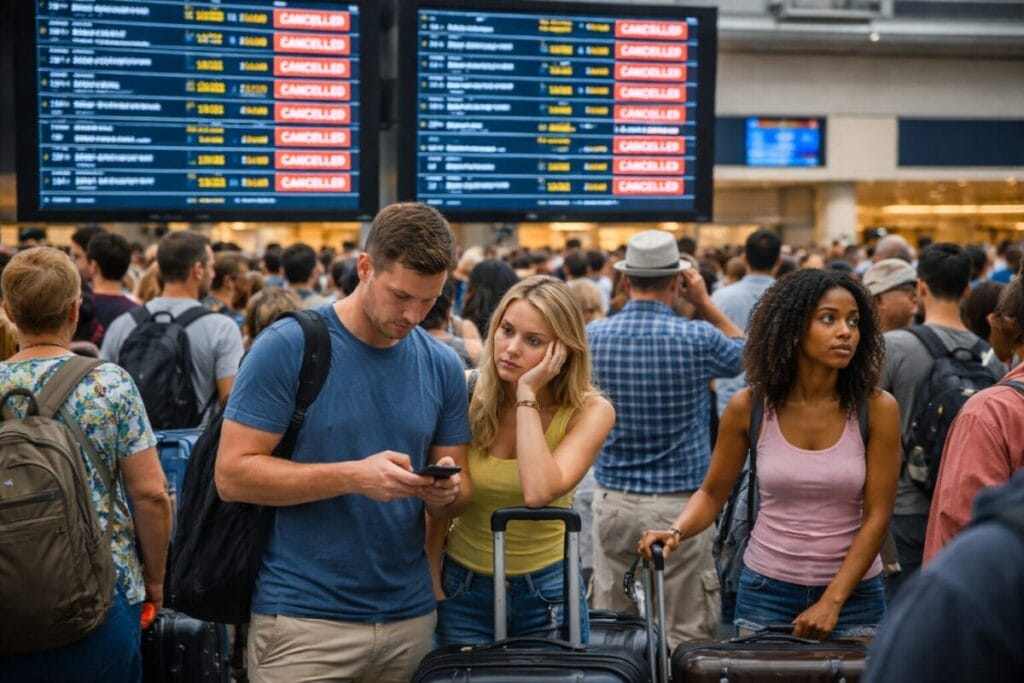
Hundreds of passengers faced major travel disruption across the Caribbean and South America after multiple airlines canceled 19 flights and delayed 44 others. The impact spread across Providenciales, São Paulo, Bogotá, Panama City, Buenos Aires and several other cities.
Airlines affected include InterCaribbean Airways, LATAM Brasil, Azul Brazilian Airlines and Copa Airlines.
The disruptions hit both leisure and business travelers. Airports in the Caribbean, Brazil, Panama and Argentina reported stranded passengers and long queues at service counters.
Caribbean Routes Face Immediate Setbacks
Travelers heading to the Turks and Caicos Islands saw sudden cancellations between Grand Turk and Providenciales. These short-haul routes are vital for island connectivity and tourism flow.
Flights between JAGS McCartney International Airport in Grand Turk and Providenciales International Airport were grounded. Morning departures were among those affected.
Providenciales serves as the main international gateway to the Turks and Caicos. The islands rely heavily on air arrivals for tourism revenue. Beach resorts, dive operators and tour providers depend on steady flight schedules, especially during peak seasons.
The sudden cancellations disrupted vacation itineraries. Many visitors missed hotel transfers, cruise connections and onward international flights.
Tourism officials in the Caribbean often stress that airlift capacity directly shapes visitor arrivals. When regional flights stop, the ripple effect spreads quickly across hotels and local businesses.
LATAM Brasil Disrupts Major Brazilian Hubs
In Brazil, LATAM Brasil canceled several domestic and regional flights. São Paulo-Guarulhos International Airport faced multiple schedule changes.
Routes connecting Córdoba, Buenos Aires and Brazilian cities were affected. Flights between São Paulo and Salvador, Uberlândia, Florianópolis and Foz do Iguaçu also faced disruption.
São Paulo acts as Brazil’s largest aviation hub. It connects international visitors to domestic destinations such as the Iguazu Falls and southern coastal cities. When flights from Guarulhos are canceled, the impact spreads nationwide.
Foz do Iguaçu, home to one of the world’s most famous waterfall systems, depends on reliable air links. Curitiba and Florianópolis also attract business and leisure travelers year-round.
Passengers reported long waits for rebooking. Some faced overnight delays. Airlines worked to accommodate travelers on later departures, but seat availability remained tight on key routes.
Azul Brazilian Airlines Cancels Regional Connections
Azul Brazilian Airlines also canceled domestic flights linking Curitiba and Cascavel. These regional services play a crucial role in Brazil’s secondary city connectivity.
Azul operates one of the country’s largest regional networks. It connects smaller cities to major hubs. When these flights stop, travelers lose access to onward national and international routes.
Regional airports rely on consistent service to support local commerce and tourism. Cascavel serves agricultural and business communities in Paraná state. Disruptions there affect both corporate travel and visiting families.
Domestic travelers scrambled to secure alternative transport. Some turned to long-distance buses. Others postponed trips entirely.
Copa Airlines Interrupts Panama’s Transit Network
Copa Airlines suspended several flights from Tocumen International Airport in Panama City. Routes to Bogotá, Cali, Monterrey and Barranquilla were among those affected.
Panama City functions as a strategic transit hub linking North, Central and South America. Copa’s network channels millions of passengers through Tocumen each year.
When connecting flights are canceled, international travelers often miss long-haul departures. Many depend on tight transfer windows. Even minor schedule changes can cause cascading delays.
Bogotá and other Colombian cities rely on strong aviation ties with Panama. Business travel, medical tourism and leisure tourism all depend on these connections.
Airport authorities increased passenger assistance measures. However, rebooking challenges remained as aircraft rotations shifted across the network.
Wider Impact on Caribbean and Latin American Tourism
Air transport remains the backbone of tourism across island and continental destinations. Caribbean economies depend heavily on visitor arrivals by air. Brazil and Panama also rely on aviation to sustain tourism growth.
Disruptions affect hotels, cruise schedules, tour operators and conference events. In peak travel periods, cancellations strain airport infrastructure and customer service teams.
Tourism boards across the region continue to promote resilience strategies. These include diversified airline partnerships and expanded route networks. Still, sudden operational issues can interrupt even well-established systems.
Travel experts advise passengers to monitor flight updates closely. Flexible booking policies and travel insurance can reduce financial stress during disruptions.
What Travelers Should Do Now
Passengers should check airline notifications before heading to the airport. Rebooking options may include later same-day departures or alternate connecting cities.
Travelers with international connections should review visa requirements if rerouted through new countries. Hotel reservations may need adjustment to match revised arrival times.
Airlines continue to realign schedules as aircraft and crew rotations stabilize. Authorities expect gradual normalization, but short-term congestion may persist at major hubs.
Outlook for Regional Aviation
The Caribbean and Latin America continue to experience steady tourism recovery in recent years. Governments have invested in airport upgrades and route expansion to support growth.
Short-term disruptions highlight the fragility of air networks. However, strong passenger demand remains across beach destinations, cultural capitals and eco-tourism hotspots.
As airlines restore schedules, tourism stakeholders aim to minimize long-term impact. For now, flexibility remains essential for anyone traveling through the Caribbean, Brazil, Panama and neighboring regions.
For more travel news like this, keep reading Global Travel Wire