









Travelers in Central Greece experienced a brief scare today after a magnitude 4.4 earthquake shook areas around Phthiotis and nearby municipalities. The tremor occurred early in the morning, just before 07:00 local time, near Xyniada in the Domokos region. Its shallow depth caused the quake to be felt across several towns that see steady tourist activity during peak seasons.
Despite widespread shaking, no major damage or injuries were reported. Authorities moved quickly to evaluate key infrastructure. Tourist landmarks, accommodations, and transportation services remain operational.
A Region Popular With Cultural and Nature-Based Tourism
Central Greece continues to attract visitors for its archaeological heritage, scenic mountain landscapes, and Mediterranean charm. Many travelers explore the region to combine ancient history with outdoor recreation.
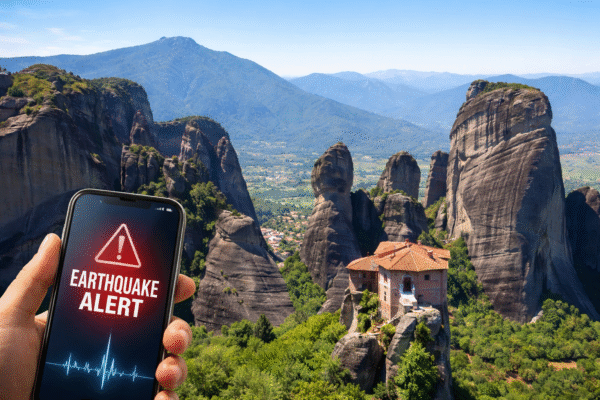
Phthiotis offers access to iconic destinations such as Delphi and Meteora. Delphi is known worldwide for the ancient Oracle and Temple of Apollo. Meteora features monasteries perched on towering rock pillars and ranks among the most dramatic UNESCO World Heritage sites in Europe. Both destinations continued to receive tourists throughout the day.
Visitors also arrive for hiking, road trips, and wellness retreats in mountain villages such as Domokos, Makrakomi, and the spa town of Kamena Vourla.
Tourists Reassured After Tremor
Local authorities and tourism operators moved fast to reassure guests. Staff at hotels and museums confirmed business as usual. Travelers continued their plans for sightseeing, guided tours, and bus excursions without major interruption.
Small-scale concerns did surface among first-time visitors unfamiliar with Greece’s natural seismic landscape. Hotels provided brief reminders on safety procedures in the event of aftershocks. Travelers reported that information and support helped ease initial anxiety.
Earthquakes Not Uncommon in Greece
Greece experiences frequent seismic activity due to tectonic movement between the Eurasian and African plates. Most earthquakes in the region are mild and cause limited disruption. Geological institutes in Greece monitor activity around the clock and cooperate with European seismic networks to track patterns and assess potential risks.
Experts noted that today’s tremor had shallow characteristics, which made it more noticeable but less dangerous. The shaking traveled through communities but lacked the energy to impact sturdy structures or archaeological grounds. This outcome aligns with typical moderate quakes recorded across the Greek mainland throughout the year.
Tourism Infrastructure Remains Stable
Public officials inspected roads, archaeological zones, and municipal buildings. No closures were issued. Museums and cultural sites near Delphi and Meteora reported normal operations. Tour buses and rental car services continued transporting visitors.
This stable response is important for a region where tourism supports local livelihoods. Shops, family-run tavernas, hotels, and excursion operators rely on seasonal traffic, especially during spring, summer, and early autumn.
Safety Guidance for Travelers
Travel experts recommend basic earthquake awareness for visitors headed to seismic destinations. These measures include:
- Stay away from glass during shaking
- Avoid balconies during aftershocks
- Follow instructions from accommodation staff
- Keep mobile devices charged for emergency alerts
- Know the nearest open public space
These simple precautions allow tourists to travel confidently without altering their itineraries.
Cultural Attractions Unaffected
Delphi welcomed groups touring the archaeological site, museum collection, and hillside ruins overlooking the Gulf of Corinth. Meteora continued receiving hikers and photographers exploring the trails and monasteries. Many visitors were unaware that a quake had even occurred hours earlier.
In addition to iconic sites, the region offers quieter attractions such as Mt. Oeta National Park, scenic lakes, and small coastal resorts along the Malian Gulf. These destinations remained open, reflecting the resilience of Central Greece’s tourism sector.
Local Economy and Traveler Confidence
While earthquakes can influence short-term travel decisions, Greece has demonstrated strong tourism resilience over decades. Tourists regularly return for the country’s cultural depth, Mediterranean lifestyle, and natural scenery. The tourism season for Central Greece typically builds from spring through autumn, and officials expect no major changes to forward bookings as a result of today’s event.
Government Monitoring Continues
Greek agencies continue to monitor seismic activity for public safety. Updates were shared throughout the morning, offering transparent information for residents and visitors. The swift communication helped maintain confidence in the region’s infrastructure and preparedness.
A Destination That Remains Welcoming
Today’s earthquake served as a reminder of Greece’s natural seismic environment, yet the region remains safe, accessible, and welcoming to travelers. For many visitors, the experience becomes another story from a destination rich in both cultural heritage and natural landscapes.
Central Greece still stands as an essential stop for those seeking archaeology, mountain adventure, and historic charm. With strong safety protocols and an experienced tourism sector, the region continues to move forward without disruption.
For more travel news like this, keep reading Global Travel Wire