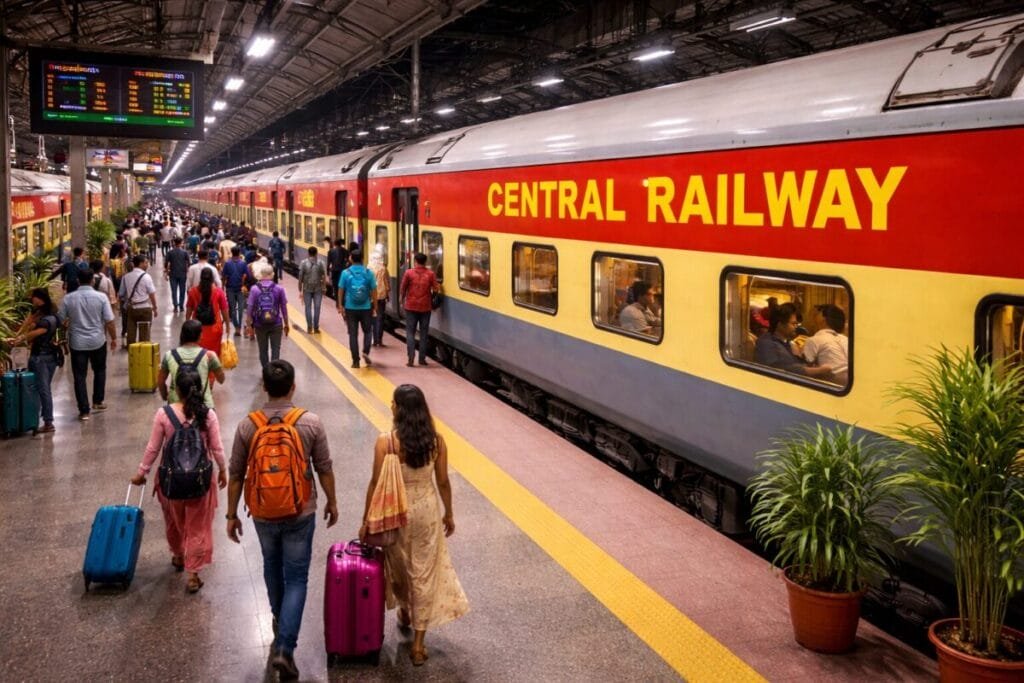
Central Railway reports a significant jump in both passenger numbers and earnings during FY 2025–26. The growth reflects a broader shift toward rail travel as an efficient and cost-friendly option for daily commuting and long-distance journeys. This trend strengthens rail’s role in regional transportation and highlights its relevance in supporting mobility for millions.
The latest figures through December 2025 showcase continued public confidence in rail travel. Travelers across suburban and non-suburban segments show strong usage patterns, driven by cost advantages, connectivity, and improved reliability. The numbers indicate sustained recovery in passenger movement and a positive outlook for future expansion.
Strong Revenue Expansion Across Key Segments
Central Railway generated ₹5,881.08 crore in passenger revenue through December 2025. This marks an increase of more than 5% over ₹5,570.33 crore reported during the same period in FY 2024–25. The revenue jump confirms rail travel’s enduring appeal across the region.
Suburban services contributed ₹757.12 crore during the period, an increase from ₹721.70 crore last year. Demand for suburban trains continues to rise due to expanding metropolitan areas and the growing need for affordable travel options for daily commuters. Trains play a vital role in connecting workers, students, and service sector employees across dense urban corridors.
Non-suburban earnings reached ₹5,123.96 crore, compared to ₹4,848.63 crore last year. Long-distance train travel maintains strong popularity due to competitive fares, comfort options, and broad network coverage. Travelers use long-distance trains for business, leisure, healthcare, and festival travel, boosting rail’s regional and interstate relevance.
Passenger Volumes Reflect Rail’s Growing Role
Central Railway transported 1,227 million passengers through December 2025. This marks a 2% increase from 1,202 million passengers during the same period in 2024. The volume growth reflects both suburban and non-suburban demand and demonstrates consistent rider confidence.
Suburban trains carried 1,073 million passengers during the period, compared to 1,058 million last year. Daily commuting traffic continues to expand as urban areas grow outward and mobility needs increase.
Non-suburban trains carried 154 million passengers, compared to 144 million last year. The increase highlights stronger demand for long-distance and intercity travel, with passengers prioritizing trains over higher-cost alternatives.
December Travel Patterns Highlight Peak Season Strength
December 2025 delivered strong operational performance for Central Railway. The network carried 142 million passengers during the month, up from 138 million in December 2024. Of these, 124 million traveled on suburban services and 18 million traveled on non-suburban routes. Seasonal factors such as holiday travel and year-end family visits contributed to the surge.
Revenue performance was even stronger during the month. Central Railway earned ₹723.27 crore in December, marking an increase from ₹604.40 crore a year earlier. Suburban services generated ₹87.58 crore, while non-suburban services accounted for ₹635.69 crore. The near 20% revenue surge highlights rail’s ability to handle seasonal peaks and support large-scale passenger travel efficiently.
Rail Travel Gains as Cities Expand and Road Networks Face Pressure
The sustained rise in passenger numbers connects directly to ongoing urban growth across the Central Railway region. Expanding residential suburbs and congestion on road networks create demand for high-capacity public transport. Rail provides predictable travel times, stable fares, and lower environmental impact compared to road-based mobility.
Government planning agencies emphasize rail’s importance in reducing urban traffic loads and supporting sustainable growth. Rail also delivers strong benefits for lower and middle-income travelers who rely heavily on public transport. Central Railway’s performance reinforces this role.
Intercity Travel Demand Continues to Strengthen
Intercity and interstate travel also contribute to the rail surge. Many passengers prefer trains for journeys of 300 to 1,200 kilometers due to comfort and reasonable fares. Rail offers overnight travel options that reduce the need for hotel stays and minimize logistical complexity.
Tourism also plays a major role. Travelers use rail to reach cultural, religious, and coastal destinations. Rail corridors serve popular holiday spots throughout Maharashtra, Karnataka, and neighboring states. Seasonal tourism boosts non-suburban ridership during festival and holiday periods.
Positive Outlook for Regional Rail Expansion
The growth trend positions Central Railway for further development in infrastructure, fleet, and services. Investments in suburban upgrades, new trains, and station modernizations continue to support rising passenger numbers. Faster corridors and improved signaling technology also enhance capacity.
As metropolitan regions expand, rail remains crucial for supporting labor mobility and improving quality of life. With continued population growth and increased travel frequency, rail is expected to remain a primary mode for both daily commuting and long-distance travel.
Rail’s Role Strengthens in the Transportation Landscape
Central Railway’s strong performance highlights rail’s enduring relevance in the regional mobility ecosystem. The combined growth in revenue and passenger volume confirms that travelers view trains as reliable, cost-efficient, and environmentally favorable compared to private vehicles.
The FY 2025–26 figures show a robust transportation network meeting both current and future travel demands. Central Railway continues to evolve with the region, offering essential connectivity for millions across suburban and intercity corridors. The rail sector stands poised to support economic growth, tourism, and social connectivity in the years ahead.
For more travel news like this, keep reading Global Travel Wire