Central Vietnam’s tourism-hotspots are facing an unprecedented challenge this week as torrential rainfall and flash flooding sweep through Hue, Hoi An and Da Nang, causing massive disruption to visitors and residents alike. Heritage streets, coastal zones and resort towns are inundated, transport networks are in chaos and thousands of tourists are left navigating conditions well outside the norm.
Heritage Cities Under Water
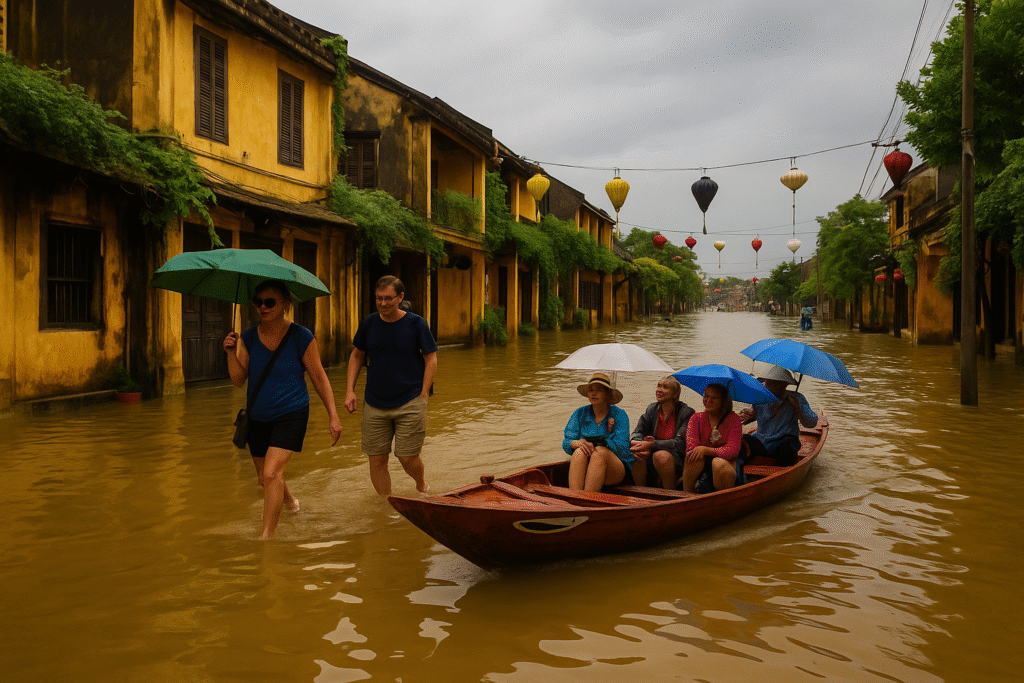
In Hue, the historic imperial city, floodwaters have reached depths of up to two metres in some low-lying neighbourhoods. Nearly 32 of the city’s 40 communes have been submerged, forcing swift evacuation and temporary closure of several key areas. Meanwhile in Hoi An, the ancient town famed for its lantern-lit streets and riverside charm, the scene is one of streets turned rivers, heritage houses under water and thousands of visitors relocated for safety. Da Nang, the major coastal city and gateway for resort tourism, has also been hit hard: key roads are impassable, power supplies disrupted and the strain on infrastructure evident.
Authorities have deployed emergency services, boats and rescue teams to assist tourists and residents trapped by rising waters. Transport corridors are compromised, hotels in flood-zones have been evacuated and many tours and excursions cancelled or indefinitely postponed. The magnitude of rainfall in some locations has shattered previous records, pushing rivers beyond capacity and overwhelming drainage infrastructure built for less extreme weather.
Travel and Transport Disruptions
For travellers, the impact is serious. While some flights continue to operate, rail services between Hanoi and Ho Chi Minh City have been suspended due to flooding along the rail-route, complicating travel plans and onward stays. Road access in many areas is restricted; temporary detours have been established but these are often slow-moving and poorly sign-posted. Accommodation availability in the worst-affected zones is also under pressure as hotels scramble to relocate guests or pause operations.
Tour operators are cancelling shore-excursions and day-trips in user-friendly destinations, and many international tourism boards are advising visitors to stay abreast of local weather updates and changes to transport. Visitors already in the region are urged to remain flexible, as further rainfall is forecast and more disruption is likely.
Tourist Experience and Local Economy
The storm’s timing is especially difficult for tourism, as central Vietnam often sees a surge of visitors in the season ahead of major holidays. Heritage sites, coastlines and resort zones which usually deliver the region’s strongest visitor credentials are either closed or under threat. For local businesses—restaurants, craft shops, tour operators and hotels—the impact is immediate: visitor numbers are down, logistics are hampered, and the usual revenue streams are interrupted.
On the flip side, destinations that remain accessible are coping with increased demand and constrained services. Tourists who do venture out report that popular spots are less crowded than usual, but many of the visual highlights—streets, temples, riverside cafés—are either partially submerged or operating under contingency measures.
Forecast & Safety Advisory
Meteorological services indicate that heavy rainfall in central Vietnam is set to continue, with some regions expecting further deluges that may worsen the flooding, trigger landslides or cause further transport cut-offs. Tourists are strongly encouraged to monitor official advisories, stay in contact with tour providers or accommodation hosts, and be prepared for sudden changes to plans. Travel insurance covering flood, weather or natural-disaster disruptions should be reviewed ahead of time.
National tourist boards advise visitors to exercise caution, avoid isolated or inundated areas and follow any local evacuation orders or service-shutdowns. For those considering travel to the region in the coming days, flexibility is key and some delays or cancellations should be factored into planning.
The Bigger Picture: Resilience and Recovery
While this flooding event has caused widespread disruption, it also highlights the importance of resilient tourism infrastructure and emergency-response readiness in destinations dependent on visitor-economies. Central Vietnam has weathered storms before, yet the intensity of this event underscores how climate variability and extreme rainfall are challenging traditional tourism calendars and travel expectations.
Local governments are now focused on immediate rescue, relief and stabilisation—but longer-term, attention will turn to rebuilding, restoring access, repairing infrastructure and ensuring that tourism recovery can proceed. For international travellers, destinations like Hue, Hoi An and Da Nang remain compelling—but the experience in the immediate weeks ahead will be different from normal, and adaptability will shape whether a trip proves smooth or subject to delay.
What Travellers Should Do
If your itinerary includes central Vietnam in the coming days:
- Check with your airline, hotel or tour operator for latest updates and possible reroutes.
- Avoid flooded zones and postponed excursions, and be prepared for transport changes.
- Allow additional time for transfers and excursions; roads, rail or boat services may be slower than usual.
- Review your travel insurance to confirm coverage for weather-related interruption or cancellation.
- Stay informed of weather alerts in-region, and follow any local authority instructions regarding safety or evacuation.
Conclusion
Central Vietnam’s tourism heartland is currently navigating through one of the most challenging flood events in recent years, with legacy destinations like Hue, Hoi An and Da Nang grappling with inundation, disrupted services and visitor uncertainty. While the allure of these historic and scenic destinations remains undiminished, the conditions for travel are far from standard. For travellers, staying agile, informed and prepared is essential. For the local tourism economy, the coming weeks will be crucial in shifting from immediate response into recovery and rebuilding. Amid the deluge, one thing remains clear: resilience and readiness will shape the next chapter of travel in central Vietnam.
For more travel news like this, keep reading Global Travel Wire