A strong winter storm has thrown the U.S. travel network into turmoil just days after Thanksgiving. Major aviation hubs, including Chicago and Detroit, are struggling to keep operations steady as snow, ice, and fierce winds sweep across the Midwest and Great Lakes. Travelers are facing long delays, crowded terminals, and uncertainty as the winter blast disrupts one of the busiest travel weeks of the year.
Storm Brings Widespread Travel Interruptions
The National Weather Service reports that the storm is stretching across a wide corridor from the central Midwest to the western Great Lakes. Heavy snow bands, fast-moving winds, and blowing snow are reducing visibility and creating dangerous travel conditions. Several areas are receiving 6 to 12 inches of snow, while higher elevations and lake-effect zones are seeing even greater totals.
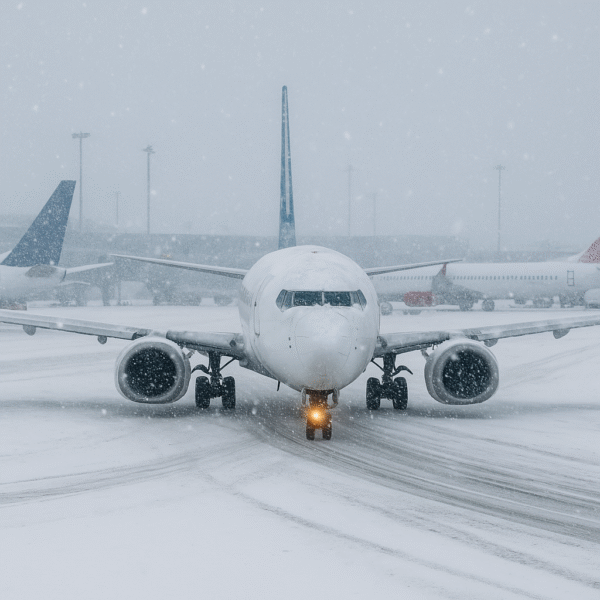
The storm’s strength is creating immediate operational challenges for airports, airlines, and road crews. Gusts near 35 mph are pushing snow across runways and major highways. Whiteout conditions are making it difficult for both pilots and drivers to navigate safely. Many travelers are choosing to delay their journeys as conditions worsen.
Chicago Faces Severe Delays and Heavy Congestion
Chicago O’Hare International Airport and Midway International Airport are among the hardest hit. O’Hare, one of the world’s busiest travel hubs, began reporting widespread delays early in the morning as snow accumulation increased. Ground crews are racing to keep runways clear, but the heavy snowfall is creating constant setbacks.
Passengers arriving at both Chicago airports are encountering long lines, aircraft de-icing delays, and last-minute gate changes. Some travelers have been advised to arrive earlier than usual or to rebook flights for safer travel windows. Public transportation and road access around the airports are also slowed by icy roads and limited visibility.
Detroit Airport Struggles After Hours-Long Closure
Detroit Metro Airport is also facing significant winter impacts. The airport experienced a near seven-hour halt in operations as snow and wind made runway conditions unsafe. Even after reopening, airlines continued to face challenges due to staffing, equipment delays, and aircraft repositioning. Many early-morning departures were canceled or pushed back, causing a ripple effect across the national flight network.
Passengers traveling through Detroit are being encouraged to monitor airline notifications closely. Airport authorities are urging travelers to allow extra time for parking, check-in, and security procedures due to the large number of delayed passengers crowding terminals.
Des Moines, Minneapolis, and Other Midwest Cities Hit Hard
Des Moines International Airport temporarily closed as rapidly falling snow and gusty winds reduced visibility to near zero. Similar conditions are being reported in Sioux Falls, Rochester, and Minneapolis-St. Paul, where crews are working around the clock to restore normal operations.
Minneapolis-St. Paul is seeing steady snowfall and icy conditions that are slowing takeoffs and landings. Milwaukee, Green Bay, and other Wisconsin cities are battling thick snow cover and freezing temperatures that are making road and air travel difficult. Blowing snow, drifting ice, and sudden wind gusts are creating hazards even on well-maintained routes.
Eastward Ripple Effects Reach Cleveland and New York
While the core of the storm is centered in the Midwest, its impact is spreading east. Travelers in Cleveland, western New York, and parts of Pennsylvania are beginning to experience delays linked to upstream weather issues. Snow bands moving off the Great Lakes may continue to create additional problems, especially for early December travel.
Airlines are adjusting schedules in advance to minimize later disruptions, but travelers should expect extended wait times. Delays in Chicago and Detroit often create national ripple effects due to their role as major connecting hubs.
Road Travel Also Hit by Dangerous Conditions
The storm is not only affecting airports. Major highways throughout the Midwest are coated in snow and ice. Strong winds are pushing snow back onto cleared roads, making driving conditions unpredictable. State transportation departments are urging drivers to avoid non-essential travel, especially during the most intense snowfall periods.
Access roads to major airports, including O’Hare and Detroit Metro, are experiencing slow-moving traffic. Some travelers are missing flights due to weather-related congestion before even reaching the terminal.
When Will the Weather Improve?
Forecasters expect the storm to begin easing as December starts, but lingering snow showers and frigid temperatures will continue to slow recovery efforts. Icy patches may remain on roads for several days. Airports will need time to reposition aircraft, clear runways, and restore normal schedules.
Wind chills will drop into the single digits, posing additional challenges for travelers waiting outdoors or transferring between terminals.
Tips for Travelers Navigating the Winter Chaos
Tourism and travel officials recommend staying flexible. Airlines are offering rebooking options to help passengers avoid unsafe weather windows. Travelers should check flight updates frequently and consider moving travel plans to later dates if possible.
Those driving should carry winter gear, keep fuel tanks near full, and monitor state road advisories. Simple steps like packing extra warm clothing and allowing more time for travel can make the journey safer.
A Difficult Start to Winter Travel Season
The post-Thanksgiving storm is shaping into one of the earliest major winter disruptions of the season. With millions of people on the move during the holiday period, the timing has created widespread delays and frustration. Chicago and Detroit remain at the center of the storm’s impact, but disruptions stretch far beyond the Midwest.
As conditions slowly improve, travelers are urged to stay alert, plan ahead, and prioritize safety as winter weather continues to shape early December travel.
For more travel news like this, keep reading Global Travel Wire