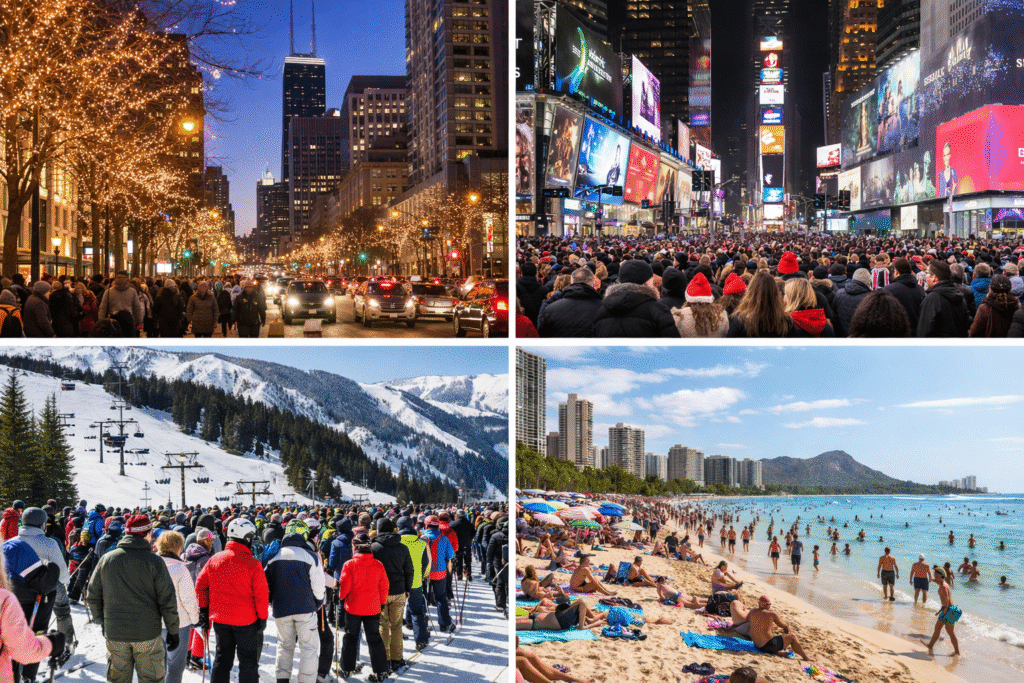
As the year-end holiday travel week arrives, Chicago has officially joined the ranks of America’s most overwhelmed destinations, standing alongside New York City, Las Vegas, Aspen, Honolulu, and Washington, D.C. Once celebrated for festive charm and seasonal magic, these iconic cities are now grappling with severe overtourism, pushing infrastructure, public transport, and visitor patience to the breaking point.
Holiday travel demand across the United States has surged to near-record levels, driven by pent-up travel interest, expanded airline schedules, and major seasonal events. While this boom is good news for tourism revenues, it has created a growing crisis for travelers seeking smooth, enjoyable experiences. Crowded streets, long queues, transport delays, and safety concerns are increasingly defining holiday travel in America’s most popular destinations.
Chicago Faces Mounting Holiday Pressure
Chicago’s emergence as a holiday crowd hotspot has been swift and intense. The city’s Magnificent Mile, famous for festive decorations and luxury shopping, is now experiencing overwhelming pedestrian congestion. Public transit platforms fill quickly, ride-hailing prices spike, and parking availability becomes scarce during peak hours. City officials have issued repeated advisories urging visitors to plan ahead, avoid peak shopping times, and explore alternative neighborhoods.
Seasonal events, waterfront attractions, and indoor cultural venues are also drawing record footfall. What was once a winter wonderland atmosphere is now, for many visitors, a stressful test of patience.
New York City Struggles Under Holiday Icon Status
New York City continues to top the list of overtourism challenges during the holidays. Times Square, Central Park, Fifth Avenue, and Midtown landmarks attract millions of visitors in a compressed time frame. New Year’s Eve celebrations alone bring extraordinary crowd density, leading to street closures, limited access zones, and packed subway stations.
While the city remains unmatched in holiday energy, navigating it during peak season can be exhausting even for seasoned travelers. Overcrowding has reached levels where basic sightseeing requires extensive planning and long waits.
Las Vegas Becomes a Congestion Hotspot
Las Vegas thrives on spectacle, but the holiday season transforms the Strip into one of the most congested corridors in the country. New Year’s celebrations, concerts, and sold-out hotels bring pedestrian traffic to a standstill. Visitors often encounter gridlocked roads, crowded sidewalks, and hours-long waits for dining and entertainment.
Despite its reputation for round-the-clock activity, Las Vegas during the holidays tests even the most enthusiastic travelers.
Aspen and Winter Resorts at Capacity
Aspen represents a different side of the overtourism problem. The winter holiday period is peak season for skiing, but visitor numbers often exceed the town’s capacity. Lift lines stretch longer each day, hotel availability becomes limited, and mountain roads experience severe congestion.
The charm of a luxury ski getaway can quickly fade when slopes are overcrowded and logistics become complicated. Travelers who fail to book early often face inflated prices and reduced access to amenities.
Honolulu and Waikiki Feel the Strain
Honolulu and Waikiki continue to experience intense holiday tourism, with beaches, shopping districts, and dining areas operating beyond comfort levels. Roads around resort zones become heavily congested, and popular beaches struggle to accommodate visitors seeking space and tranquility.
Local communities have increasingly voiced concerns about sustainability, urging travelers to be mindful of crowd impacts and explore less-visited areas where possible.
Washington, D.C. Overwhelmed by Seasonal Visitors
Washington, D.C.’s monuments and museums remain a major holiday draw, especially for domestic travelers. The National Mall sees constant foot traffic during the festive period, resulting in crowded walkways, security queues, and limited viewing access at major memorials.
Visitors often underestimate winter tourism levels in the capital, leading to packed itineraries and unexpected delays.
National Parks Join the Overtourism Crisis
Overcrowding is no longer limited to cities. Yellowstone National Park and Great Smoky Mountains National Park face serious strain during the holiday season. Parking shortages, road congestion, and crowded viewpoints challenge both visitor experience and environmental preservation.
Winter scenery attracts photographers and outdoor enthusiasts, but infrastructure limitations mean that even nature escapes require careful timing and planning.
What This Means for Holiday Travelers
The rise of overtourism across major US destinations highlights a shift in holiday travel realities. Iconic cities and parks remain appealing, but peak-season visits now demand strategic planning. Travelers are increasingly encouraged to consider off-peak hours, secondary neighborhoods, lesser-known destinations, or alternative travel dates.
For those who still choose these hotspots, flexibility and realistic expectations are essential. Early reservations, public transit awareness, and crowd-avoidance strategies can make the difference between a memorable holiday and a frustrating one.
As Chicago joins America’s most crowded holiday destinations, the message is clear: popularity comes at a cost. This holiday season, smart planning and destination awareness are more important than ever to ensure joy isn’t lost in the crowd.
For more travel news like this, keep reading Global Travel Wire