China is reshaping winter tourism with a unique rail journey through Heilongjiang. Travelers ride through snowy landscapes while discovering the traditions of the province. The journey blends sightseeing, cultural activities, and culinary heritage. Visitors experience winter in China through music, crafts, and storytelling. This immersive approach elevates Heilongjiang as a standout destination for winter travelers in 2026.
International Travelers Explore Northern China by Rail
Tourists from Singapore, Malaysia, and other Asian countries joined the winter journey. The tour began at Harbin Railway Station and ended in Mohe, China’s northernmost city. The route crosses forests, frozen rivers, and snow-covered plains. Travelers enjoyed views of Heilongjiang’s remote countryside, which remains pristine during the winter season. The tour attracted families, photographers, culture enthusiasts, and adventure seekers.
Heilongjiang has gained attention for its ice and snow tourism in recent years. Harbin hosts one of the world’s largest ice festivals each winter. Mohe attracts visitors eager to experience the aurora borealis, sub-zero temperatures, and themed winter attractions. The new rail journey expands tourism options and offers a cultural focus that complements existing attractions.
Folk Music and Crafts Bring Traditions to Life
The cultural activities became the highlight of the journey. Travelers watched Ewenki artists create birch bark pyrography. The artists burned patterns into bark using heated metal tools. The designs often depict wildlife and forest spirits. This craft has been practiced for generations by the Ewenki people.
Passengers also enjoyed Oroqen folk music. Oroqen singers performed songs inspired by hunting traditions and the forest. The melodies echoed through the carriages and captured the unique rhythm of northern ethnic culture. Many passengers recorded the performances and asked questions about the music.
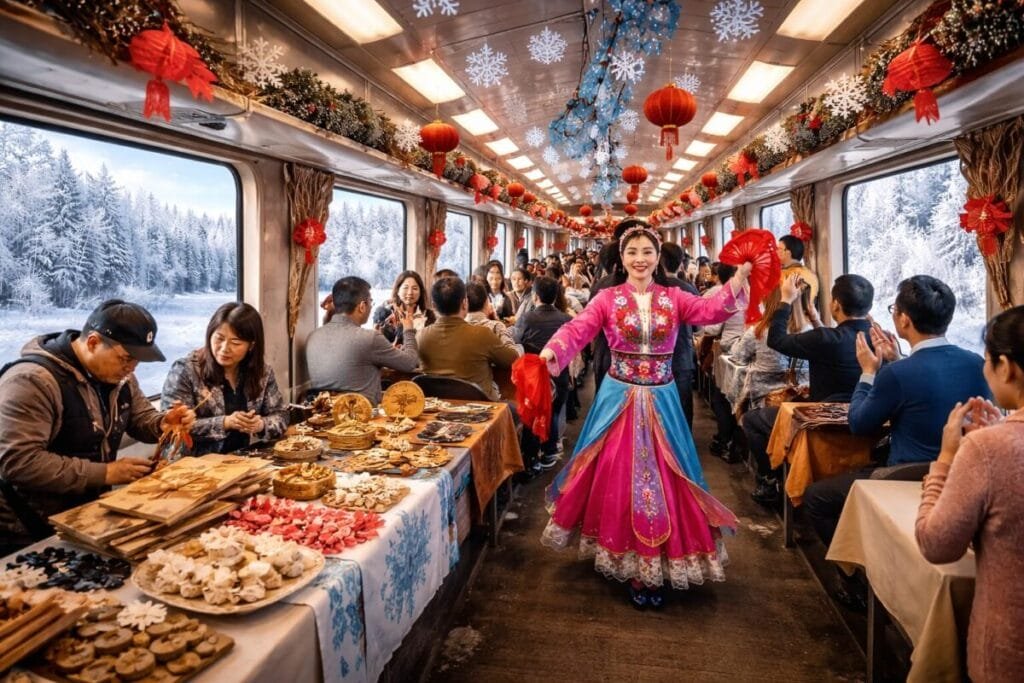
Art displays also filled the train. Local artisans showcased embroidery inspired by the region’s flora and fauna. Bright colors and detailed stitching revealed the level of skill required for each piece. Travelers took part in hands-on workshops that introduced them to traditional paper cutting. Participants learned how to cut detailed patterns with red paper sheets and small scissors. Others tried dumpling making and learned about the culinary history of winter food in northern China.
Passengers Join Lively Folk Dances and Winter Games
The winter journey offered outdoor-inspired fun as well. The Northeast yangko dance delighted travelers with its bright costumes and fast movements. Passengers joined performers and learned simple steps. The carriages filled with laughter as groups moved to the beat of drums and folk instruments.
The train also featured displays of bamboo skis, triangle sleds, and snow equipment used in rural winter life. These items revealed the practical side of winter survival in Heilongjiang. Travelers tried a Manchu folk game that involves coordination and balance. Games and cultural activities created an atmosphere of friendly participation rather than passive watching.
Ice-and-Snow Themes Enhance the Atmosphere
Winter decorations inside the train added to the seasonal mood. Snowflakes, lanterns, and icy motifs decorated the aisles. The carriages featured scenic images of Heilongjiang’s winter landscapes. The theme complemented the view outside the windows, where frozen forests and white hills stretched for miles.
Heilongjiang promotes winter tourism through ice festivals, skiing, and cultural events. The province hopes to attract more international winter tourism over the next decade. New transport programs, including rail tourism, support that goal and provide structured cultural experiences for overseas visitors.
Smooth Travel Assistance for International Guests
Staff prepared special services for the international tour group. A dedicated boarding channel at Harbin Railway Station reduced wait times. On board, bilingual volunteers helped travelers communicate and navigate the experience. Multilingual guides provided commentary on culture, geography, and history.
The guides explained the customs of ethnic groups who live in the region. Travelers learned about clothing, festivals, winter hunting, and ancestral traditions. Many guests expressed surprise at the diversity found in China’s northeastern provinces.
Mohe Welcomes Travelers With Arctic Charm
The train arrived in Mohe, where temperatures often drop well below freezing. Mohe markets itself as “China’s Arctic Town.” Visitors explore winter cabins, snow villages, and ice sculpture displays. Some travelers hope to witness the aurora borealis, which appears occasionally during the winter months. Local restaurants serve hearty northern dishes that warm travelers after long days outdoors.
Tourism in Mohe has grown due to its unique winter setting. Travelers enjoy activities such as dog sledding, skiing, and fire-themed festivals. The rail journey provides smoother access for international visitors who may not want to navigate winter roads.
Winter Rail Tourism Strengthens Cultural Exchange
The Heilongjiang rail journey demonstrates how travel can create cultural understanding. Travelers interacted directly with local artists, performers, and guides. They learned traditions not from museums but through participation. This approach builds appreciation for local heritage and encourages repeat visits.
China continues to develop themed rail tourism programs that blend culture with scenery. These programs bring economic benefits to remote regions and diversify tourism offerings beyond major cities.
A New Era for Winter Tourism in China
The rail journey through Heilongjiang signals a new direction for winter tourism in China. Travelers no longer view winter solely as a season for skiing or festivals. They now explore winter culture, winter cuisine, and winter traditions. The success of the journey may inspire similar tours across China’s northern provinces.
For more travel news like this, keep reading Global Travel Wire