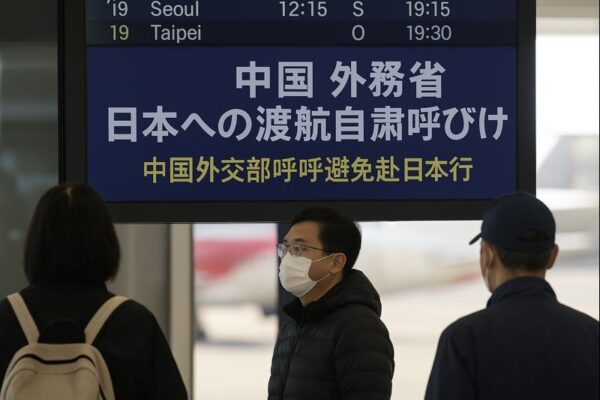
China has issued a renewed travel advisory urging its citizens to avoid visiting Japan. The warning follows a series of strong earthquakes that have shaken large parts of the country since December 8. Authorities cite ongoing seismic risks, tsunami threats, and large-scale evacuations as key concerns.
The advisory reflects growing safety fears as aftershocks continue to hit affected regions. Chinese officials have asked travelers to postpone trips and prioritize personal safety.
Powerful Earthquakes Disrupt Japan
Japan experienced several earthquakes over recent days. The strongest reached a magnitude of 7.5. It struck coastal and inland areas, causing injuries and structural damage.
Multiple aftershocks followed. Some measured above magnitude 6.0. These tremors worsened fear among residents and travelers. Seismic experts warned that further strong earthquakes could still occur.
Japan sits on the Pacific Ring of Fire. Earthquakes remain a constant risk. However, the recent sequence raised alarms due to its intensity and frequency.
Tsunami Alerts and Coastal Risks
Following the main earthquake, tsunami warnings were issued along parts of Japan’s coastline. Authorities reported waves reaching coastal zones. While most waves remained moderate, the risk prompted emergency measures.
Coastal residents were ordered to evacuate. Ports, beaches, and low-lying areas faced temporary closures. Emergency sirens and alerts disrupted daily life.
Chinese officials highlighted the danger of secondary disasters. These include tsunamis, landslides, and infrastructure failures. Coastal areas remain under close watch as aftershocks continue.
Mass Evacuations and Displacement
Japanese authorities ordered evacuations across multiple prefectures. More than 100,000 people were moved to shelters and safer zones. Schools, public buildings, and sports centers served as temporary shelters.
Transport services faced disruptions. Some train routes slowed or stopped operations. Road access remained restricted in damaged areas.
The scale of displacement added to safety concerns for foreign nationals. China cited these evacuations as a major reason behind the travel warning.
China Advises Citizens to Postpone Travel
China’s Foreign Ministry called on citizens to delay all non-essential travel to Japan. The advisory stressed that conditions remain unstable.
Chinese nationals already in Japan received guidance to stay alert. Officials urged them to follow local instructions and evacuation orders. Travelers were also advised to monitor earthquake alerts closely.
The ministry warned against visiting coastal zones and disaster-hit regions. It emphasized that personal safety should come first.
Consular Support and Emergency Measures
Chinese diplomatic missions in Japan activated emergency response plans. Consulates increased monitoring and communication efforts. Emergency contact channels were reinforced for citizens in need.
Officials encouraged travelers to keep identification documents accessible. They also advised preparing emergency supplies and knowing evacuation routes.
The advisory did not provide a clear timeline for lifting restrictions. Authorities stated that decisions would depend on seismic developments.
Tourism Impact and Industry Concerns
Japan’s tourism sector faces renewed uncertainty. December usually marks steady travel flows, especially from East Asia. The advisory may affect bookings, hotel stays, and tour operations.
Natural disasters often disrupt travel confidence. Even regions far from the epicenter can see cancellations. Airlines and travel operators are closely monitoring the situation.
Local tourism bodies have focused on safety messaging. They continue to support evacuation efforts and infrastructure checks.
Broader Diplomatic Backdrop
This travel warning comes amid strained relations between China and Japan. Recent political disagreements have already affected travel sentiment.
An earlier advisory in November cited security concerns. The current warning focuses on natural disaster risks. Still, diplomatic tensions form part of the broader context.
Despite political differences, the latest advisory centers on citizen safety. Officials stressed that earthquake risks remain the primary driver.
Japan’s Ongoing Emergency Response
Japanese authorities continue rescue and inspection efforts. Emergency teams assess damaged buildings, roads, and utilities. Power and water services are gradually restored in affected areas.
Seismologists warn that strong aftershocks may continue for days or weeks. Disaster management agencies remain on high alert.
Japan’s early warning systems and evacuation protocols have limited casualties. Still, the situation remains fluid.
Safety Advice for Travelers
Travelers in Japan are advised to stay indoors during alerts. They should avoid damaged structures and coastal zones. Emergency kits and charged devices remain essential.
Authorities recommend checking official alerts frequently. Calm and prompt action can reduce risks during earthquakes.
Outlook for Travel to Japan
China’s travel advisory underscores the unpredictable nature of natural disasters. It serves as a reminder for travelers to assess risks carefully.
Until seismic activity subsides, caution remains essential. Authorities urge patience and preparedness as Japan navigates this challenging period.
For now, China’s message is clear. Safety takes priority, and travel plans should wait until conditions stabilize.
For more travel news like this, keep reading Global Travel Wire