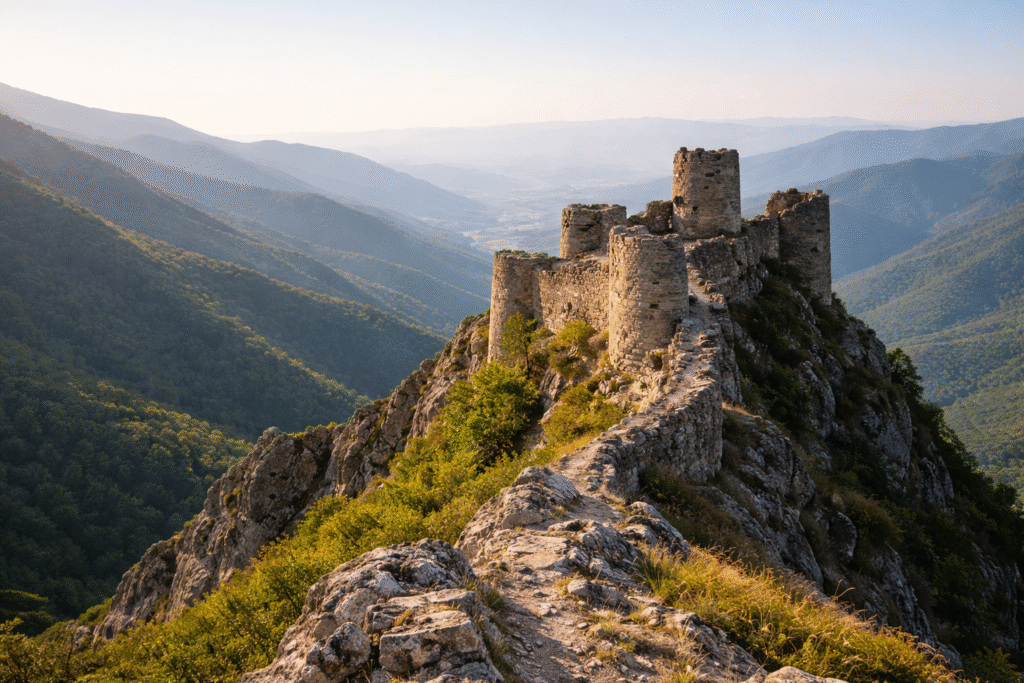
Rising high above Azerbaijan’s northeastern valleys, Chirag Gala stands in purposeful isolation. Known as the “Lamp Fortress” or “Torch Fortress,” its name reflects a role rooted in visibility rather than comfort. Built to watch, warn, and communicate, Chirag Gala now offers modern travelers a different experience—one defined by altitude, silence, and perspective.
Unlike city-based monuments or restored castles, Chirag Gala remains largely untouched by modern tourism. For culturally curious travelers and heritage-focused explorers, it represents Azerbaijan in its most elemental form, where stone, landscape, and time operate without distraction.
Strategic Location in the High Mountains
Chirag Gala occupies a commanding position along a steep mountain ridge, overlooking wide expanses of land below. Its placement was deliberate. From this elevation, watchmen could observe movement across valleys and relay warnings through signal fires to neighboring fortifications.
The journey to reach the fortress reinforces its historic purpose. The final approach is typically on foot, with winding paths that gradually separate visitors from modern life. As elevation increases, sound diminishes, and the surrounding landscape becomes the primary point of reference. This transition mirrors the experience of those who once guarded the site centuries ago.
Origins and Defensive Role
Believed to date back to the early medieval period, Chirag Gala was part of a broader defensive network designed to protect settlements, trade routes, and strategic corridors. Unlike urban fortresses that housed communities, this site served a focused role centered on observation and communication.
Its design reflects urgency rather than display. There are no decorative elements or expansive courtyards. Every wall, opening, and vantage point served a practical function, reinforcing the idea that survival depended on awareness rather than force.
Architecture Shaped by the Mountain
One of Chirag Gala’s most striking qualities is how seamlessly it blends into the terrain. Thick stone walls rise directly from exposed rock, making it difficult to distinguish where natural cliff ends and human construction begins.
This integration of architecture and landscape creates a powerful visual impression. The fortress feels as though it belongs to the mountain itself, shaped by the same forces of wind, erosion, and endurance. For travelers, this connection heightens the sense of authenticity and permanence.
Experiencing Chirag Gala Today
A visit to Chirag Gala is quiet and self-directed. There are no ticket counters, guided tours, or interpretive signage. Exploration is shaped by weather, light, and physical awareness rather than structured narratives.
The reward lies in scale and perspective. From the fortress walls, the surrounding terrain unfolds uninterrupted, revealing why visibility once mattered more than comfort. Standing at these heights, travelers gain an immediate understanding of how geography functioned as a tool of defense.
Silence as a Living Historical Element
Perhaps the most defining feature of Chirag Gala today is silence. Wind replaces voices, and distance replaces explanation. This quiet is not emptiness but continuity, echoing the conditions under which the fortress once operated.
For visitors, the absence of interpretation invites imagination. It becomes easy to picture fires burning against the night sky, messages traveling across ridges, and watchmen scanning the horizon for signs of movement below.
A Destination for Slow Heritage Travel
Chirag Gala appeals strongly to slow travelers who value authenticity over convenience. Unlike reconstructed monuments, it remains exposed to the elements, shaped by time rather than preservation aesthetics.
The site demands effort, patience, and respect. In return, it offers a direct encounter with history that feels unfiltered and deeply personal. Travelers who make the climb often describe the experience as meditative rather than informative.
Seasonal Influence on the Experience
Weather plays a defining role at Chirag Gala. Clear days emphasize visibility and scale, revealing vast landscapes stretching toward the horizon. Fog and mist heighten the sense of isolation, reinforcing the fortress’s role as a lone sentinel.
Each season reframes the experience, reminding visitors that defense once depended not only on architecture but also on climate, light, and timing.
Responsible Travel at an Unprotected Site
As an exposed historical ruin, Chirag Gala relies on visitor awareness rather than formal regulation. Travelers are encouraged to avoid climbing unstable walls, disturbing stonework, or leaving any trace behind.
Preservation here is collective. Respectful behavior ensures that the site remains intact for future generations seeking the same quiet connection to the past.
Chirag Gala’s Place in Azerbaijan’s Heritage Story
Azerbaijan is home to many castles and fortifications, yet Chirag Gala stands apart for its stark simplicity. It tells a story not of rulers or cities, but of systems—how people once read landscapes, distance, and danger.
For travel journalists and cultural explorers, it offers a compelling narrative of function over form, where survival shaped every decision.
Why Chirag Gala Endures
Chirag Gala was built to be seen from afar, not remembered closely. Yet centuries later, it is precisely its distance from towns, noise, and explanation that gives it lasting power.
For travelers willing to climb, pause, and listen, Chirag Gala becomes more than a ruin. It becomes a lesson in how history once depended on light, elevation, and patience—and how some places still ask us to slow down enough to understand them.
For more travel news like this, keep reading Global Travel Wire