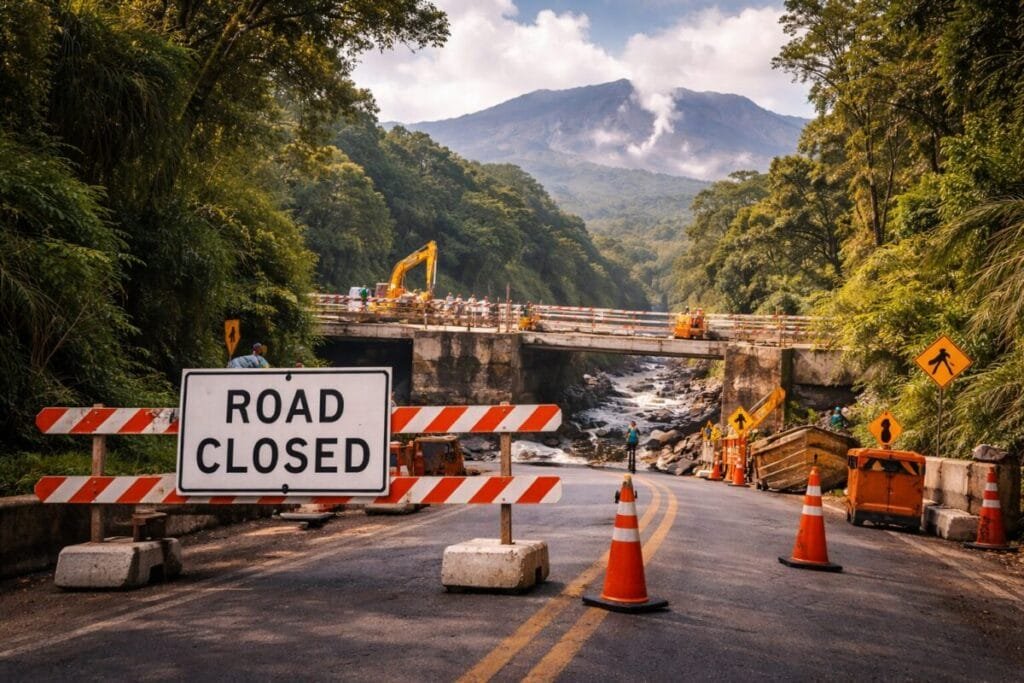
Poás Volcano National Park remains closed while crews repair a damaged bridge on Route 120. The bridge stands above Quebrada Tigre and connects visitors to the park through Poasito. Officials shut down access due to safety concerns and extended the closure beyond the original January deadline. Tour operators, guides and hospitality businesses now struggle to adjust schedules during the peak travel season.
Poás ranks among Costa Rica’s most popular parks and attracts travelers from San José, Alajuela and destinations abroad. Many tourists plan day trips to its crater viewpoint and forest trails. The shutdown leaves many itineraries in disarray and forces travelers to seek alternative nature attractions.
Bridge Repairs Stall Reopening Plans
The Ministry of Public Works and Transport ordered the bridge closure after engineers studied the aging structure. The inspection showed signs of serious structural failure and potential collapse. Crews aim to install a modular Bailey bridge to restore vehicle access. Engineers estimate a timeline of several weeks for completion, yet weather conditions could slow progress. Heavy rains in highland regions often interfere with construction work and road access.
SINAC, the national agency that oversees protected areas, confirmed that Poás will stay closed until repairs finish. Park administrators noted that visitor safety takes priority. The agency continues to coordinate with transportation officials to evaluate the bridge and surrounding road network.
Tour Operators Feel Immediate Impact
Local guides and tour companies felt the disruption within hours of the announcement. Travelers canceled reservations or redirected tours to other natural attractions. Hotels in Poasito reported a drop in occupancy as guests modified travel plans. Day-trip companies in San José also scrambled to adjust itineraries for inbound travelers.
The Central Valley region depends heavily on Poás Volcano for steady tourist flow. Many small restaurants and souvenir shops rely on park visitors for daily revenue. The sudden drop in tourism caught many businesses off guard and strained budgets during the high travel season.
Travelers Confront Limited Options
Many visitors booked Poás as a primary day excursion due to its short distance from the capital city. The closure forced travelers to choose between rescheduling or seeking new destinations. Some visitors lacked flexibility due to tour packages or short stays.
SINAC urged travelers not to use the old Poás route through Route 146. That road features steep inclines, narrow shoulders and sharp curves. Officials stressed that this path cannot support large buses or heavy tourist traffic. Local police also warned drivers about limited emergency access along several sections of the route.
Alternate Destinations Highlight Costa Rica’s Biodiversity
Travel planners now redirect tourists toward other natural sites. La Paz Waterfall Gardens offers wildlife exhibits, waterfalls, gardens and forest trails within a short drive of Poasito. Travelers seeking volcanic landscapes can visit Arenal Volcano near La Fortuna. Arenal provides hot springs, zip-lining, suspension bridges and lake tours. Irazu Volcano and Turrialba Volcano also remain open for visitors who want crater views and high-altitude scenery.
The Central Valley region benefits from a strong mix of natural attractions, yet Poás holds a unique position due to its accessibility and views. Many first-time visitors include Poás on their itinerary because they can visit the summit and return by afternoon.
Infrastructure Challenges in Volcanic Regions
The bridge closure highlights a broader issue facing Costa Rica’s highland attractions. Mountain roads suffer from landslides, heavy rains, steep gradients and erosion. Authorities must invest in maintenance to keep routes safe for residents and tourists. Frequent storms can wash out bridges or damage guardrails. The government continues to study ways to improve resilience in volcanic corridors.
Officials from the Ministry of Public Works also evaluate long-term infrastructure upgrades. The agency must balance environmental protection with tourism demand. Improved roads can increase access but require careful planning to protect sensitive ecosystems near volcanoes and cloud forests.
Rescheduling Policies for Affected Visitors
Visitors who purchased entrance tickets for Poás during the closure may reschedule visits through official customer service channels. Staff help travelers select new dates once the park reopens. Many travelers appreciate the flexibility during a stressful situation. Travel agents also noted that schedule changes help preserve future bookings instead of triggering cancellations.
Tourism advocates argue that clear communication protects Costa Rica’s reputation as a reliable destination. Travelers who receive timely updates remain more willing to return in future seasons.
Economic Impact on Regional Communities
The shutdown underscores how dependent certain communities are on natural tourism. Poasito businesses felt an immediate slump in sales. Restaurant owners noted fewer lunchtime customers. Shuttle drivers and guides lost bookings for several consecutive days. Souvenir vendors saw foot traffic plummet. Local chambers of commerce now urge authorities to complete repairs quickly to limit long-term damage.
Tourism analysts highlight the importance of diversifying attractions in rural towns. Communities rely on a single park or natural site can face major economic swings when closures occur.
Long-Term Outlook for Poás Volcano Tourism
Officials expect Poás Volcano to rebound once repairs finish. The park remains a flagship attraction due to its crater views and unique geology. International travelers continue to show strong interest in Costa Rica’s volcanic landscapes and biodiversity. The country’s tourism brand remains strong across global markets.
The delay creates short-term pain, yet infrastructure upgrades may create long-term benefits. Safer bridges and improved access routes can support sustained tourism growth and reduce future closures.
For now, travelers must adjust itineraries and explore alternative destinations. Local businesses remain hopeful that repairs will finish soon so Poás can welcome new visitors and resume its role as a highlight of Costa Rica’s Central Valley travel circuit.
For more travel news like this, keep reading Global Travel Wire