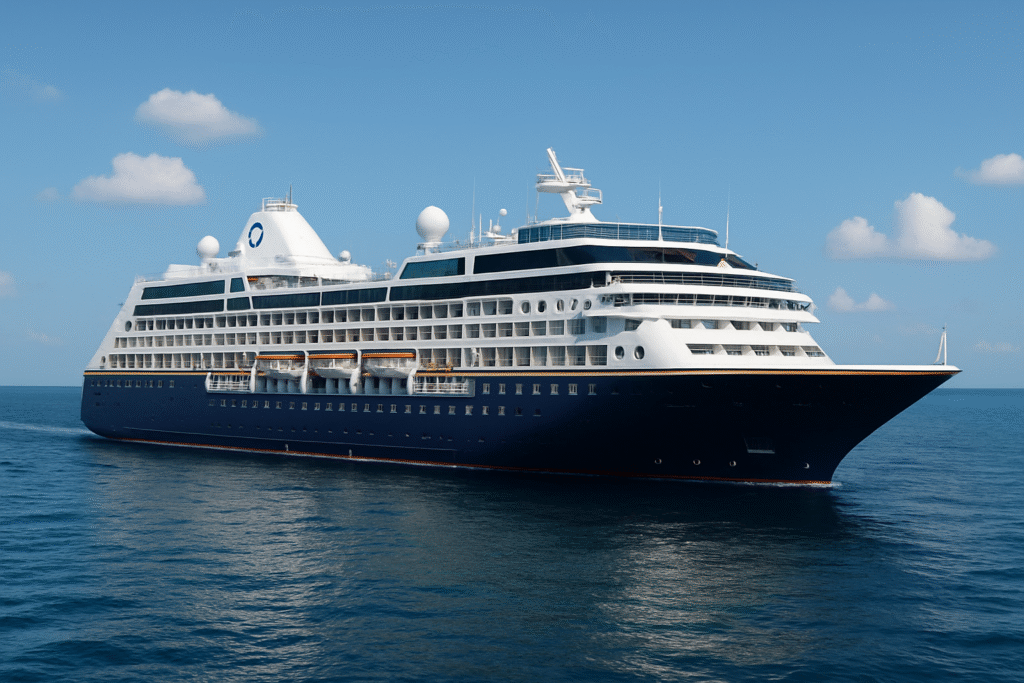
Crescent Seas, the U.S.-based maritime lifestyle company, has made a decisive shift in its strategic course by ending its charter agreements for the Regent Seven Seas Navigator and Oceania Insignia. Both ships, previously owned by Norwegian Cruise Line Holdings (NCLH), were to serve as the foundation for Crescent Seas’ residential cruise venture. The company has now pivoted toward developing a brand-new purpose-built ship, setting its sights on a 2032 launch.
This decision marks a redefinition of the brand’s ambitions in the luxury cruise sector. Instead of transforming existing ships into floating residences, Crescent Seas will design a vessel built specifically for long-term ocean living. This move aligns with a growing trend among affluent travelers who desire more spacious, customizable, and technologically advanced living spaces at sea.
Charter Agreements Officially Terminated
The termination of Crescent Seas’ charter plans was confirmed in filings made by Norwegian Cruise Line Holdings (NCLH) to the U.S. Securities and Exchange Commission. The original contracts, signed in March 2025, outlined 10-year agreements that included purchase options. However, before the end of September 2025, both charters were formally dissolved.
According to Crescent Seas, this decision followed months of market analysis revealing that high-net-worth travelers were seeking more individualized experiences than what refurbished vessels could offer. The company discovered that its target audience preferred customizable spaces, larger living areas, and greater design participation—features that existing cruise ships could not accommodate without major compromises.
A New Vision for Life at Sea
Founder Russell W. Galbut emphasized that Crescent Seas’ evolution represents a deliberate response to customer feedback and shifting industry trends. Instead of adapting older ships, the company will now focus on a purpose-built residential vessel designed around modern sustainability, personal ownership, and architectural innovation.
The upcoming ship will feature residences that combine the luxury of ocean travel with the comfort of home. Each unit will offer expansive layouts, private terraces, and access to a curated collection of onboard amenities—such as fine dining, wellness centers, co-working spaces, and cultural programming.
Crescent Seas envisions a floating community where residents can live, work, and travel in harmony with the ocean. The project is expected to appeal to retirees, digital entrepreneurs, and lifestyle investors seeking a permanent yet mobile residence.
Original Plans for the Navigator and Insignia
Before the charters were cancelled, Crescent Seas had planned extensive refurbishments for the Regent Seven Seas Navigator and Oceania Insignia. Both ships, launched in 1999, were slated for complete interior redesigns, converting their traditional cruise accommodations into full-time residences.
The Navigator, with capacity for 490 guests, was to be transformed into a flagship residential vessel featuring high-end apartments and advanced onboard technology. The Insignia, capable of housing 684 guests, was to follow a similar path. Under the agreement, Norwegian Cruise Line Holdings would have retained technical management of both vessels.
These plans, however, became less practical as Crescent Seas refined its long-term vision. Rather than retrofitting ships constrained by older designs, the company chose to start fresh with a new vessel that would embody its philosophy of modern seaborne living.
Market Insights Driving the Change
Crescent Seas’ internal studies revealed that the new generation of luxury travelers views residential cruising as more than an alternative to traditional cruising—it represents a lifestyle shift. Clients now seek ownership, personalization, and sustainability.
In addition, rising environmental expectations have influenced the company’s plans. The upcoming vessel will likely feature energy-efficient propulsion, advanced water recycling systems, and eco-conscious materials to reduce its carbon footprint.
Industry experts have observed that Crescent Seas’ pivot mirrors broader shifts within the luxury travel market, where exclusivity and autonomy are valued above convenience alone. Modern travelers want to shape their environment, not simply rent it for a week.
Regent Navigator and Oceania Insignia Continue Operations
Following the cancellation, both the Navigator and Insignia remain integral parts of their original fleets. Regent Seven Seas Cruises confirmed that the Navigator will undergo a comprehensive drydock refurbishment in late 2026. The ship will continue operating throughout Europe and maintain its reputation as a small, high-end vessel offering personalized experiences.
Oceania Cruises also confirmed that the Insignia will stay in active service through 2027, primarily sailing Mediterranean and Northern Europe itineraries. Both ships will receive scheduled updates to enhance passenger comfort and maintain their positions in the luxury cruise market.
A New Era of Residential Cruising
Crescent Seas’ decision signals a broader transformation within the cruise industry. Traditional short-term voyages are giving way to long-term and ownership-based models that merge hospitality, real estate, and maritime innovation.
The company’s upcoming newbuild will serve as a floating residential community—part cruise ship, part luxury condominium. Future residents will be able to invest in or lease their ocean homes, enjoying global travel while maintaining a permanent address at sea.
As more companies experiment with similar models, residential cruising is expected to become a major niche in luxury travel by the next decade. Crescent Seas aims to be at the forefront of this evolution, setting new standards for comfort, personalization, and sustainability.
Conclusion
Crescent Seas’ cancellation of the Regent Navigator and Oceania Insignia charters marks a bold turning point in its journey toward redefining luxury ocean living. The company’s focus now shifts to a purpose-built residential cruise ship designed for the next generation of travelers who value space, autonomy, and global mobility.
This pivot demonstrates foresight in a rapidly changing market where travelers seek to merge lifestyle, exploration, and sustainability. With its newbuild planned for 2032, Crescent Seas stands poised to reshape the future of residential cruising—where the ocean is not just a destination but a permanent home.
For more travel news like this, keep reading Global Travel Wire