Croatia is preparing to tighten alcohol sales in its coastal hotspot Split. The move aims to reduce street drinking, noise, and late-night disturbances. Officials want to protect local life while keeping tourism strong.
Split has seen a surge in party tourism over the past decade. The city’s Old Town and waterfront attract millions each year. While tourism drives the economy, it also fuels public disorder during peak season.
City leaders now plan strict late-night alcohol sale limits in key nightlife zones.
What the New Split Alcohol Rules Will Include
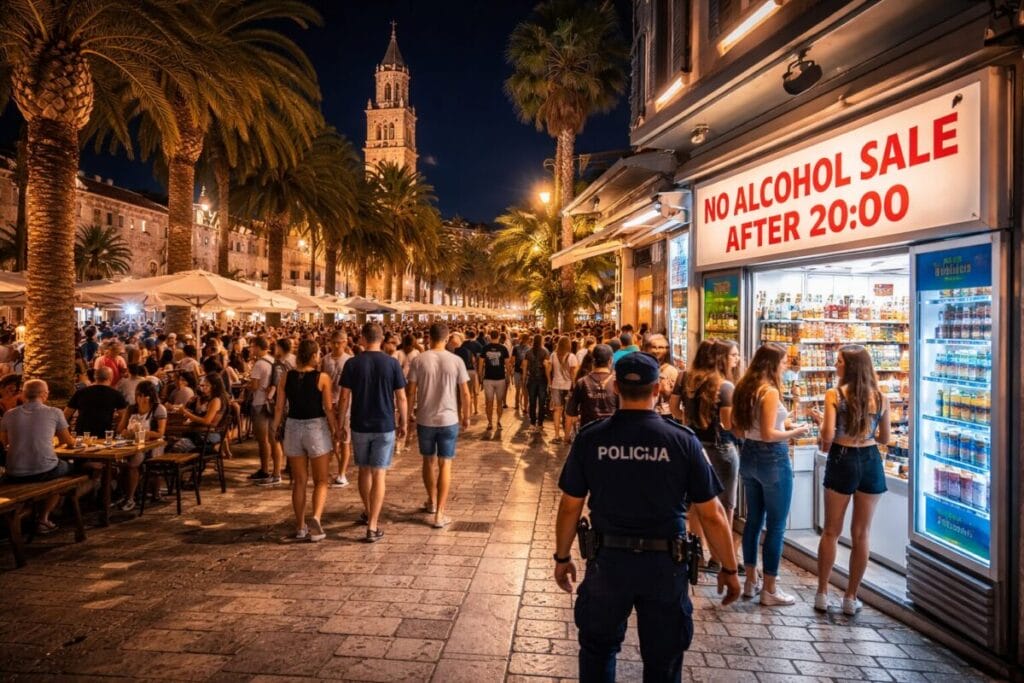
Under the proposal, shops will not sell alcohol between 8 p.m. and 6 a.m. in areas packed with bars and clubs. The rule will affect supermarkets, liquor stores, and convenience outlets.
Licensed venues such as bars, restaurants, and nightclubs will continue serving drinks. Tourists can still enjoy nightlife inside regulated spaces. However, they will not buy alcohol from stores for street consumption during late hours.
Local authorities believe this targeted approach will reduce:
- Street drinking
- Public urination and littering
- Alcohol-fueled fights
- Noise complaints from residents
Officials expect enforcement to begin as early as this summer season.
Why Split Is Taking Action Now
Croatia remains one of Europe’s most visited Mediterranean destinations. According to national tourism data, the country records tens of millions of overnight stays each year. Split ranks among the top coastal cities for international arrivals.
However, residents have voiced frustration. Large groups often gather outside shops late at night. Noise echoes through narrow historic streets. Emergency services also report rising calls during peak tourist months.
City planners want to protect Split’s UNESCO-listed heritage zones and residential neighborhoods. Authorities argue that responsible tourism must replace uncontrolled partying.
Croatia Joins a Wider European Tourism Crackdown
Croatia is not acting alone. Several countries have introduced similar alcohol restrictions to manage overtourism and nightlife disorder.
Spain Tightens Controls in Party Destinations
Spain has long battled party tourism in hotspots like Ibiza and Mallorca. Authorities have introduced limits on public drinking and nighttime alcohol sales in key areas.
Some regions restrict happy hours and bar promotions. Others enforce heavy fines for street drinking. These measures aim to protect local communities and reshape the country’s tourism image.
Spanish officials now promote cultural and sustainable tourism instead of alcohol-focused travel.
Portugal Limits Night Alcohol Sales in Porto
Portugal has also tightened regulations in Porto and Lisbon nightlife districts. In parts of Porto, shops cannot sell alcohol after 9 p.m.
The goal is clear. Leaders want fewer intoxicated crowds in historic city centers. The policy still allows bars and restaurants to operate normally.
Local governments say the rules improve safety and reduce vandalism.
Poland Restricts Shop Alcohol Sales After Dark
Poland introduced late-night alcohol sales bans in cities like Warsaw and Kraków. Shops and petrol stations must stop selling alcohol after set evening hours.
Authorities report improvements in public order. Residents in affected districts have noticed quieter nights.
Poland’s model shows how targeted restrictions can reduce alcohol-related disruption without harming licensed venues.
Australia’s Lockout Experiment
Australia took a different approach. Sydney once enforced strict “lockout laws.” Bars could not admit new guests after 1:30 a.m.
The rules aimed to reduce violence in nightlife districts. While controversial, officials recorded a drop in alcohol-related assaults during the enforcement period.
The laws were later eased. Still, the case shaped global debates about nightlife control.
A Shift Toward Sustainable Tourism
Across Europe and beyond, tourism strategies are changing. Governments now prioritize sustainability over volume.
Overtourism creates strain on housing, transport, sanitation, and public safety. Historic districts suffer the most. Residents often feel pushed out of city centers.
Croatia’s national tourism strategy emphasizes quality over quantity. Authorities want visitors who respect culture, heritage, and local communities.
Split’s alcohol restriction plan reflects this broader shift.
Balancing Economy and Community
Tourism remains vital for Croatia’s economy. Coastal cities depend heavily on summer revenue. Restaurants, hotels, and tour operators rely on strong visitor numbers.
However, unchecked nightlife can damage long-term appeal. Families and cultural travelers may avoid destinations known only for party scenes.
By limiting shop alcohol sales instead of closing bars, Split aims for balance. Visitors can still enjoy nightlife. At the same time, authorities hope to reduce street chaos.
Local officials believe the policy protects both economic growth and quality of life.
What This Means for Travelers
Tourists visiting Split should expect:
- No retail alcohol sales in nightlife zones after evening hours
- Continued service inside bars and clubs
- Stronger enforcement against street drinking
- Higher fines for disorderly conduct
Travelers may notice increased police patrols in busy districts during peak season.
Officials stress that the city remains welcoming. The focus is behavior management, not tourism reduction.
The Future of European Nightlife Tourism
Croatia’s move signals a broader transformation in global travel policy. Popular destinations no longer tolerate uncontrolled late-night drinking.
Cities want vibrant nightlife. They also demand respect for residents and heritage spaces.
Experts predict more Mediterranean destinations will adopt similar alcohol rules in coming years. Sustainable tourism now shapes government planning across Europe.
For Split, the goal remains clear. Protect the city’s charm. Preserve community life. Welcome visitors who value culture as much as celebration.
Croatia’s tourism crackdown may mark the beginning of a new era—where responsible travel defines the future of Europe’s most beloved coastal cities.
For more travel news like this, keep reading Global Travel Wire